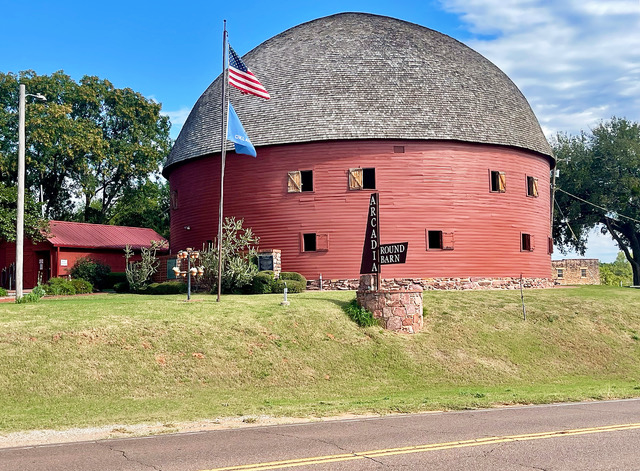
 Arcadia Round Barn: The Arcadia Round Barn is a landmark in the town of Arcadia, Okla. Seen at the bottom of the photo is the Route 66 highway, which passes through the small farming community north of Oklahoma City. Photo by Gary Warren/ladailypost.com
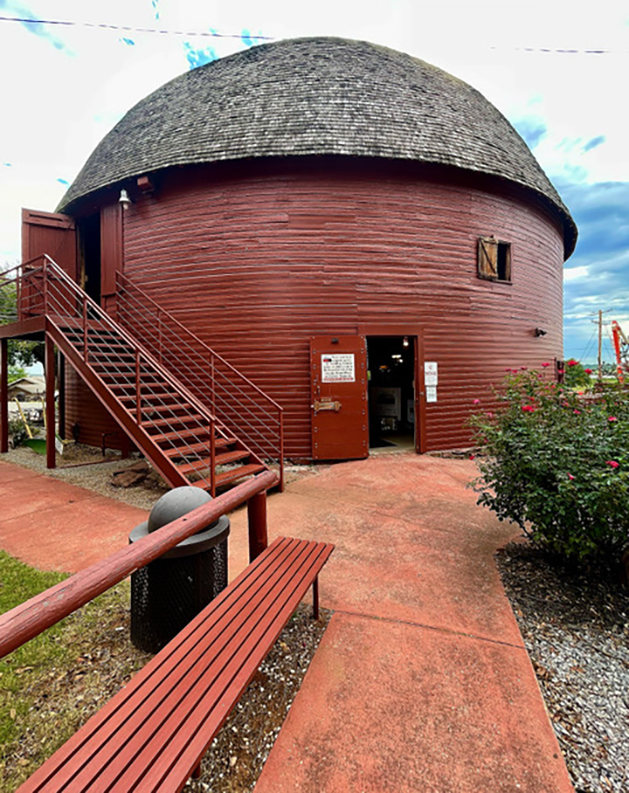 Entrance: The entrance doors to the round barn are seen from this side of the structure. The downstairs serves as a local museum with displays of tools and equipment used by pioneers. The ground floor includes a gift shop. The upper floor, reached by the exterior steps, leads to the only entrance upstairs. Workers saw the value of a local gathering place under the domed roof and convinced builder William Odor to install a finished hardwood floor. Photo by Gary Warren/ladailypost.com
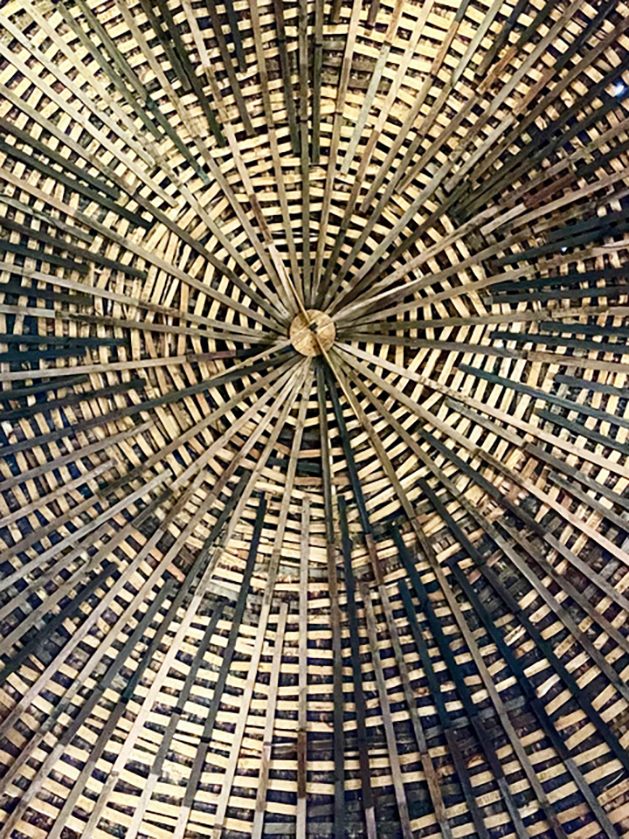 Heads Up: A view of the roof of the round barn is a work of art. The timbers were cut and shaped to the curvature of the domed roof before installation. This photo was made from the center of the room, looking straight up toward the center point of the roof. Photo by Gary Warren/ladailypost.com
By GARY WARREN
Photographer
Formerly of Los Alamos
While traveling the back roads across the U.S., we are treated to many beautiful scenes and landscapes. One of my favorites is agriculture and farms seen throughout the country. I especially enjoy seeing the smaller farms and ranches owned and operated by families. The barns and pasture land almost always create a picture in my mind.
These rural settings always look inviting and make me wonder what the story is behind these places. If those barns could talk, the stories they might tell. In almost all cases, we never know the good or bad of any of these farms and ranches, but the thoughts are always present.
However, one unique barn in Arcadia, Okla., has quite the history. The Arcadia Round Barn was constructed in 1898 by William Odor and his brother-in-law J. Henan Keely, with the assistance of some local farmhands.
The base of the structure is rose rock, a reddish rock found only in Oklahoma. The upper portion of the barn is constructed of bur oak, which is also native to Oklahoma. Odor even created a sawmill to turn large bur oak logs into lumber.
In addition to creating the lumber, the river by the mill enabled them to build a mold to shape the lumber in the curves required to build a round structure. The lumber was cut and soaked in a mold in the water to establish the needed curves before placement on the barn.
This architectural masterpiece was 60 feet in diameter and stood 43 feet high in the center of the barn. The barn was a community landmark from the beginning. In the 1920s, Route 66 was created and ran by the round barn through Arcadia, and the unique structure began to gain attention from travelers.
Why build a round barn? Tornadoes were frequent in the area, and William Odor’s thoughts were that a tornado would travel around a round structure and not blow through the building. Who knows if that theory has any validity, since it was never tested in Arcadia.
The unique round shape of the barn creates a stunning interior. The rafters and framing of the round domed roof exhibit a beautiful pattern when viewed from below.
When the barn was under construction, the volunteer helpers convinced Odor to install a finished hardwood floor in the loft so the area could be used as a dance floor. The upstairs loft is still used today for dances, musical events, weddings, birthday parties, and other celebrations. The ground floor of the barn was used for typical farm and barn storage, such as hay and tools.
No changes were made to the round barn by those who owned it after Odor. By the 1970s, the barn was beginning to deteriorate and show its age, but nothing was done to improve the situation. By the late 1980s, the building was almost in ruins. In 1988, the barn roof collapsed.
At this point, the Arcadia Historical and Preservation Society was formed by locals who took ownership of the barn. Plans were made to restore the barn beginning that year. The diligent job of restoration was headed by a retired contractor from Oklahoma City, Luke Robison, and several other retired volunteers. The volunteers were fondly named the “Over the Hill Gang” as most of the volunteers were retired.
The restoration of the Arcadia Round Barn was completed exactly to the original design and construction and reopened to the public in 1992. The restoration team earned national awards for their excellent work. In 1993, the National Trust for Historic Preservation acknowledged the restoration project and the team of workers by presenting each member with the National Honor Award for the craftsmanship and commitment to preserving the barn.
Today, the barn serves as a local museum with photos and history of the barn, as well as a nice collection of tools used daily on the farms in the pioneering days of Oklahoma. There is a section on Route 66 as well as an assortment of books and souvenirs. The Round Barn is open daily, 10 a.m. to 5 p.m., and is operated by volunteers.
The Arcadia Round Barn will always be the central landmark in Arcadia, Okla., and will also remain one of the top stops for visitors driving Route 66.
Editor’s note: Longtime Los Alamos photographer Gary Warren and his wife Marilyn are traveling around the country, and he shares his photographs, which appear in the “Posts from the Road” series published in the Sunday edition of the Los Alamos Daily Post.
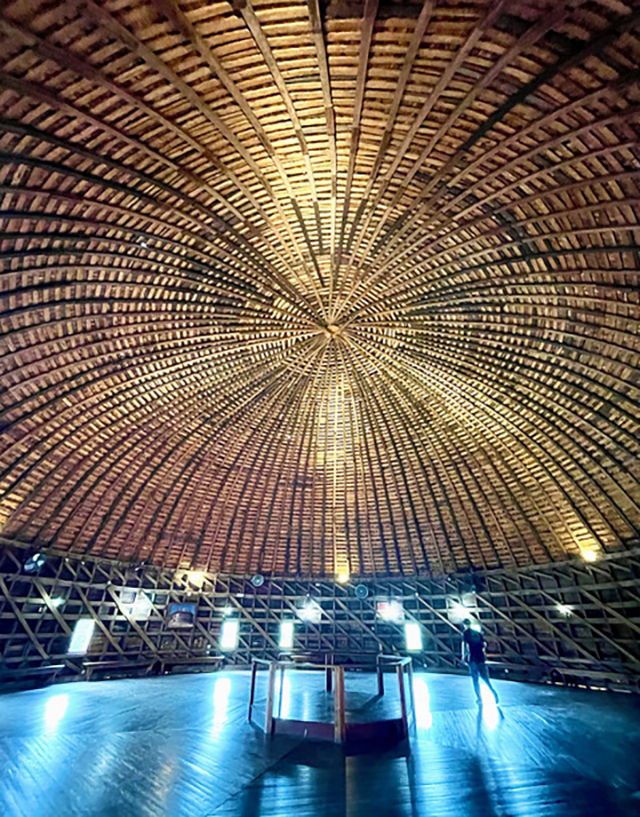 Loft Interior: A wide-angle view of the loft and flooring is the crown jewel of the Arcadia Round Barn. The upper space was used as a community gathering place from the beginning. The ‘windows’ are openings cut out of the wall, with the cutout serving as shutters when needed. The windows are required for air movement, although there are fans installed around the space today. A closer look reveals a visitor walking on the right side of the photo. A small stage is seen in the center of the floor. Photo by Gary Warren/ladailypost.com
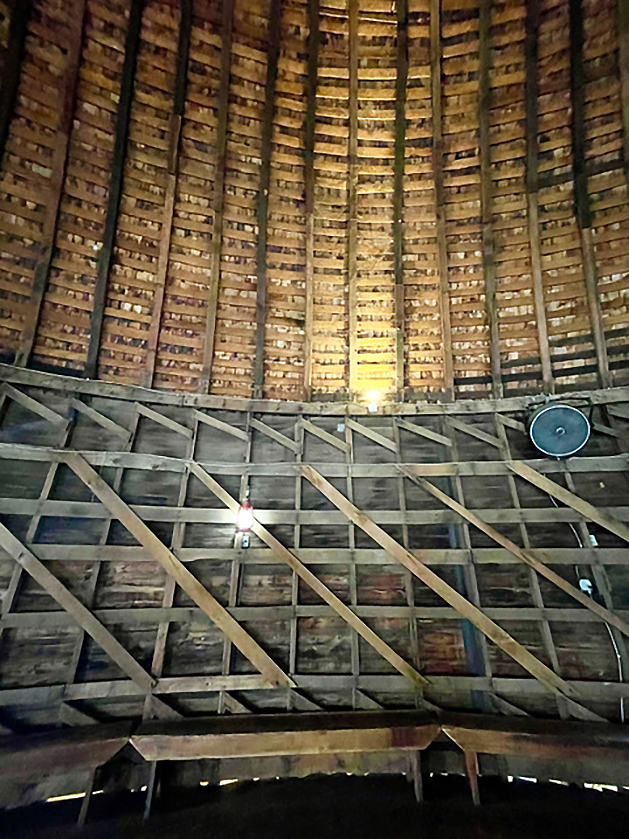 Interior Walls and Roof: The base area of the barn is more vertical than round. This wall is seen downstairs and extends up a few feet into the loft area. The round domed roof and rafters rise from the top of the wall. The design and construction of the space are amazing, considering it was originally built in 1898 with hand tools. Photo by Gary Warren/ladailypost.com
 Tools of the Day: The ground floor serves as a local museum, a historical museum, and a gift shop. Shown is a wall in the local museum area showing tools used in everyday life on the farm in the pioneering era of Oklahoma. Photo by Gary Warren/ladailypost.com
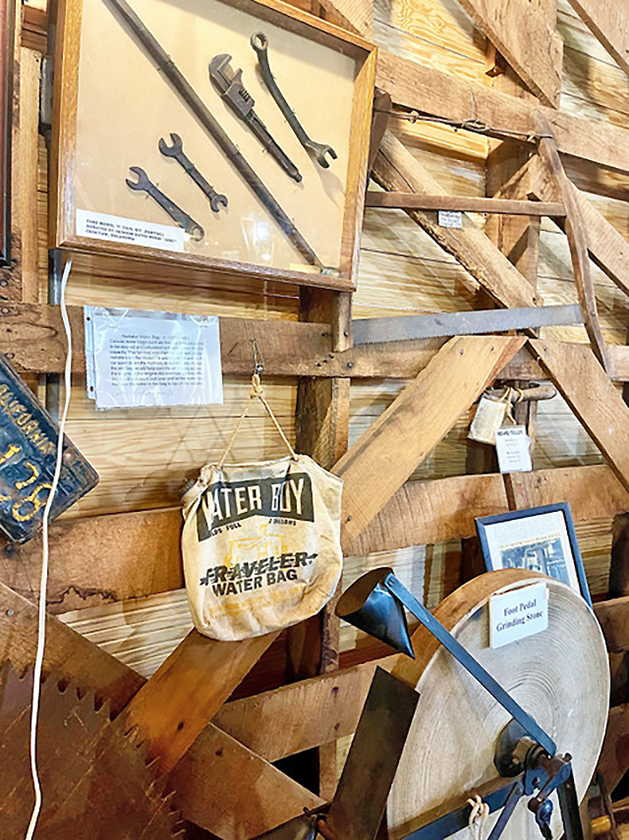 Artifacts: A view of the museum shows tools and artifacts used by locals. The items in the museum were donated by local families who have lived and farmed in the area for decades. Photo by Gary Warren/ladailypost.com