 Tales Of Our Times
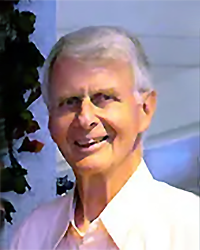
By JOHN BARTLIT
New Mexico Citizens
for Clean Air & Water, Inc.
Our citizens group learned the ways of air issues, inside and out. Large issues are part history, law, science, business, and emotions. Each of these has its own jargon, which impedes the exchange of information. Clean air made headway after events helped break these barriers. A notorious case was Donora.
Donora was a hilly town of industrious folks on a horseshoe bend in the Monongahela River 24 miles southeast of Pittsburgh. Donora and nearby Webster were home to U.S. Steel Corporation’s Donora Zinc Works and American Steel and Wire. Shortly before Halloween in 1948, a temperature inversion set a roof over the valley floor and trapped the air for five days as the smog grew denser. A clearing rain ended the killer smog on Sunday, Oct. 31. Later studies found the smog had killed 20 people and hospitalized nearly 6,000 of the town’s 14,000 residents.
In 1950, President Truman convened the first national air pollution conference, citing Donora as an example of the need. By present standards, its recommendations were tame, mostly calling for more research. Yet the precedent of a federal role had been set. In 1963, Congress passed the first Clean Air Act.
Early innovators found sundry ways to promote environmental concerns. In the 1960s, clean air drew a healthy mix of competent protest plus competent research. Results showed that a fair touch of advocating (aka “squeaky wheels”) mixed with research (aka “studied findings”) brings lasting change sooner than does too much of one without the other. Still, an able mix is hard to sustain.
History builds on history. Out West, people focused on their own unique concerns about clean air. In the mid-’60s, Los Alamos resident Joe Devaney was returning home from a visit to the Grand Canyon. In his small plane, he happened to track the smoke plume from a large power plant near the borders of AZ/UT/CO/NM all the way to the Rio Grande Valley near Santa Fe. Depending on weather conditions, similar haze can fill the Grand Canyon and more national parks in the region, and stay for days.
Studies of how air pollutants damage prized vistas are very different from epidemiologists’ studies of how air pollutants damage health. In 1972, Dr. William Malm and his students at Northern Arizona University were among the first to measure visibility and air quality at the Grand Canyon. Thus began the new science of visibility/particulates and measuring scenic vistas.
Dr. Malm later served for 30 years as a Research Physicist at the National Park Service Air Resources Division, where he was program coordinator in the new field of study. Work by Dr. Malm and others in the field created new instrumentation for measuring the features of particles that obstruct visibility through the atmosphere. Dr. Malm also pioneered assessments of people’s values and concerns about the gray shrouding of scenic vistas with known burdens of aerosols in the photos. The concerns of a few tourists only describe pastimes, until pastimes of millions create jobs in big tourist industries.
Still others, like Dr. Michael D. “Mike” Williams of the John Muir Institute, then of Los Alamos National Laboratory, and a co-founding member of New Mexico Citizens for Clean Air & Water, also wrote peer-reviewed technical papers on validating new uses of computers to model visibility effects of smoke plumes.
Issues are surprising inside. It’s the special sauce. “Special sauce” is my term for a mix of public doings that jolts our senses. The zest comes both from our allies and the enemy camp. Some fond allies take dishonest or poorly judged stands in major issues. And some supposed “enemies” bring surprisingly noble honesty and good ideas. Special sauce seasons democracy.