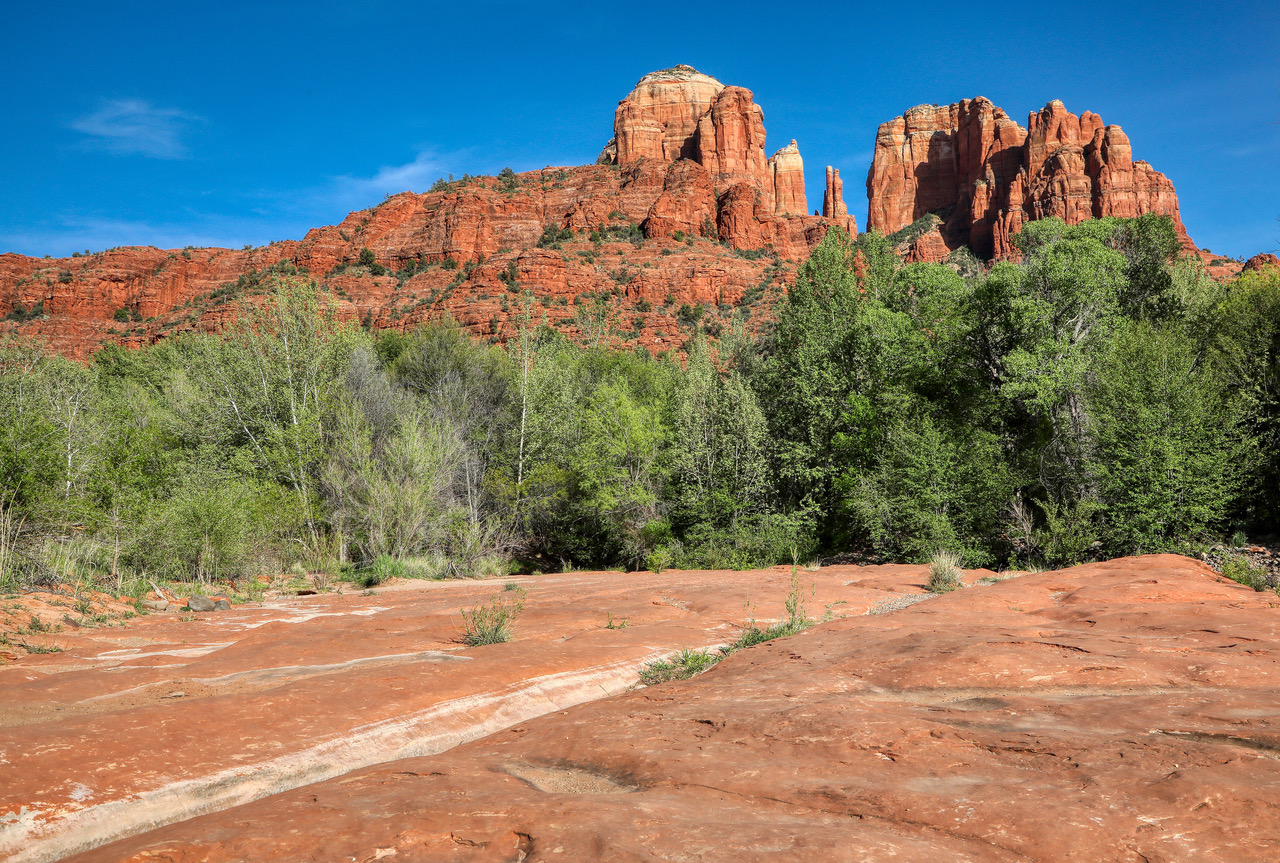
 Cathedral Rock: Cathedral Rock viewed from the hiking trail at Crescent Moon Park in Sedona, Ariz. The trail opens up to a large flat red rock landing, which sits next to Oak Creek giving hikers this view of the rocks. This formation is one of the most popular of the many red rock formations in Sedona. Photo by Gary Warren/ladailypost.com
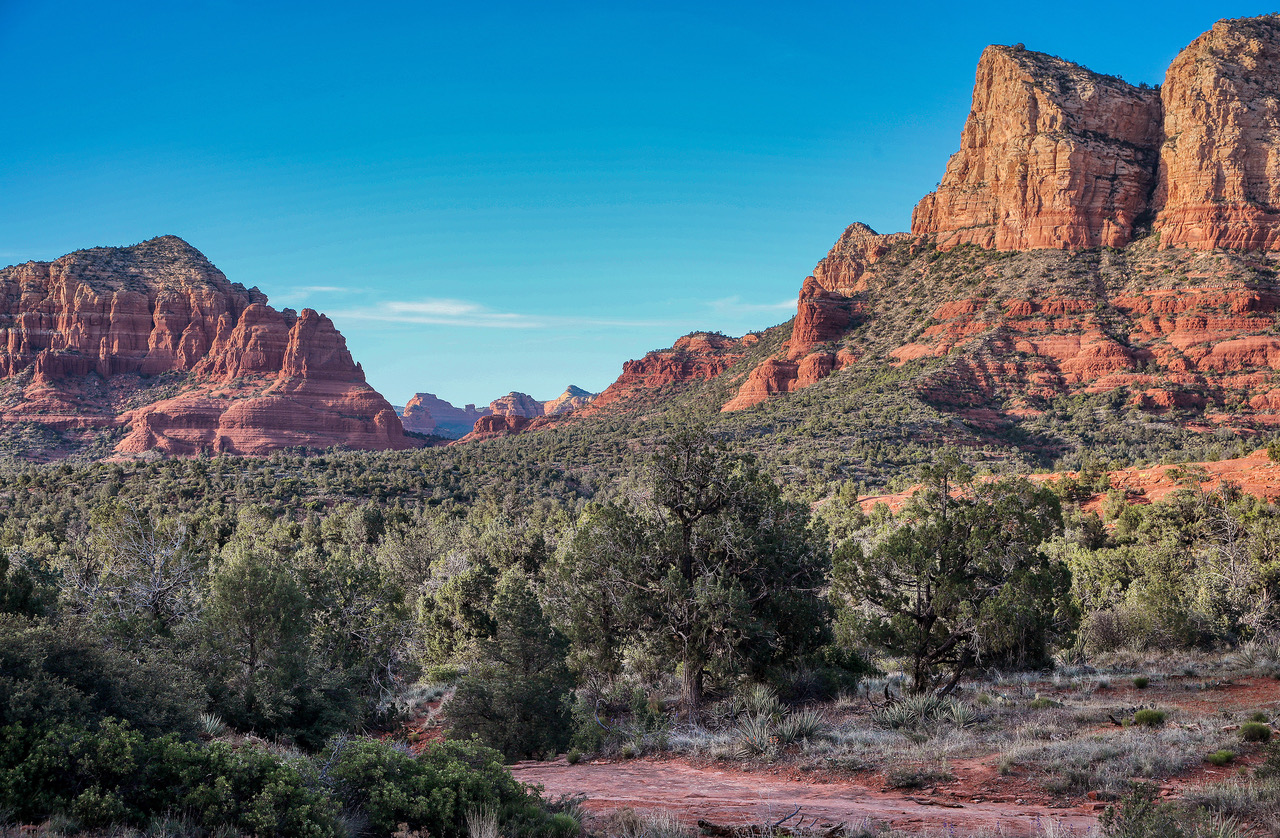 Red Rock Country: A wider view of the valley in Sedona illustrates several of the formations which are seen in every direction around town. This unique town sits in one of the most beautiful areas with panoramic vistas from most any point in town. Photo by Gary Warren/ladailypost.com
By GARY WARREN
Photographer
Formerly of Los Alamos
Magnificent red rock country, red sandstone formations, green valleys and river beds and clear blue skies … you may already know the location featured in today’s Post From the Road. Sedona, Ariz.
Sedona is noted for many features and qualities but the centerpiece of a visit to Sedona is the beautiful red sandstone formations which the town is built around.
Human life in this area can be traced back to 700 A.D. when Native Americans settled in what is now Sedona, Arizona. Various groups of Native Americans lived in the area on and off for hundreds of years. The dry, arid climate and other forces of nature are reasons that the people moved in and out of the area over time.
In the early 1900s, a Pennsylvania Dutch couple, Theodore and Sedona Schnebly, bought property in the area with intentions to form a village. Theodore Schnebly’s brother, Ellsworth, suggested that they use Theodore’s wife name to identify the area. A year later Sedona was the official name of the area.
Today Sedona is a thriving town of about 10,000 residents but the area attracts millions of visitors every year. The magnificent scenery and the abundance of outdoor activities make Sedona a destination for all ages. There are many other features and attractions in Sedona and the area but
I am focusing on the scenery for this post.
The geological gem that is Sedona is a work of nature over millions of years. The red coloring of the sandstone is created with a layer of iron oxide. Wind and water continue to sculpt the red rock formations but the change occurs over many years making and not noticeable in the short term.
We have traveled often in almost all regions of Arizona and we never tire of visiting Sedona. Driving into Red Rock Country is always a joy in any time of the year but spring is special. If you have never experienced Sedona and all of Red Rock Country, I would hope that you would plan a visit soon. You will not be disappointed!
Editor’s note: Longtime Los Alamos photographer Gary Warren and his wife Marilyn are traveling around the country, and he shares his photographs, which appear in the “Posts from the Road” series published in the Sunday edition of the Los Alamos Daily Post.
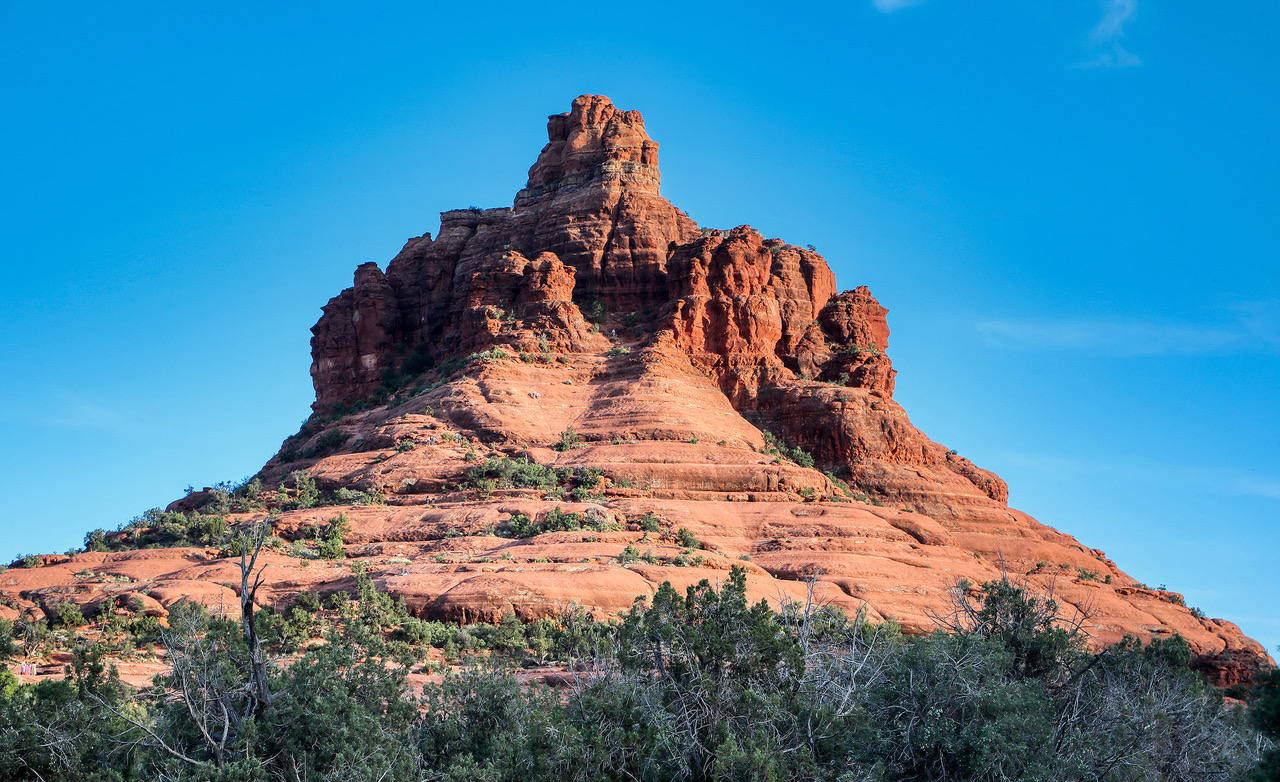 Bell Rock: Bell Rock sits near Highway 179 which is a popular routes into town from Interstate 17 in northern Arizona. Bell Rock and Cathedral Rock are the two most popular sites in Sedona. Hiking trails lead hikers up and around the formation which gives hikers a unique view of the entire area. A section of Highway 179 is designated an All American Road and is considered a ‘museum without walls’ because the many views and geological features of the rock formations visible from the highway. Photo by Gary Warren/ladailypost.com
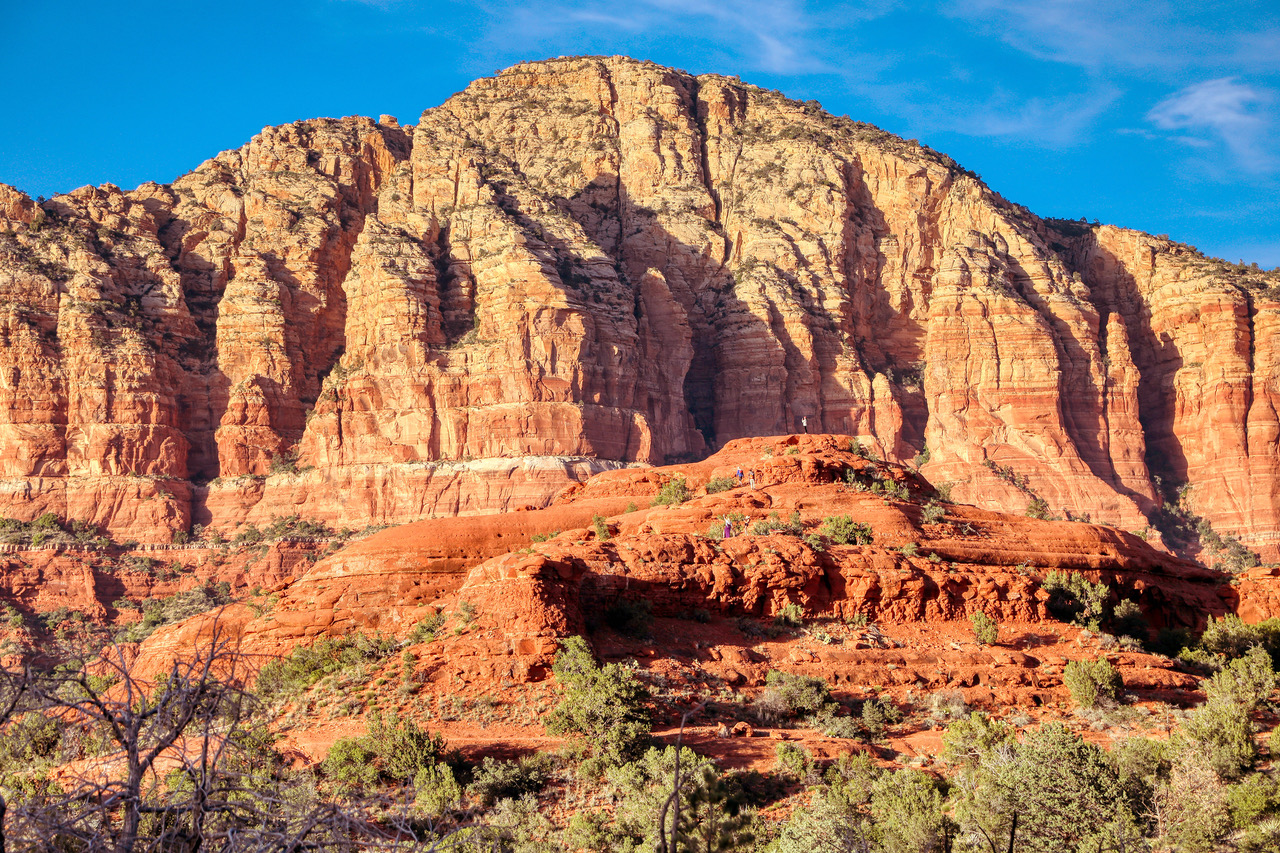 Hikers: Sedona has many miles of hiking trails which visitors can enjoy and see the red rocks up close and enjoy the panoramic views from the higher elevations of some of the formations. A closer view of this image reveals several hikers as they navigate across the red rocks. Photo by Gary Warren/ladailypost.com
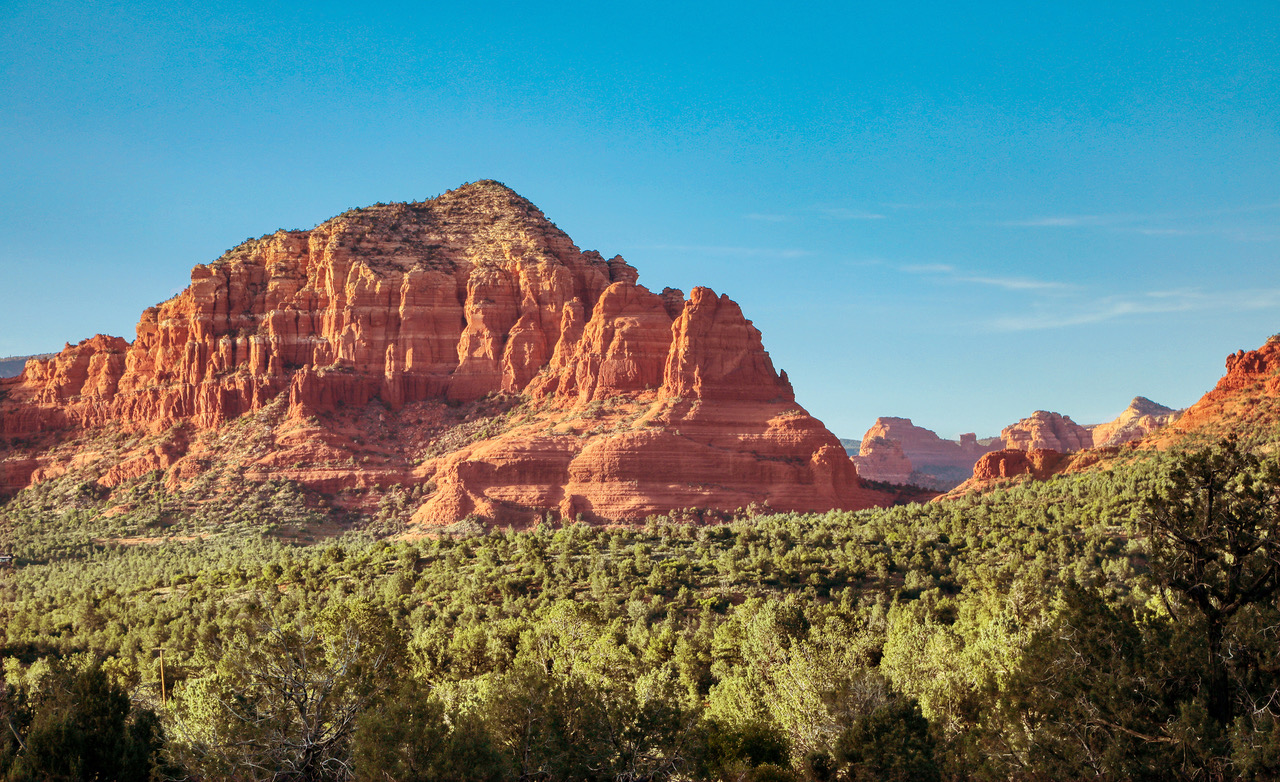 Red Rocks, Green Valley: A view across the valley illustrates the colorful red rock country in Sedona. The views of the area are always changing as the sun light and angles of light move across the area every day. This view was taken at a time of day when the red rocks were reflecting a lighter color tone of red and green. The entire Sedona valley reveals the massive red rock formations with a blanket of green trees below. Photo by Gary Warren/ladailypost.com
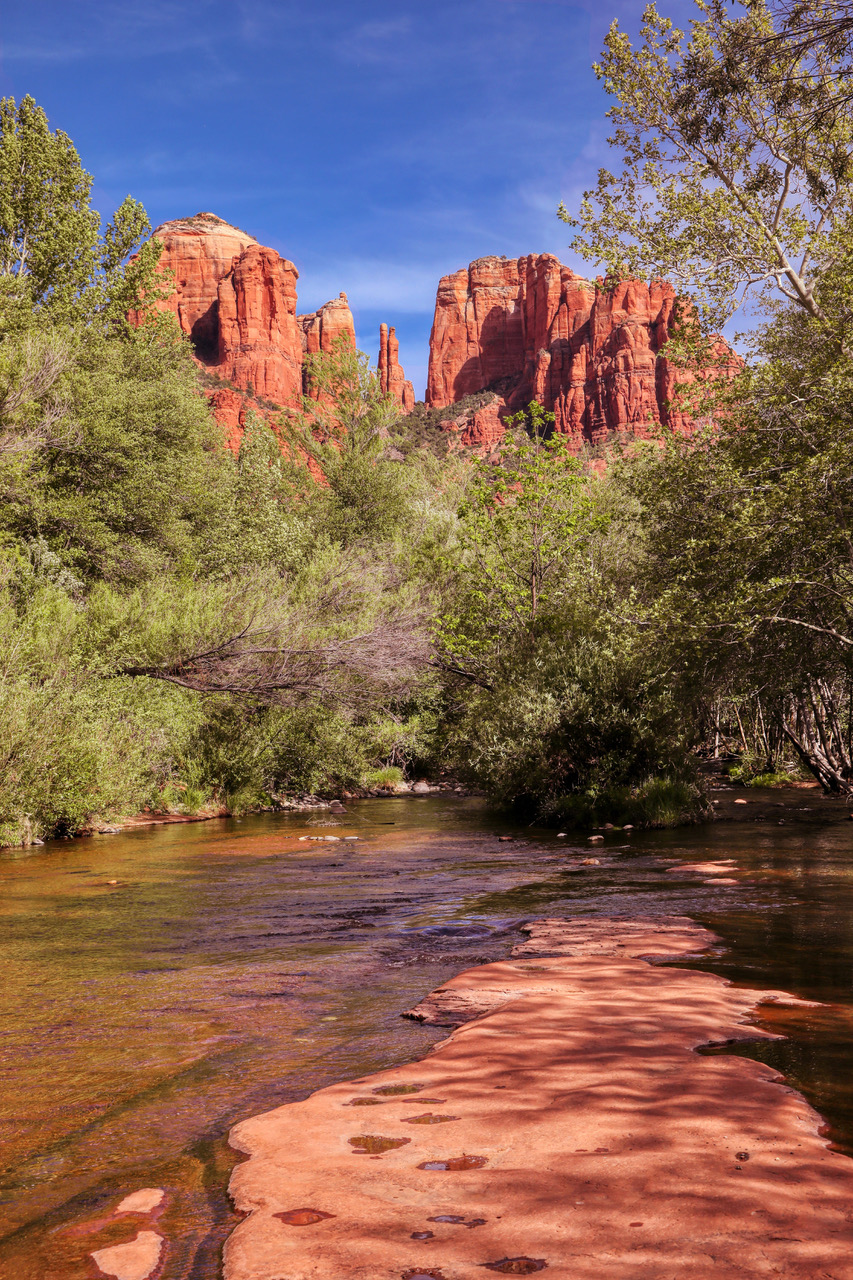 Oak Creek: Oak Creek flows through the canyon north of town through the Sedona area. Shown is Cathedral Rock and Oak Creek as it flows through the area. These formations have been created over millions of years of wind and water and erosion. Photo by Gary Warren/ladailypost.com