 Ken Groves
Staff Report
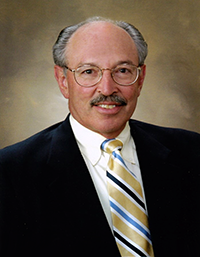
Kenneth L. “Ken” Groves, Fellow of the Health Physics Society (HPS), retired U.S. Navy Commander and former Los Alamos National Laboratory (LANL) senior manager is the 2024 recipient of the HPS Distinguished Public Service Award.
Groves joins two other New Mexicans, Senator Pete Domenici, and Pete Lyons, distinguished scientist at Los Alamos, as well as a former commissioner at the Nuclear Regulatory Commission and DOE Nuclear Energy’s assistant secretary as one of the 11 recipients of this award.
This award is intended to acknowledge outstanding (1) contributions to the profession of health physics while in public service or (2) service to the general public that significantly contributes to the relationship between the public and the health physics profession.
The recipient of the award is recognized for accomplishments of fundamental importance to the practice, acceptance, and advancement of health physics or for public education in radiation science that is above and beyond the normal, accepted performance for the position held. The recognized service may be that resulting from a long career or from a short-term effort that is part of a fruitful career.
Groves is a trained Health Physicist with extensive experience in all ES&H disciplines as well as experience as both an Emergency Manager and Response Team Leader for Radiological/Nuclear Emergency Accidents and Incidents both as a civilian and as a U.S. Navy Radiation Health Officer.
He received his BA in Chemistry from the University of New Mexico in 1969 and his Master of Science in Biophysics/Health Physics from Texas A&M University in 1970. He is a Distinguished graduate of the Navy’s Nuclear, Biological and Chemical Warfare Defense School in 1971. Groves was awarded as a Fellow in the HPS (less than ½ of 1 percent of the society is so designated) and awarded his 50 years membership in HPS in 2020.
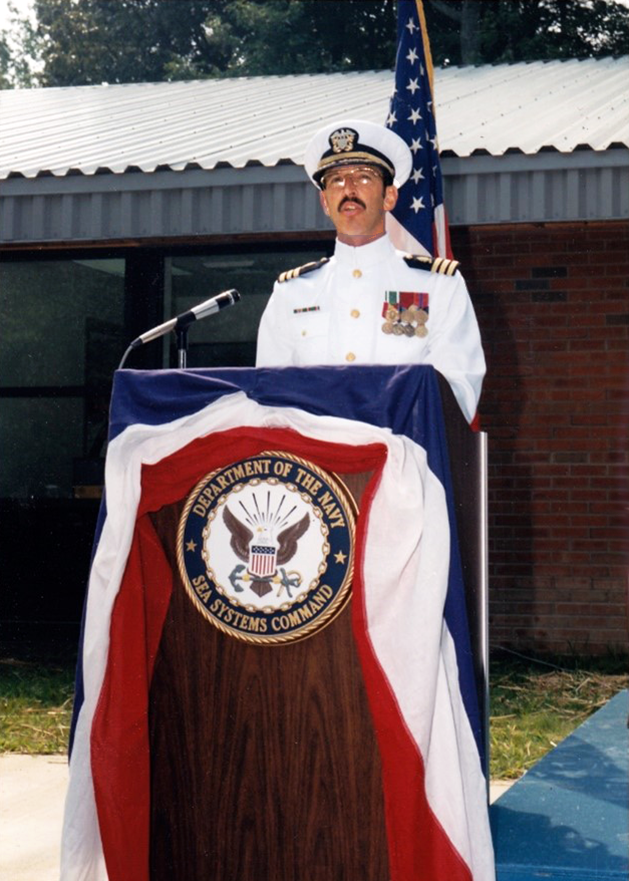 Ken Groves is a Distinguished graduate of the Navy’s Nuclear, Biological and Chemical Warfare Defense School in 1971. Courtesy photo
Commander Groves, Medical Service Corps (Radiation Health Specialist), United States Navy retired as a 26 ½ year veteran having served in ever increasing responsible positions both as an enlisted man and a Naval Officer. As an enlisted man he served at Naval Hospitals in San Diego, Calif. and Corpus Christi, Texas; aboard the USS Isle Royale (AD29), a destroyer tender, as Leading Petty Officer in the Medical Department, with duty in Long Beach, Calif.; Pearl Harbor, HI; Subic Bay, Philippines; Kaohsiung, Tiawan and Yokosuka, Japan where the USS Isle Royale (AD29) was in direct support of the Viet Nam War.
After release from active duty in 1966 to attend UNM, Groves reaffiliated with the Naval Reserve where he was later commissioned as an Ensign in the Supply and Administrative Branch of the Medical Service Corps in 1968. He stayed in the Navy Reserve while in graduate school at Texas A&M and was recalled to active duty as a Radiation Health Officer (RHO) in 1971 after graduation.
His first assignments included studies at the National Naval Medical Center in Bethesda, MD and the Naval Damage Control School at the Philadelphia Naval Shipyard. His subsequent assignments included duty aboard the USS Canopus (AS34), a submarine tender, in Holy Loch, Scotland as Radiation Health Officer; Radiological Physicist and Radiation Safety Officer (RSO) at the Naval Regional Medical Center, Great Lakes, IL; with additional duty as the RSO for the Naval Dental Research Institute.
Groves later served as the Director, Radiation Health, Pearl Harbor Naval Shipyard, with additional duty as radiation safety and health advisor to the Pacific Naval Command. He then served as the Director of Training at the Naval Nuclear Power Unit (where all Navy and Marine Corps Radiation Safety Officers were trained) and the first Medical Service Corps Director, Radiological Affairs Support Office (RASO) at the Naval Energy and Environmental Support Activity, both at Naval Facilities Engineering Command, Port Hueneme, Calif.
He transferred to the Naval Sea Systems Command (NAVSEA), Arlington, VA in 1980 as the first Director, Naval Nuclear Weapons Radiological Controls Program Office and later as first Director, Naval Radiological Controls Program Office with expanded responsibility for all Navy and Marine Corps radiological material/assets and radiation producing machines/devices other than Nuclear Power and Medical sources. Groves was responsible for transferring RASO from the Naval Facilities Engineering Command to the Naval Sea Systems Command and physically moving RASO from Port Hueneme to the Naval Weapons Station, Yorktown, VA in 1982. He played an instrumental role in the Department of the Navy being delegated by the NRC, through the issuance of a Master Materials License (MML), regulatory authority for the receipt, possession, distribution, use, transportation, transfer and disposal of radioactive material from all Navy and Marine Corps activities.
While at NAVSEA, Groves represented the Navy on several Joint Federal Agency Committees and report writing organizations. He chaired the Joint Services Nuclear Weapons Radiation Safety Committee and represented the Chief of Naval Operations at a number of full field exercises involving nuclear weapons accidents world-wide. He ended his navy career in 1986 as the senior operational Radiation Health Officer in the U.S. Navy.
Groves joined LANL in October 1986, after his retirement from the U.S. Navy, as Program Manager for the DOE Radiological Assistance Program. He later served as the Deputy Group Leader for Health Physics in the ES&H organization. Groves also served as the Director, Emergency Management and Response and was a Senior Health and Safety Advisor to the DOE’s Accident Response Group and Nuclear Emergency Search Team.
In 1994 Groves was appointed as the Director of LANL’s Human Studies Project Team. Former LANL Director Sig Hecker recognized Groves in the LANL publication, “Radiation and the Human Radiation Experiments” as follows: “In the fall of 1994, Ken Groves, a broadly experienced health physicist, took over as the team began to interact with President Clinton’s Advisory Committee on Human Radiation Experiments. Ken successfully guided us during this period when a mistake would have had major political fallout.”
Groves completed his time at LANL as a senior advisor to the ES&H Director where among other duties he coordinated ES&H-related research activities.
In January 1995, Groves was assigned for a one-year change of station to the University of California, Office of the President (UCOP) as Deputy Director, Environment, Safety and Health, and Emergency Management. This position in the Laboratory Administration Office coordinated and managed the DOE contracts with LANL, Lawrence Livermore National Laboratory, and Lawrence Berkeley National Laboratory. His one year change of station turned into a permanent position in 1996 where he served until his retirement from UCOP in 2002.
Groves formed S2-Sevorg Services, LLC, a Veteran-Owned Small Business specializing in Environmental, Safety and Health (ES&H), and Emergency Management and Response (EM&R) program design, support, and reviews. During his time as President he served in several ES&H and Emergency Response activities including:
Led efforts in the DOE’s Radiological Assistance Program (RAP) as the Training and Outreach Coordinator for DOE RAP Region 4 (KS, TX, NM, OK and AZ) where he trained numerous First Responders on responses to Radiological Dispersal Devices (Dirty Bombs) and Improvised Nuclear Devices.
Was the Subject Matter Expert for the DOE (NNSA) Emergency Operations Training Academy and one of the lead instructors for the DOE’s Radiological Assistance Program one-week RAPTER training course required for all RAP responders nationwide.
Served as a Technical Staff Consultant to the National Council on Radiation Protection and Measurement’s Scientific Committee 2-2 which published in Feb. 2011 a report entitled: “Responding to a Radiological and Nuclear Terrorist Incident: A Guide for Decision Makers”. This report funded by the Department of Homeland Security is the most widely distributed NCRP report to date.
Chaired the Communication and Outreach Subcommittee of the congressionally mandated Joint Department of Defense and Office of Veteran’s Affairs, “Veterans’ Advisory Board on Dose Reconstruction” (www.vbdr.org) (2005-2014). VBDR advised the DoD and VA on Atomic Veterans and their potential health issues from exposure to atomic radiation from above ground nuclear testing.
Chaired the Nuclear Weapons Subcommittee of the Health Physics Society’s (HPS) Homeland Security and Emergency Response Section and served as an Executive Board Member of the HPS Military Health Physics Section. He chaired the Awards Committee for both of these sections.
Groves retired from his position as President of S2-Sevorg Services, LLC in 2021.
He served in several Health Physics Society positions including being a member of the Strategic Planning Committee, the History Committee, the Program Committee and chaired the HPS Nominating Committee. Ken is a charter member of both the Military Health Physics Section and the Homeland Security and Emergency Response Sections. Groves is an active member of the Rio Grande Chapter of the HPS. He received the Atomic Veterans Commemorative Service Medal in 2023 for his service as a participant in the clean-up of the Enewetak Atoll. Ken’s military decorations include the Meritorious Service Medal, the Navy and Marine Corps Commendation Medal, the Naval Reserve Meritorious Service Medal, National Defense Service Medal, and others for his 26 plus-year career in the U.S. Navy. He is a recipient of the John C. Taschner Leadership Award from the Military Health Physics Section. Groves also is honored to be the 2024 Health Physics Society’s Distinguished Public Service Awardee.
Groves is married to the former Constance “Coni” Garcia; they have a blended family of six children, 11 grandchildren (four of which are married) and two great-grandsons.