 Courtesy photo
COUNTY News:
What are deer doing in the fall?
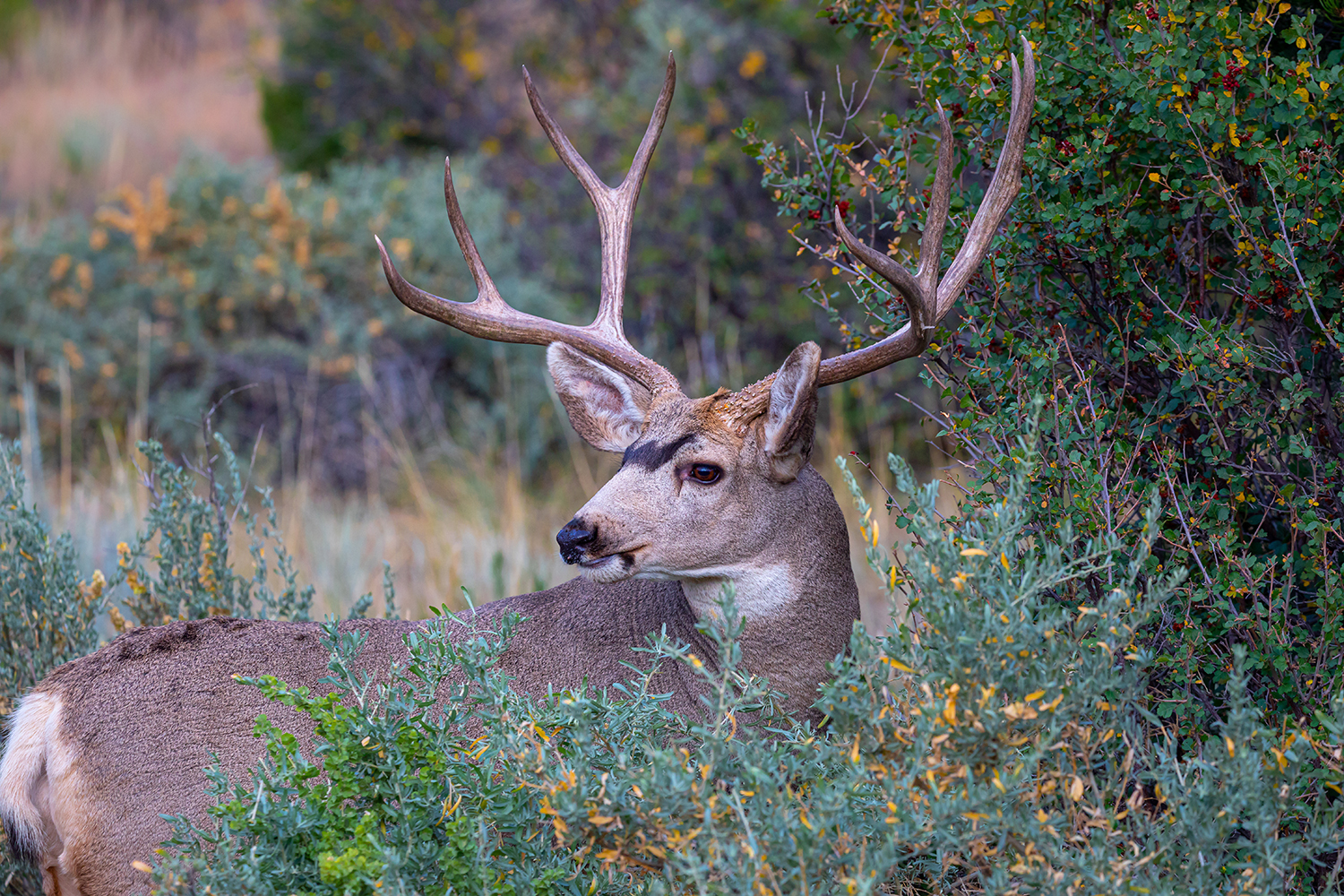
Many big bucks are relocating back to their core areas in early September, but not all of them do this. Mule deer bucks gather in fall and, irrespective of rank, frequently engage in friendly antler wrestling.
To foster body and antler growth, males seek out habitats rich in food even though these same habitats also attract predators. Females select secure habitats to save themselves and their vulnerable young.
Mule deer are concentrate feeders; that is, they carefully select highly nutritious bits of forage. They may also consume partially rotted plants, as well as dry leaves, buds, fruit, flowers, sprouting grasses and herbs, the tips of some coniferous boughs, small twigs, and lichens that fall from trees.
What challenges do Mule Deer face in urban areas…
Road collisions: Increase risk of deer-vehicle collisions.
- TIP – Drive slowly and remain alert in areas where deer are prevalent.
Predators: Can attract predators, which can be dangerous for residents and pets.
- TIP – Feed pets inside and store pet food inside.
Disease transmission: The high density of deer in urban areas can increase the risk of disease transmission.
- TIP – Don’t intentionally feed the deer. That draws in a larger population.
What can you do in the fall to help prevent wildlife challenges and encounters?
Assess your homes and yards for potential tangle hazards to deer. Bucks will rub their antlers on various objects to remove their velvet, mark territory, and signal their presence to other bucks. This can further increase the possibility of tangle hazards.
Do not try to free wildlife from entanglements yourself. Always call New Mexico Game and Fish.
Keep your distance. Deer can become aggressive toward humans. Bucks can become agitated if any other animal, object, or person appears to be posing a challenge.
Leash your dogs when out for a walk. Dogs are often targets and a buck’s antlers can badly injure them.
To learn more about the wildlife of the Pajarito Plateau, visit the County wildlife page at www.lacnm.com/wildlife.
To learn more about living with wildlife, visit the NM Game & Fish website at www.lacnm.com/NMGF. For information on how to contact NM Game and Fish, visit this Contact Us page.