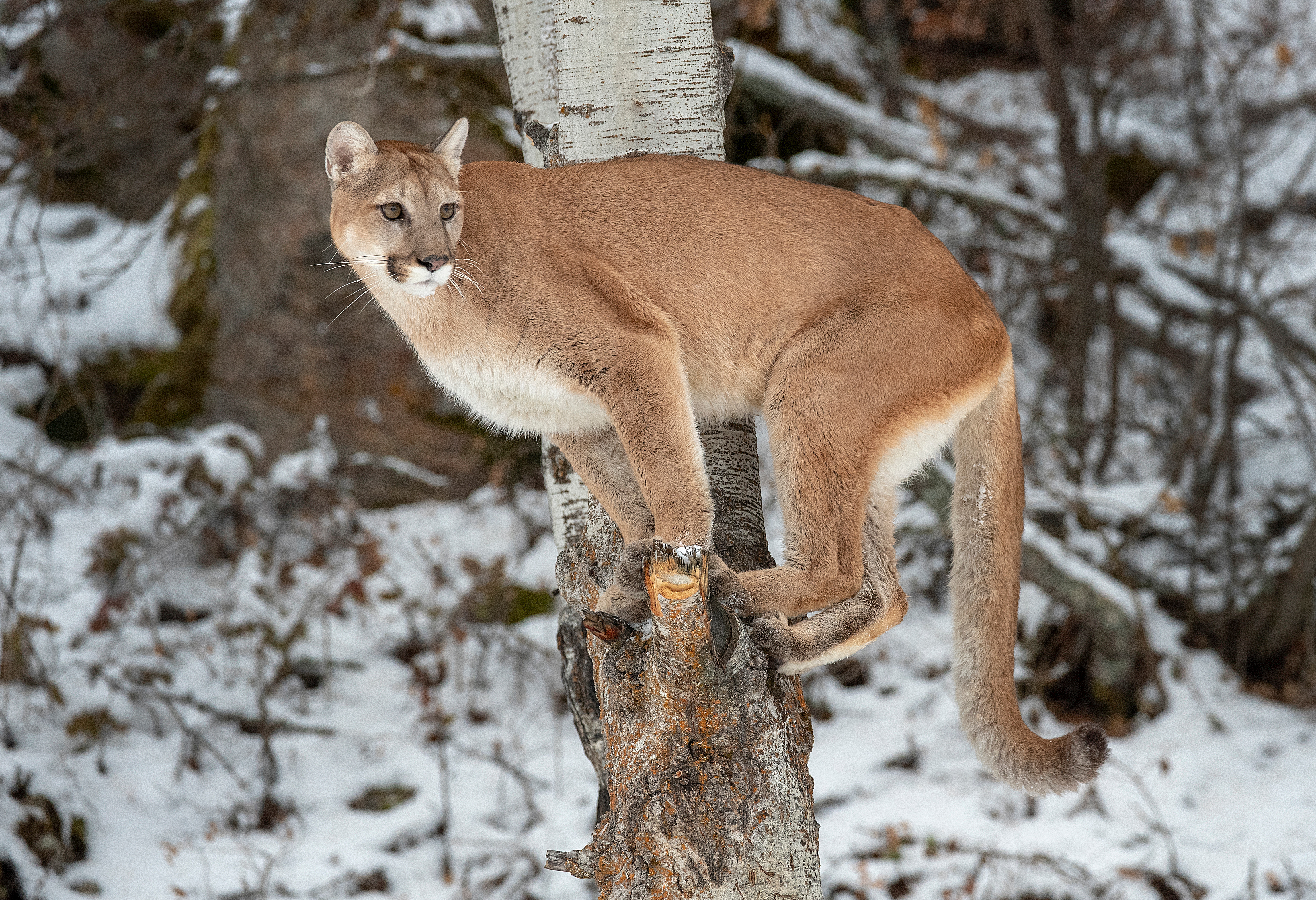
 Mountain Lion perches on an Aspen Tree. Courtesy/LAC
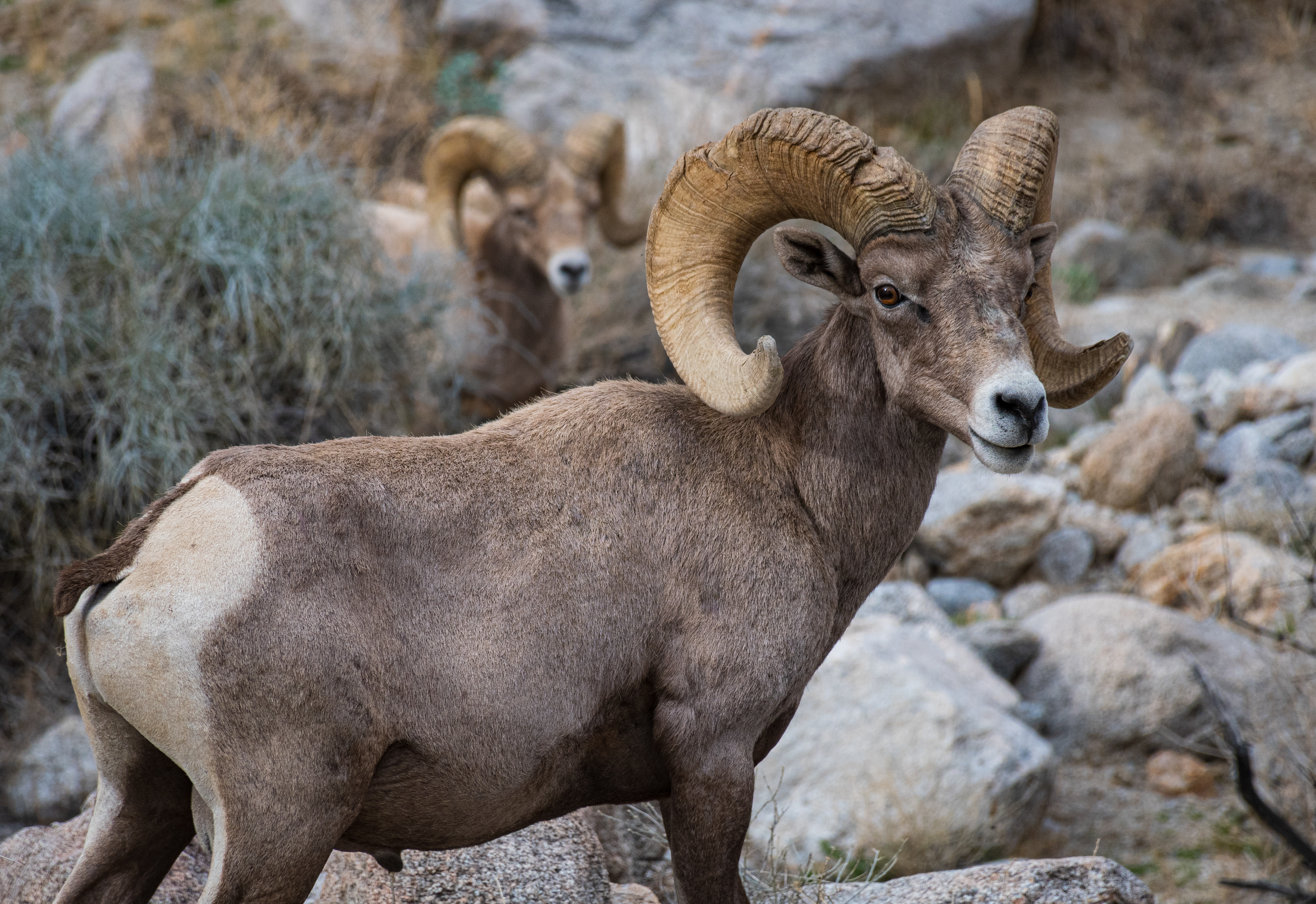 Rocky Mountain Bighorn sheep. Courtesy/LAC
COUNTY News:
Los Alamos County is home to several large predators, including the Mountain lion. Mountain lions are most active at dusk and dawn. They are typically more energetic in the cooler months, which is driven by their instinct to hunt and eat.
Important tips for living in mountain lion country during the winter months:
- Make your yard less attractive: Remove potential food sources and structure your landscape to make it harder for predators to hide.
- Supervise children: Don’t leave children alone. Keep children inside before dawn and make sure they are home before dusk.
- Secure pets: Don’t leave pets outside unattended, especially at night. If you must let them out, keep them on a leash or in a fully enclosed or supervised area, and don’t leave them out for long periods of time.
- Install outdoor lighting: Install outdoor lighting, preferably with motion sensors to illuminate pathways and areas you walk.
- Stay on trails: When out on the trails, stay on the path to protect the habitat and for your safety, in case large predators are in the area.
- Avoid carcasses: Report dead animals to the New Mexico Game & Fish – 505.487.0961.
- Be aware of your surroundings: If you encounter a mountain lion, stay calm, make noise, and back away slowly. Avoid running, which could trigger the animal’s attack instinct.
- Make yourself appear large: Spread out your jacket behind your head and body, or extend your arms.
- Fight back if attacked: Use any handy weapons including backpacks, sticks, rocks and even your bare hands.
Rocky Mountain Bighorn Sheep
Rocky Mountain bighorn sheep are an important species of wildlife for New Mexico both as a big game trophy and as watchable wildlife. Through active management and conservation measures, wildlife biologists have successfully brought back this sensitive species, now no longer endangered.
Rocky Mountain Bighorn Sheep can be found in White Rock Canyon in Los Alamos County. The herd is thriving in the canyon, and some call it the Jemez or Cochiti herd. In 2020, the population of Rocky Mountain bighorns in Cochiti Canyon was around 150, according to New Mexico Game & Fish. The sheep were reintroduced to the canyon in 2014 after the Las Conchas Fire. The herd was established with 45 sheep from the Wheeler Peak area in the Carson National Forest.
There are two breeds of bighorn sheep in New Mexico. Rocky Mountain bighorns are mostly found in the northern half of the state, including Los Alamos County. Desert Bighorns are found in the southern part of the state.
For more information about the wildlife of the Pajarito Plateau, visit the Living with Wildlife webpage on the County website: www.lacnm.com/wildlife.