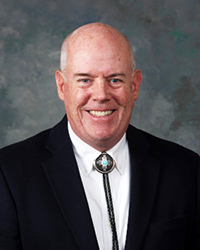
 State Rep. Matthew McQueen, D-Galisteo
By MARGARET O’HARA
The Santa Fe New Mexican
State Rep. Matthew McQueen, D-Galisteo, can finally rest easy.
Probably.
After hours of debate Wednesday, the House of Representatives voted 42-26 to pass Senate Bill 5, a bipartisan proposal to reform the State Game Commission, which oversees hunting and fishing regulations and the New Mexico Department of Game and Fish.
The proposal secured approval from the Senate on March 1. The bill now heads back to the Senate to concur with amendments made in the House Energy, Environment, and Natural Resources Committee before heading to Gov. Michelle Lujan Grisham’s desk for her signature.
The biggest alterations the bill will bring to hunters, anglers and other outdoors-people: A name change and a fee change.
The bill renames the Department of Game and Fish to the Department of Wildlife, a change that would provide “mission clarification” to the agency, McQueen said.
Jodi McGinnis Porter, a spokesperson for the governor, said in an email Lujan Grisham is still evaluating the measure.
“The Governor will evaluate the bill in its final form should it reach her desk,” McGinnis Porter wrote.
These reforms have been on McQueen’s mind for about eight of his past 11 years in the Legislature, and it was among his priorities during this year’s legislative session in particular.
“This is an even-handed bill that protects hunting and fishing, protects ranching and farming, and protects wildlife, too,” McQueen said Wednesday from the House floor.
And it would impose a “modest adjustment” of about $15 for hunting and fishing license fees, said Rep. Nathan Small, D-Las Cruces, a co-sponsor of the measure. That money will go to support the Department of Wildlife.
“For over 20 years, we haven’t raised the license fees that myself, my family and so many others in this body pay when we apply and are successful in applying for or purchasing over-the-counter license fees,” Small said.
He added, “Our department needs more resources.”
The fee change went over without many objections.
“Believe it or not, I agree with that,” avid hunter and fisherman Rep. Harlan Vincent, R-Glencoe, said of the fee changes.
Though he was among the main critics of the bill on the House floor, Vincent argued outdoorspeople should have to pay fair fees to access to New Mexico’s “world class” hunting and fishing.
Republicans opposed to the bill framed it as a step toward undermining farmer and ranchers’ way of life through additional wildlife regulation.
“My biggest fear — and I think every rancher in the state of New Mexico’s biggest fear — is that they will be regulated because of the expanding authority of the Game and Fish,” said Gail Armstrong, R-Magdalena.
McQueen noted the bill doesn’t regulate farming and ranching nor does it designate any species as endangered or authorize the department to do so — that’s the purview of the federal government.
“The bill doesn’t seek to end hunting and fishing in any way, nor does it create a path to ending hunting and fishing,” he said.
However, SB 5 would also make some structural changes to the State Game Commission, which McQueen argued would bring “stability and professionalism” to the commission. In addition to hiring the Department of Game and Fish director, that commission sets the department’s overall orientation and oversees its annual budget of more than $35 million.
The bill would maintain the commission’s seven-member structure, but set new required credentials for those members. Three of them would sit in at-large seats, including one tribal member.
The remaining four would serve as representative of ranchers and farmers, hunters and anglers, conservationists, and scientists, though all members of the commission must possess knowledge of hunting, fishing and wildlife.
The bill also changes how those commissioners get selected, shifting appointment power away from the governor. Instead, the bill proposes a nominating committee, composed of four people selected by legislative leadership from both parties plus three more, including a tribal member, chosen by the governor.
“We’re taking politics out of the commission,” McQueen said. “Because we will have this vetting process — which is similar to what we do with judges, similar to what we do with regents, similar to what we do with the [Public Regulation Commission] — we think we’re going to get a list of highly qualified people for the governor to pick from.”