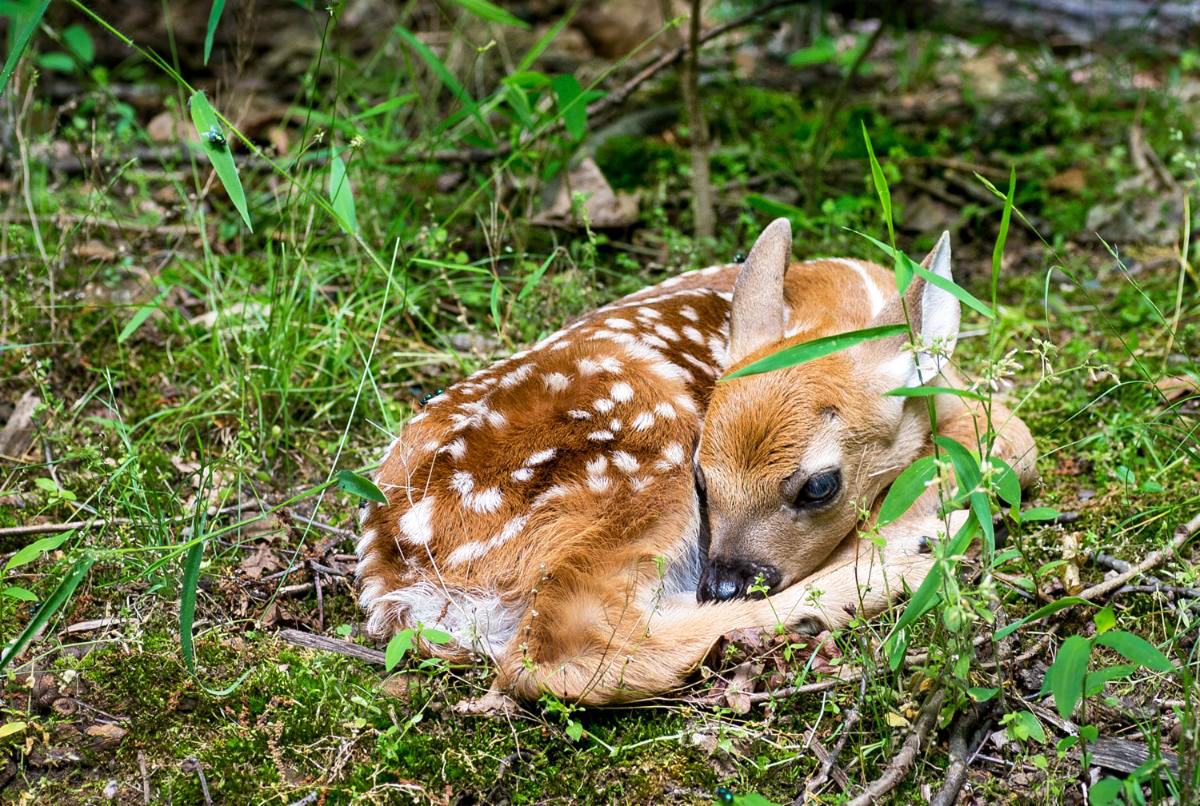
 Never approach or pick up a newborn fawn—doing so dramatically decreases the probability it will survive. In almost every instance, fawns have not been abandoned but are waiting for mom to return. Courtesy/LAC
COUNTY News:
Los Alamos County and New Mexico Game & Fish receive many phone calls from the public concerning abandoned newborn fawns. In almost every instance, the fawns have not been abandoned and are waiting for the doe to return to nurse. People who find newborn fawns should never approach or pick them up—doing so dramatically decreases the probability that fawns will survive.
“Hiding” Behavior
Shortly after birth, mule deer fawns exhibit hiding behavior to avoid detection and maximize survival. Newborn fawns are licked clean by the doe to minimize scent and have a spotted coat to help camouflage them. Newborn fawns spend more than 95 percent of their time hiding. Fawns are typically alone or within a few meters of their twin during most of the day for the first week of life. They only stand a few times each day when the doe comes to nurse them. Once nursed, the mother nudges the fawn back to the ground and leaves the immediate area— usually remaining just a few hundred meters away. This pattern will continue for up to 3 weeks. By this time the fawns are mature enough to keep up with their mother and able to race out of real or perceived danger.
I’ve found a deer fawn (baby deer). What should I do?
Under most circumstances, the best thing a person can do is to immediately leave the area to avoid creating any additional disturbance near the fawn. Approaching or handling newborn fawns increases their stress level and threatens their survival.
The fawn was alone, with no mother protecting it. It is so small and helpless and it doesn’t even move when I approach it. Does it need help?
No, the fawn does not need your help. The fawn is well camouflaged and has very little odor, which helps it hide from predators. Fawns instinctively lie motionless when approached by a potential predator. A fawn’s heart rate will also drop dramatically as another way of protecting itself.
It looks hungry; should I feed it?
People should never feed a fawn anything. Just like adult deer, fawns have very specific nutritional requirements, and improper nutrition will make the fawn sick and may lead to its death.
My children touched/moved the fawn, I’m afraid the mom won’t take it back. What should I do?
The doe-fawn bond is very strong. A mother deer will not avoid her fawn if there are human or pet odors on it. Fawns are rarely abandoned, except in extreme cases where the fawn has defects that will prevent its survival. If moved, the fawn should be placed in or next to natural vegetation near the location where it was found to provide cover and protection. The doe will avoid the area until the disturbance has passed, after which she will search for the missing fawn. If more than 24 hours have passed, the fawn may need attention from a wildlife rehabilitator. In this case, call New Mexico Game & Fish at 888.248.6866 (toll-free) or 505.476.8000. In an emergency, call 9-1-1.
Get more tips and learn more about the animals of the Pajarito Plateau on the County’s Living with Wildlife webpage here. To learn more about living with wildlife, visit the New Mexico Game & Fish website at www.lacnm.com/NMGF. For information on how to contact New Mexico Game and Fish, visit their Contact Us page.