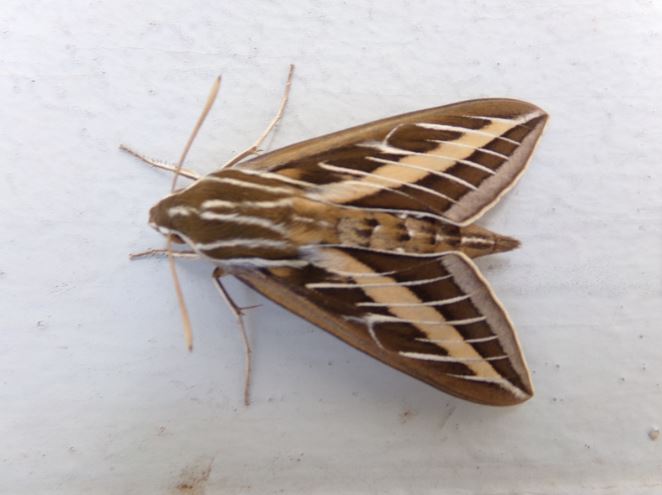
 Picture 1 provides an overall view of a white winged sphinx moth. Photo by Robert Dryja
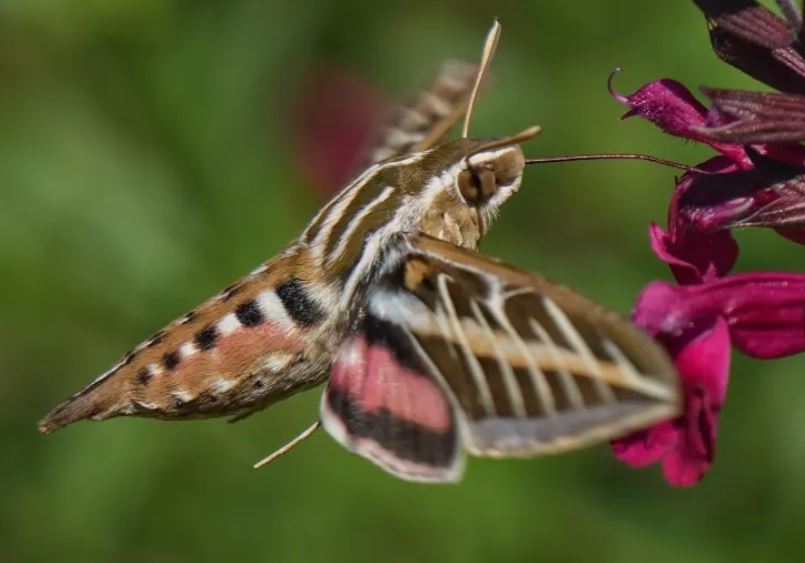 Picture 2 The wings are spread about five inches wide. The tongue is extended so it can be pushed deep into the tubular flower to reach its nectar. Courtesy photo
 By ROBERT DRYJA
Los Alamos
A variety of insect life appears with the arrival summer. Insects can have unusual and interesting facets to their lives. The white winged sphinx moth is one example. It is a relatively large moth, ranging from 2 ½ to 3 ½ in length. Its wings have a geometric color pattern. A broad line extends the length of a wing. This broad line is crossed with six narrow lines in parallel, (see Picture 1)
The wings of a sphinx moth have evolved for rapid flight. They can reach speeds just over 30 miles per hour. They therefore are called a hawk moth. Some hover while feeding from a flower and look like a hummingbird when seen at a distance. They then are called a hummingbird moth. The sphinx moth has the world’s longest tongue among moths and butterflies. It is able to draw nectar from narrow, tubular flowers that are too deep for bees to reach. When not in use, the tongue rolls up, (see Picture 2).
Moths are different from butterflies because they may be active in the late evening as well as at night. They search for plants that produce flowers that are open at night so nectar can be obtained. These plants also may produce a distinctive aroma to attract moths at night. The plant therefore may be pollinated at night as well as the day while the moth has nectar available for food. A specialized relationship has evolved to benefit both the moth and flower.
The caterpillars hatch from eggs deposited in the early summer. The females may lay hundreds of eggs. The caterpillars grow for six to eight weeks throughout the summer.
They then burrow underground and remain in a shell-like case for the winter. The case is brownish and up to two inches in length. They become mature moths capable of flying and mating when spring arrives. Being underground provides protection for cold air and possibly being eaten. Some species of the sphinx moth have a coil-like extension at one end of the case. This is where the tongue develops, (See Picture 3).
The caterpillars grow large, up to five inches long. They are colorful with a horn at their rear. This leads to them being called a horn worm. They have stubby legs for walking on plants. A caterpillar may lift up its head and front part of its body. It then resembles the shape of a sphinx. The repeating geometric pattern of dots along its body also helps to suggest a sphinx. This leads to the grown moth being called a sphinx moth, (See Picture 4).
Sphinx caterpillars once were a food source for Native Americans living in Southern California and the Sonora desert area of Arizona/Mexico. They collected mature caterpillars. They then pulled off the head and pulled out the internal organs. The remaining muscle-like part then was roasted on a stem to be eaten. This insect eating was not unique to these particular Native Americans. Other Native Americans also ate insects. Insects today are a specialty form of food.
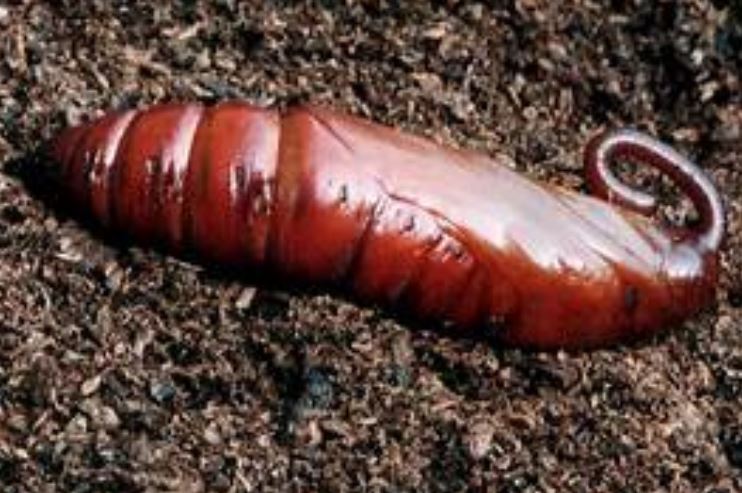 Picture 3: The case is where the caterpillar grows into a mature moth over the winter months while underground. A coiled extension for the developing tongue is at one end for some species. Courtesy photo
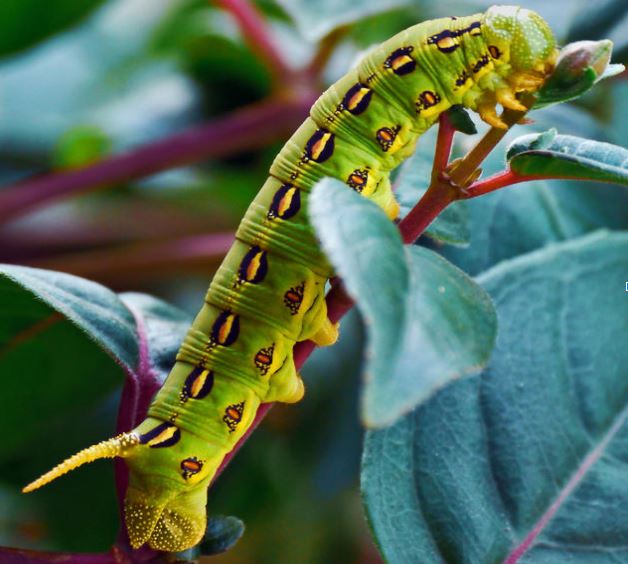 Picture 4: A sphinx moth caterpillar with a horn at its rear. It also is called a horn worm. Courtesy photo