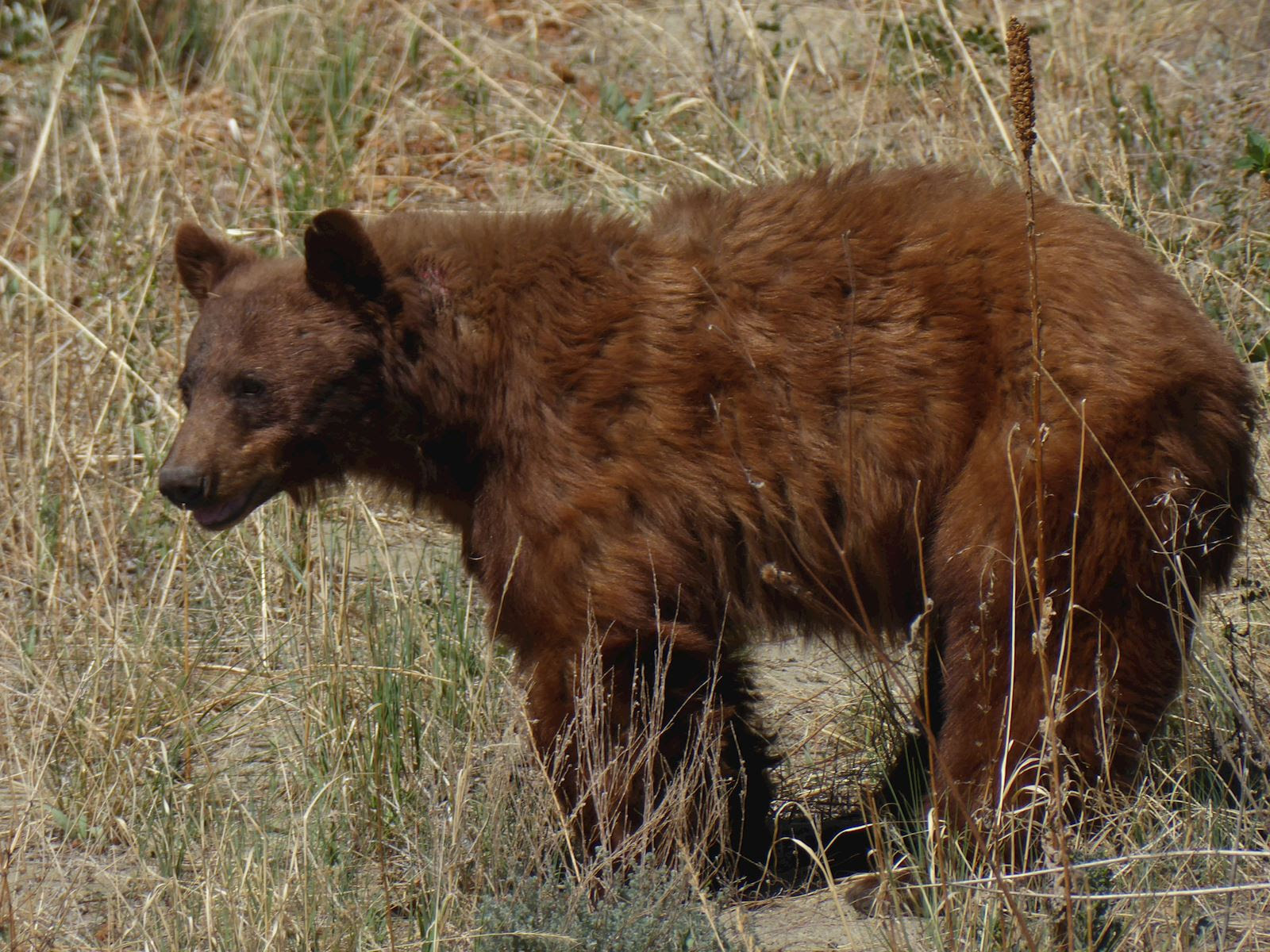
 Bears rely on torpor and hibernation to get through lean, cold times. Courtesy/NMWF
NMWF News:
While human beings get to reach for a wool blanket when nights get cooler in the fall, many other animals rely on the ability to slow down their metabolism to conserve energy. From the tiniest hummingbird to the largest bear, a wide spectrum of creatures relies on torpor and hibernation to get through lean, cold times.
Shayne Halter, a graduate student at the University of New Mexico, will speak on how animals use torpor and hibernation. He’s the featured speaker at the New Mexico Wildlife Federation’s (NMWF) free “Wildlife Wednesday” presentation for September.
Halter’s talk will start at 5:30 p.m., Sept. 10, at Marble Brewery’s Northeast Heights Taproom, at 9904 Montgomery Blvd., NE, in Albuquerque.
Biology is a second career for Halter. He was in the U.S. Air Force for 24 years, where he served as a navigator in C-130s—huge turboprop transport airplanes. He was stationed at Kirtland AFB in Albuquerque when he retired.
At UNM, Halter is working on his Ph.D with Professor Blair Wolf, a former board member at the NMWF. Halter also works with current NMWF board member Carlos Martinez del Rio, a biology professor who most recently worked at the University of Wyoming. Halter is on track to finish his degree next spring.
Animals that go into torpor or hibernation are called heterotherm, Halter said – a word that means they have the ability to allow their body temperature to change.
“They only allow their body temperature to change when they need to,” he said. “They go into hibernation or torpor. bear, a wide spectrum of creatures relies on torpor and hibernation to get through lean, cold times. “Animals that have a constant body temperature, like humans, are called homeotherms.”
Torpor is the term for a single cycle in which an animal lowers its metabolism and then, at some point, brings its body temperature and metabolism back up, Halter said. Hibernation is the term for a series of torpor events that last throughout a whole season, or a longer period than just a few days.
Halter said his talk will address some of the risks that animals face when they enter a state of torpor, including being unaware of their surroundings.
“It could pretty easily be eaten by another animal,” he said.
Many birds, including hummingbirds, use torpor to conserve energy. Halter said only one bird hibernates—the Common Poorwill. He said the bird species exists in New Mexico and said he will present a photo of one he found recently in an apparent state of hibernation.
The Common Poorwill tends to hibernate in the open, where it can soak up the rays of the sun to warm up, Halter said. He said they will hibernate typically for around four to six days.
“Mammals that hibernate typically do a series of torpor bouts throughout the season,” Halter said. “They’ll stay in for a couple of days, come out of torpor and warm up, go back into torpor for a couple of days, come out, warm up.”
Halter will speak about the hibernation of bears, which can last up to seven months. While they’re hibernating, bears don’t eat and don’t defecate. The females can give birth and breastfeed while they’re hibernating.