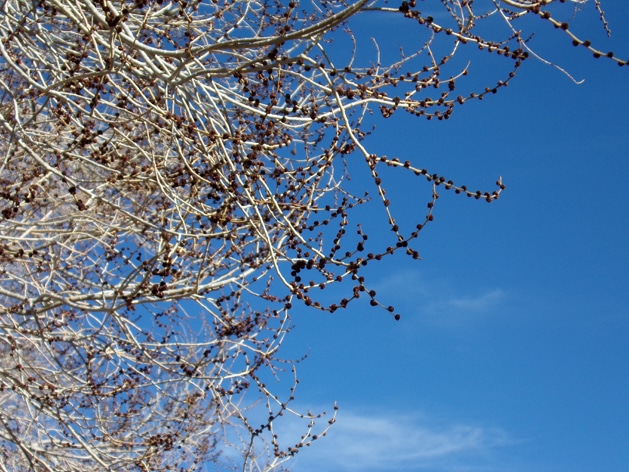
 What species of tree is this? The buds are dark brown to black in color. It will be a few weeks before its leaves will help identify it. Photo by Robert Dryja
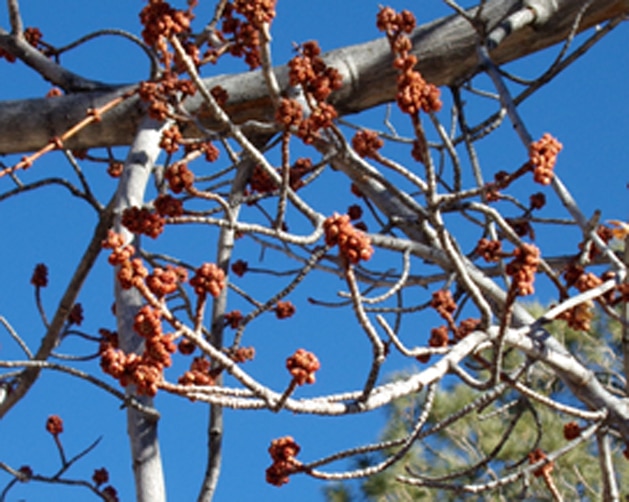 A maple tree with its distinctive red colored buds is starting its spring growth. Photo by Robert Dryja
By ROBERT DRYJA
Los Alamos
There has been about a foot of snow fall during the past three weeks. Drifts of up to two feet have been encountered while hiking along canyon slopes. The night time temperature has dropped well below freezing.
However, the peak day-time temperature has been into the mid-forties. There are sunlit areas where the snow has melted away. The length and warmth for at least part of the day have been enough to start growth for some plants.
Trees provide an example. The branches of one tree are barren sticks, as would be expected for winter. However, the branches of an adjacent tree are covered with leaf buds. Perhaps the local micro-climate is promoting spring.
One tree is in direct sunlight but a nearby tree is shaded. The ground and trunk of one tree are being warmed just enough to stimulate growth.
Besides micro-climate conditions, some species of trees may be more or less adapted to different kinds of climatic conditions. A line of honey locust trees does not show any sign of spring time growth, whether in shaded or sunny areas. A maple tree in contrast is covered with red buds.
The honey locust is a more cautious tree. It is avoiding having its leaves frozen by not starting to grow until things are clearly warmer and sunnier. But this results in a shorter growing season. The maple tree is more adventurous. It is taking a chance on a late winter freeze but then it may have a longer growing season.
An aspen tree grows a fuzzy tip from the end of its buds. A bud continues to grow to be about a two-inch-long cylinder. This cylinder is called a catkin. It covered with small seeds and fuzz grows on the seeds. The fuzz will help carry a seed away in a breeze later in the summer.
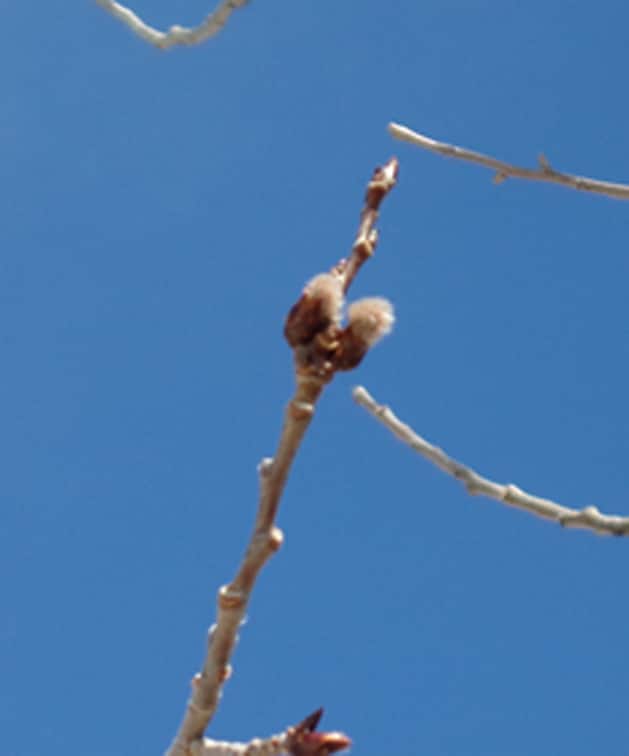 An aspen tree has a bud with a fuzzy tip. It will grow into a cylinder-shaped seed pod covered with fuzz. Photo by Robert Dryja