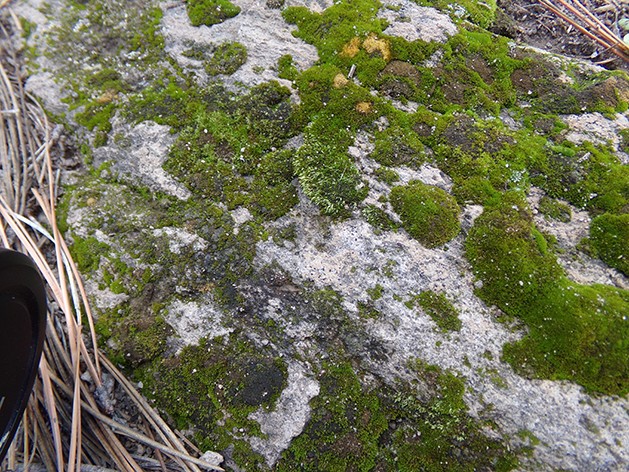
 Disbursed growth of leaves in white capsules. The moss is growing on bare rock. Photo by Robert Dryja
By ROBERT DRYJA
Los Alamos
A variety of micro-environments can be encountered when hiking in mountain woodlands.
Part of a mountain slope may face eastward, receiving much sunlight throughout the day. The slope is dominated by rock and soil and plants are spread apart. Patches of some sort of white growth on rocks may be seen from time to time. A slope alternatively may face northward. More plant and tree growth may occur since rain water does not quickly evaporate away in sunlight. White patches still may be seen but green patches also may occur on rocks. The texture of the green patches shows that they are a plant called moss.
Moss has a life cycle that can be divided into two stages. The first stage involves growth that creates leafy stems for single plant. These stems grow from a base called a rhizoid and are called gametophytes. A stem is male if it will produce sperm or female if it will produce eggs. Sperm fertilize a nearby egg by swimming to it through rain water. A fertilized egg then is called a spore. The second stage occurs when a female stem grows a stalk for its fertilized eggs. The stalk grows a distinct capsule at its end. The capsule releases spores to start a new life cycle. Stalks with their capsules are called sporophytes.
What is interesting is that a single plant has separate male and female stems grow from its rhizoid base. Imagine if a single human being was a male on one side of its body and female on the other side. Also imagine a fertilized egg then growing in the womb of the female side. Gametophyte stalks may grow to be about half an inch tall while sporophyte stalks are two inches tall. Imagine if a woman grew to be four times taller than her husband during her pregnancy. Mosses clearly have a different approach to reproduction compared to humans.
Moss may grow leaves on their stems that are close to one another, creating a mat. This results in rain water being kept between the leaves, helping the plants to grow rather than evaporating away in open air. Leaves initially grow in what look like pointed white tubes. The tubes then open, allowing green leaves to emerge. Depending on growth circumstances, the tubes can be spread apart (Picture 1) or form a white mat for a few days, (Picture 2).
The green leaves also may grow silvery filaments at their tips. These may be of different lengths, (Picture 3). These filaments are different from the thicker stalk that has a ball containing spores, (Picture 4). Colonies of mosses grow in two ways. One way involves stems growing erect and without branches. The erect stems may grow close to one another or have some spacing between them. The vertical growth of a cornstalk in a field of corn is an analogy. A second way involves stems that have multiple branches that spread in different directions, forming a mat. Ferns provide an analogy. Their leaves are formed as part of branches and can spread horizontally. The shape of the stems of some moss species do look like ferns, (Picture 5).
The next time you see a low-lying patch of green, look closely to see if it is moss. Then consider how differently life may be proceeding for it.
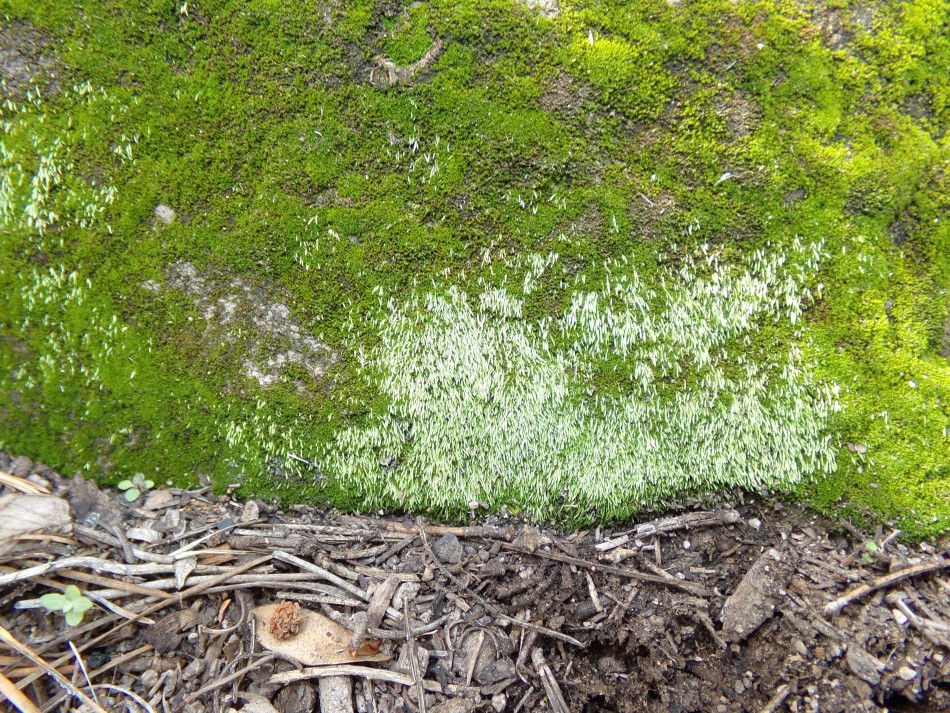 Picture 2: Matted growth of leaves while in white capsules. Photo by Robert Dryja
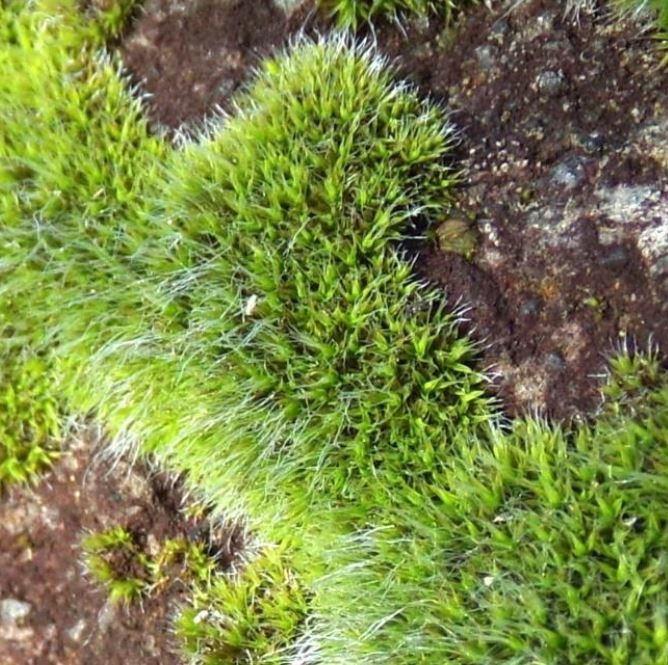 Picture 3: Leaves growing long and short white filaments. Note the leaves are on upright stems, not spreading sideways, (compare to Picture 5). Photo by Robert Dryja
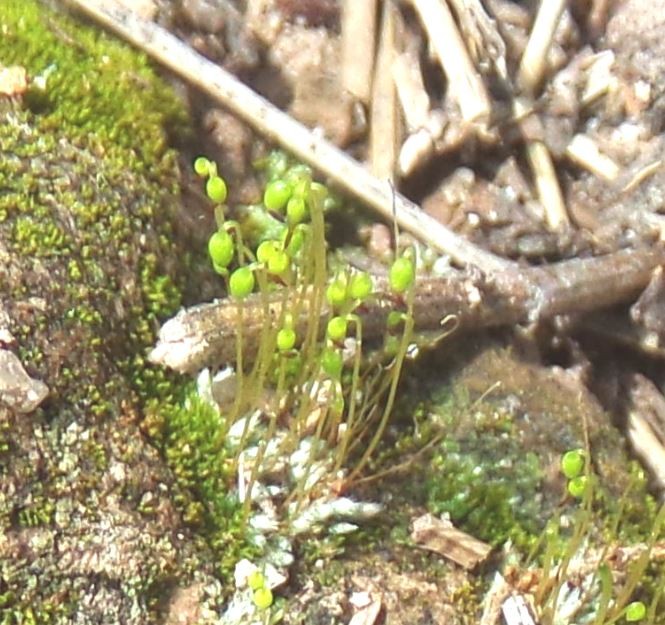 Picture 4: Sporophyte stalks with spore capsules. Note the green and white leaf growth at the base of the sporophyte stalks. Photo by Robert Dryja
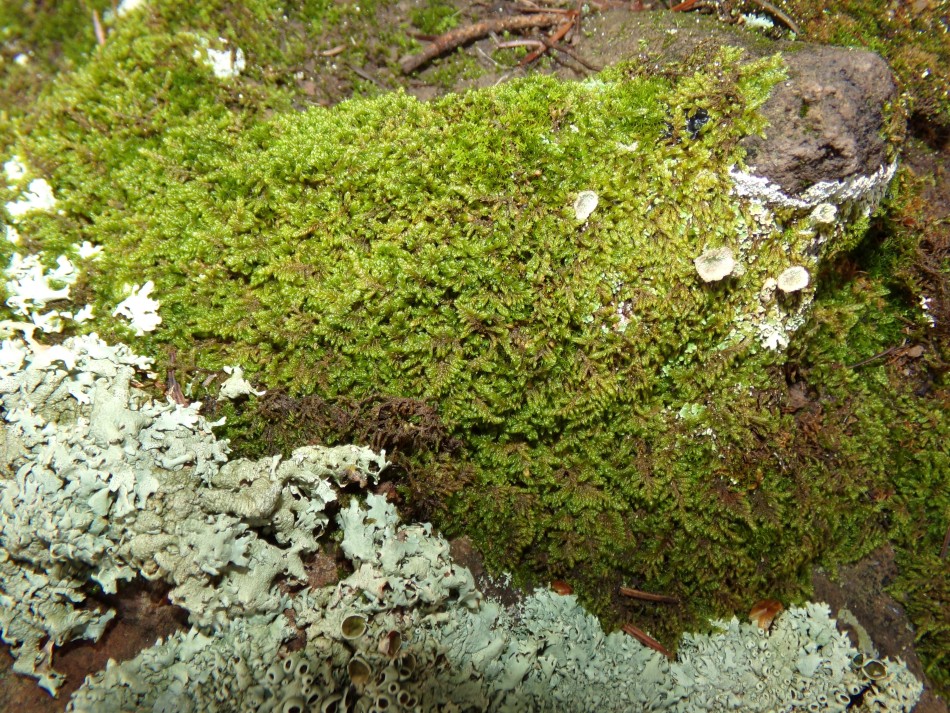 Picture 5: The main stem of this species has numerous side branches similar to a fern. Photo by Robert Dryja