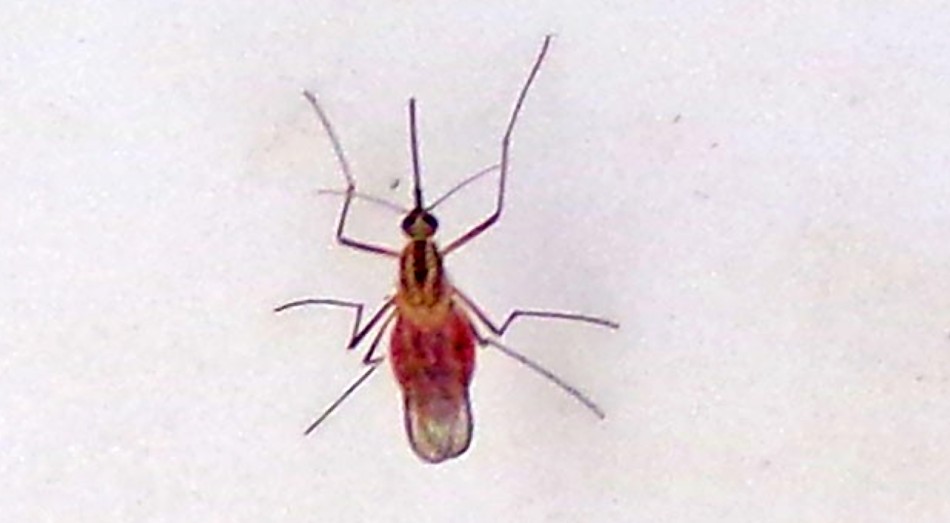
 Picture 1: Mosquitoes have three forms of symmetry for their legs and their body sections. Symmetry for their left and right sides; Symmetry of three legs on each side and each leg has three sections; Symmetry along their back: Two antennae, two eyes, two stripes and two wings. Photo by Robert Dryja
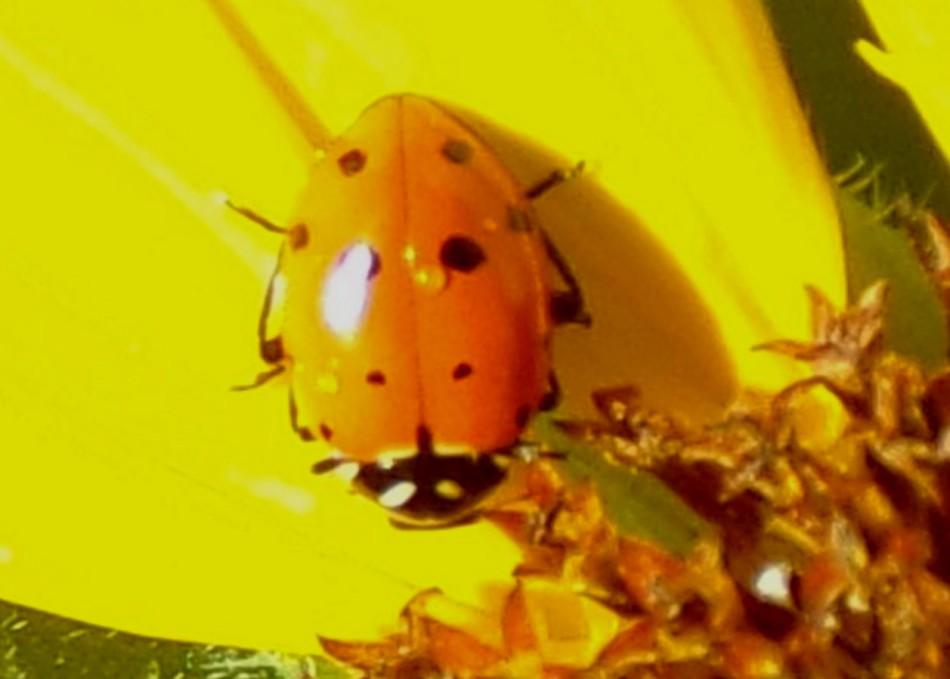 Picture 2: Adult Ladybird beetle: Smooth and round; Three parallel lines of dots; Mostly yellow with some black. Photo by Robert Dryja
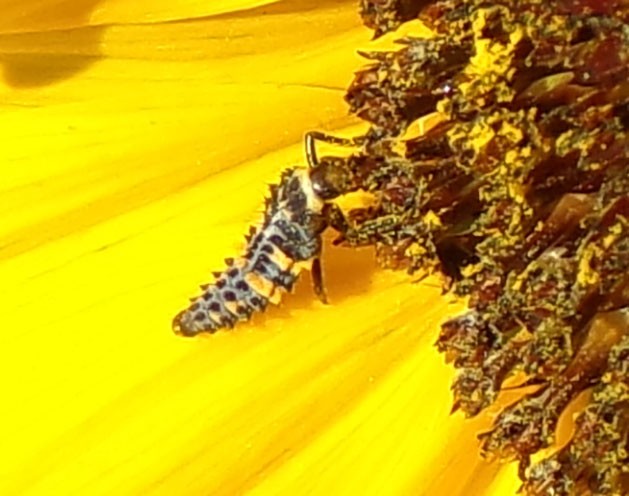 Picture 3: Larval stage of the Ladybird beetle: Pointed and skinny; Three parallel yellow bands; Mostly black with some yellow. Photo by Robert Dryja
By ROBERT DRYJA
Los Alamos
We are now nearly out of summer. There have been numerous rain showers, which have supported plant growth. The slopes of the nearby mountains and canyons are colored green from all the plants growing on them. The natural world of the small also has benefited from the rain showers. Puddles of all sizes have provided the setting for the growth of insect larva. Plants adjacent to puddles have provided a good setting for the growth of insects.
Whereas the mountains and canyons are impressive because of their large scale, it is the different kinds of symmetry that stand out among small insects. The mosquito population has blossomed, thanks to the many puddles that have been available for their larva. Dozens of mosquitos may appear around anyone walking by or sitting next a pond. Most of the time a person only has a sense of irritation when mosquitoes arrive to bite.
However a person may be impressed if looking at a mosquito close up with a magnify glass. Different kinds of symmetry then become visible. Each leg is made of three segments and there are three legs on each side of its body. The body itself is composed of three segments: head, thorax and abdomen. Another form of symmetry occurs along the length of the segments: two antennae, two eyes, two stripes and two wings. (See picture 1)
Ladybird beetles have a different kind of complimentary symmetry for their larval and adult stages. This symmetry relates to shape rather than the number of parts, as with the mosquito. Ladybird beetle larvae are thin and covered with points while the adult is round and smooth. The body of the larva has a set of three parallel bands while the adult has three sets of parallel dots. The adult is primarily yellow in color with some black circles. T the larva is primarily black with some yellow bands. (See pictures 2 and 3)
The nabid bug and spined soldier bug are a contrast based on their shape. The nabid bug is long and smooth while the spined soldier bug looks almost like a square. The nabid bug has a smooth body while the spined soldier bug has distinct spines toward its head. (See pictures 4 and 5)
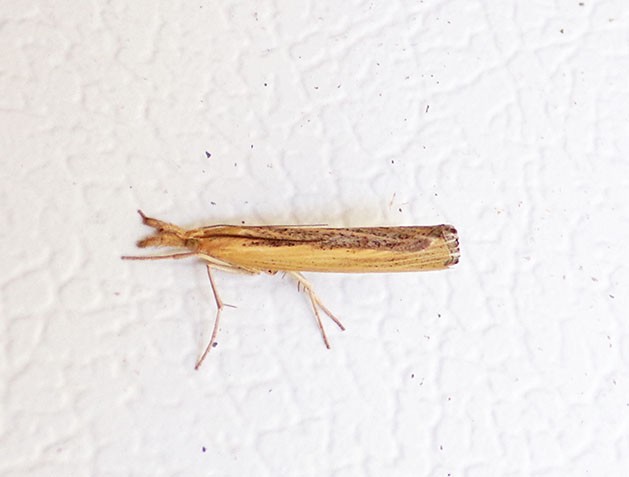
The forage looper and clover looper are two species of moths. They have similar patterns for their colors but the colors are opposite from one another. The lower half of the wings for the forage looper is black in color but is a light brown for the clover looper. Both have spots on the outer side of their wings but one has white spots while the other has black spots. Both also have a line along the bottom of their wings but these also are opposite from one another in color. (See pictures 6 and 7)
Bees and butterflies are much larger and can be easily seen at a distance, flying from flower to flower. The preceding smaller insects also can be seen but by carefully looking closely at blooming flowers. They provide an additional level of color and patterns not otherwise noticed.
 Picture 4: A slim and smooth nabid bug. Photo by Robert Dryja
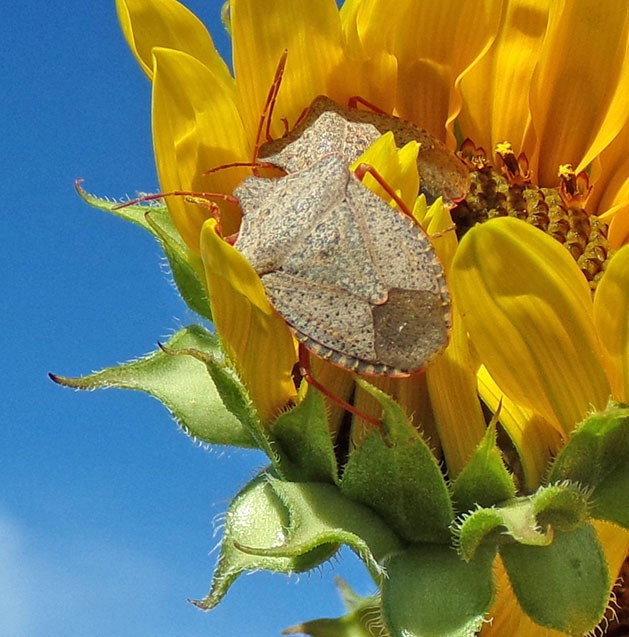 Picture 5: A stout spined soldier bug. Photo by Robert Dryja
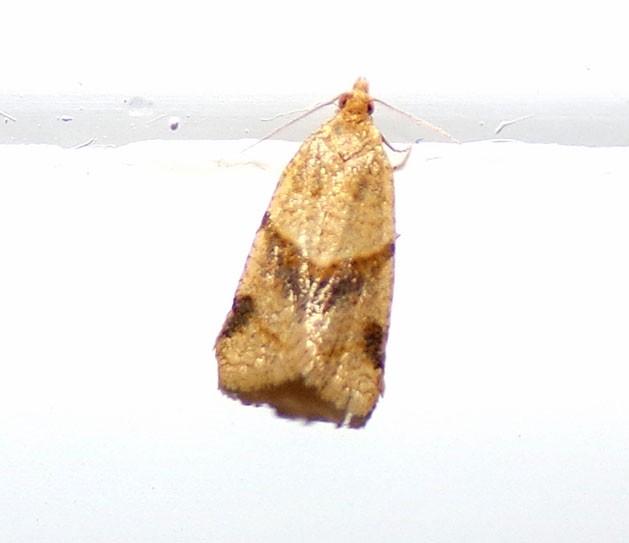 Picture 7: Clover looper moth. Photo by Robert Dryja
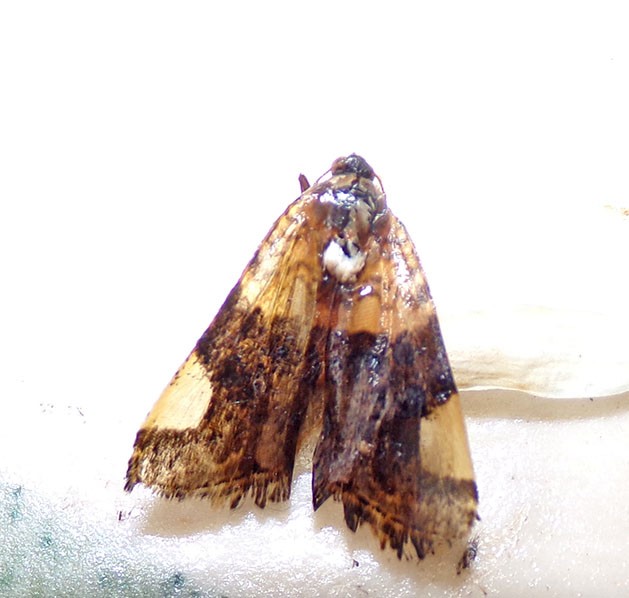 Picture 6: Forage looper moth. Dark or light color for back half of wings; White spots or black spots on sides of wings; White or dark line at the end of the wings. Photo by Robert Dryja