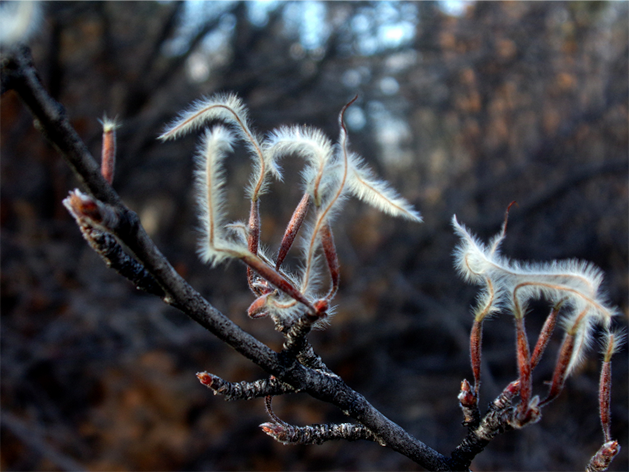
 Picture 1: The brown oblong seed pod of a mountain mahogany shrub contains a single seed. Pollen reaches this seed after first being caught by the white curly style extending from it. Photo by Robert Dryja
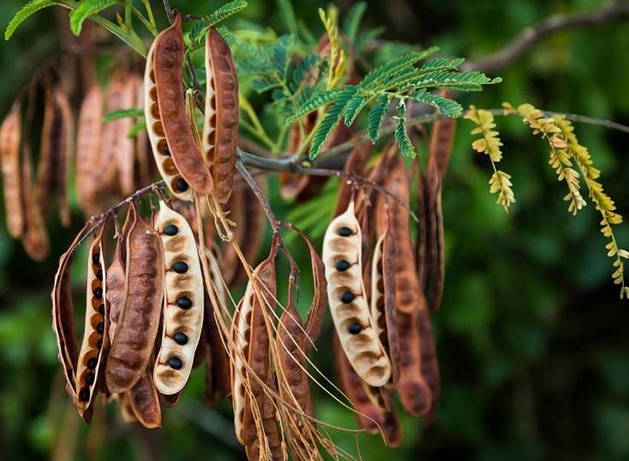 Picture 2: The pod of an acacia tree contains several seeds. The single seed pods of a mahogany shrub are spread apart compared to the batches of seeds in an acacia tree pod. Photo by Robert Dryja
By ROBERT DRYJA
Los Alamos
We are more likely to notice a plant or animal when it is part of a cluster. Flowers may emerge on a stem as florets. A set of florets may give the impression of being a single flower by growing adjacent to one another on a stem. Some bird species gather closely together. This gathering of birds may be stimulated when a winter weather front is passing through.
The opposite of clustering may occur. What circumstances contribute to spreading out? Closer observation of circumstances now is needed to understand what is happening. The mountain mahogany shrub provides an example. It can appear to be producing florets in early spring. Picture 1 shows stems that appear to be covered with small white fuzzy flowers. The impression is that many small seeds will emerge from a multitude of florets on each curling stem
However closer observation shows that each flower-like stem (called a style) only catches pollen. It is emerging from a tubular brown base (called an achene). This tubular base contains a single seed when it is opened. Further, the tubular seed pods with flower-like stems may have emerged last summer. They have remained attached to a branch over the winter. This does not occur for all mountain mahogany flowers. Tubular seeds may become dispersed at the end of summer. The flowers that then emerge in the spring are much smaller compared to the ones that have remained from the preceding winter.
This is very different from Acacia trees. An Acacia tree produces and releases several seeds from a single pod when autumn arrives, (see Picture 2). The growth and release cycle may be spread out over a full twelve months for some mountain mahogany seeds while the growth cycle for an acacia is completed in about four months.
The length of time for how long snow lasts also can be spread out or shortened. The slope of the land, the direction of a slope, and the amount of shade all affect the length of time snow remains. A canyon that goes east and west affects how much sunshine reaches it north or south facing slopes. The north side slope can receive sunlight throughout the day while the south side slope can remain shaded from direct sunlight. A north slope therefore may have snow melt more quickly even though it is close to a south slope.
The steepness of a slope also affects how quickly the resulting water drains away. The growth of trees therefore is affected by the availability water. A gentle slope provides a better environment for tree growth. Slower moving water has more time to percolate to roots in the ground. Picture 3 shows a steep north facing slope that has patches of snow on it. Picture 4 shows a gentle slope that is shaded by trees. Fields of snow cover the ground compared to the snow shown in Picture 3.
Mountain mahogany is adapted to growing in dryer areas. It therefore can be found growing on dryer and steeper slopes compared to other trees such as ponderosa. Two adjacent areas may receive the same amount of sunlight but the shade from tall ponderosa trees and snow stop mountain mahogany from growing there. It can be surprising to see mountain mahogany in bloom while a field of snow lies nearby.
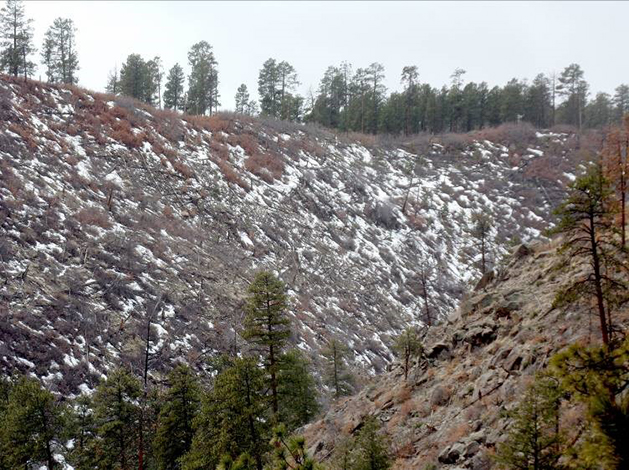 Picture 3: A north facing slope has patches of snow remaining while the south facing slope has no snow. (A portion of the south facing slope is on the right side of the picture.) Photo by Robert Dryja
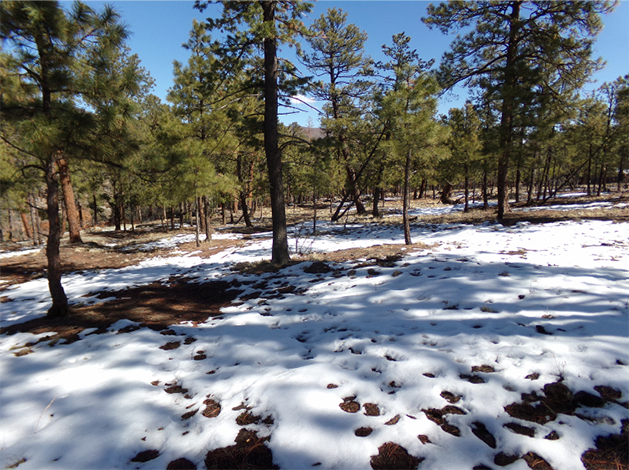 Picture 4: Snow remains on the gentle slope. The trees provide shade that further helps the snow to remain. Photo by Robert Dryja