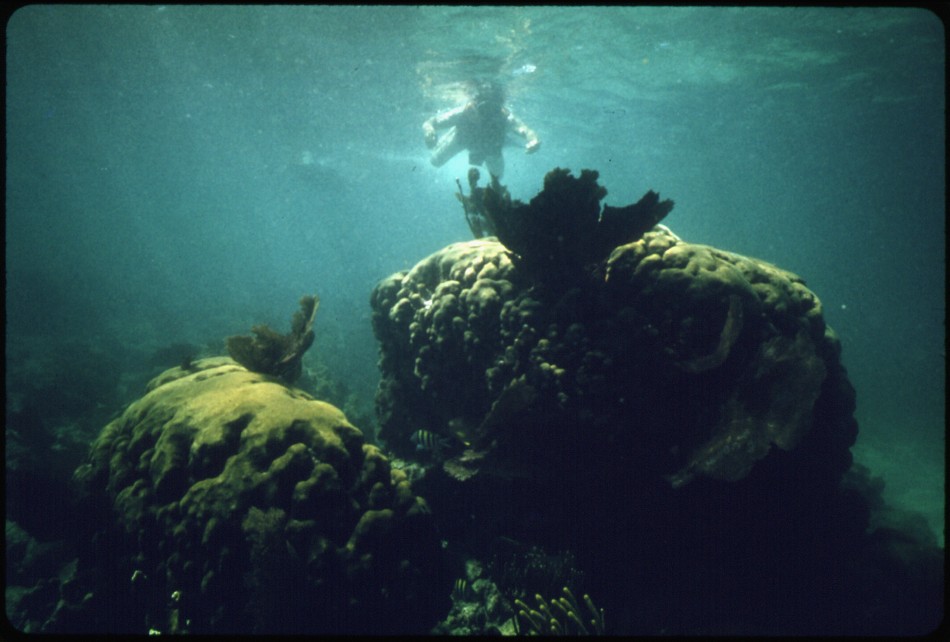
 A snorkeler on a Florida Keys reef in the late 1970s. Flip Schulke, part of EPA’s Documerica Project. Courtesy photo
NOAA News:
This past Sunday, Oct. 23, 2022, marked the 50th anniversary of NOAA’s National Marine Sanctuary System. It’s a milestone in NOAA’s mission to conserve and protect some of the nation’s most treasured wildlife, seascapes, maritime heritage, and cultural resources.
Today, the sanctuary system encompasses more than 1,605,793 square kilometers (620,000 square miles) of ocean and Great Lakes waters from Washington state to the Florida Keys, and from Lake Huron to American Samoa. The network includes a system of 15 national marine sanctuaries along with Papahānaumokuākea and Rose Atoll marine national monuments.
A diverse network of sites with diverse goals, our sanctuaries and monuments include remote coral reefs and deep canyons, whale migration routes, shipwrecks, and idyllic settings for recreation, as well as places that sustain the stories and cultures that define America’s Indigenous people and maritime legacy.
These sites play a critical role in marine conservation and stewardship and provide safe haven for marine life and ecosystems we depend on for a variety of ecosystem services, social, cultural, and economic benefits. But where did this idea for a national system of ocean parks begin?
Explore a photo history of key moments spanning 50 years of NOAA Sanctuaries here.