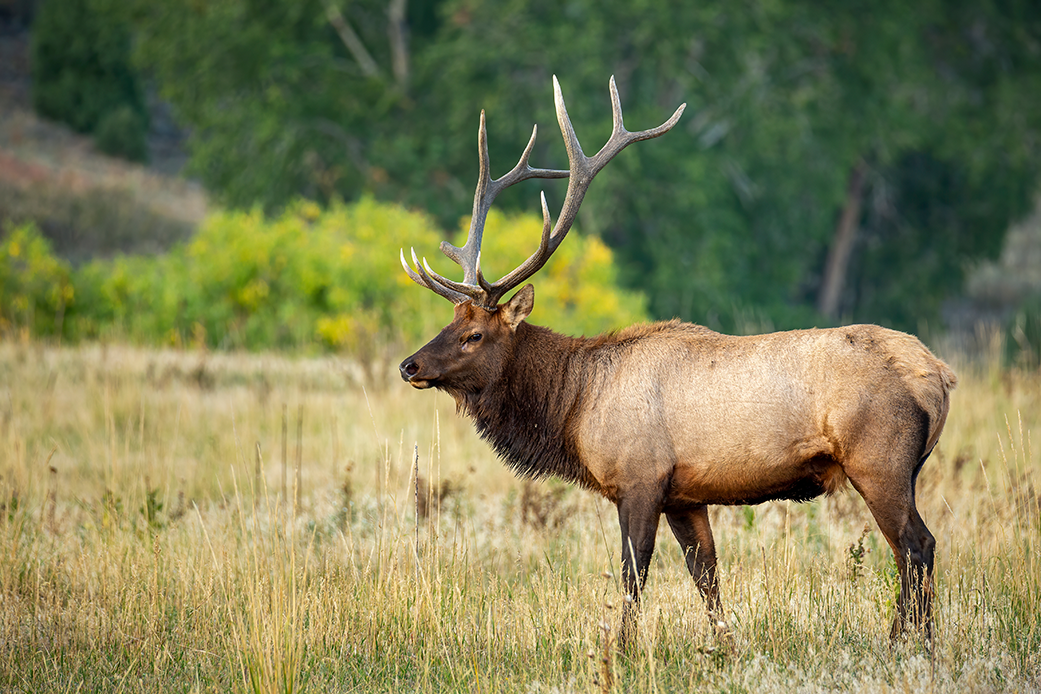
 The elk is the star of the show during October in the Jemez Mountains. Courtesy/LAC
COUNTY News:
During the month of October, the elk becomes the star of the show here in the Jemez Mountains. Known for being more visible and vocal during the fall season, spectators flock to the Valles Caldera National Preserve for a chance to watch and hear these magnificent creatures. But what are the elk doing?
The Rut
Elk behavior during the fall season is called the rut. Elk breed in the fall and exhibit various behaviors that are more aggressive and visible than at other times of year.
- Bulls gather cows and calves into small groups called harems;
- Bulls wallow in mud to coat themselves with urine “perfume” to attract cows;
- They also bugle and rub trees, shrubs, and the ground with their antlers to attract cows and intimidate other bulls;
- Bulls aggressively guard their harems from other bulls; and
- Sometimes, bulls wage violent battles for a harem, occasionally even fighting to the death.
Elk Talk: Vocalizations
Elk are among the noisiest ungulates, communicating danger quickly and identifying each other by sound. There are several different types of vocalizations, each meaning something very different:
- High-pitched squeal: Newborn to its mother, who recognizes her calf by its voice;
- Bark: Warning of danger;
- Chirps, mews, and miscellaneous squeals: General conversation among the group; and
- Bugling (bellow escalating to squealing whistle ending with a grunt): Bull advertising his fitness to cows, warning other bulls to stay away, or announcing his readiness to fight.
Body Postures
Watch for these common body postures when watching the elk interact with other elk, other animals, and even people:
- When alarmed, elk raise their heads high, open their eyes wide, move stiffly, and rotate their ears to listen;
- If a harem cow wanders, a bull stretches his neck out low, tips up his nose, tilts his antlers back, and circles her;
- Elk threaten each other by curling back their upper lip, grinding their teeth, and hissing softly; and
- Agitated elk hold their heads high, lay their ears back and flare their nostrils, and sometimes even punch with their front hooves.
For more information about the elk, visit https://www.rmef.org/elk-facts/, or the Valles Caldera National Preserve at https://www.nps.gov/vall/learn/nature/rocky-mountain-elk.htm.
For more information about living with wildlife on the Pajarito Plateau, visit www.lacnm.com/wildlife.