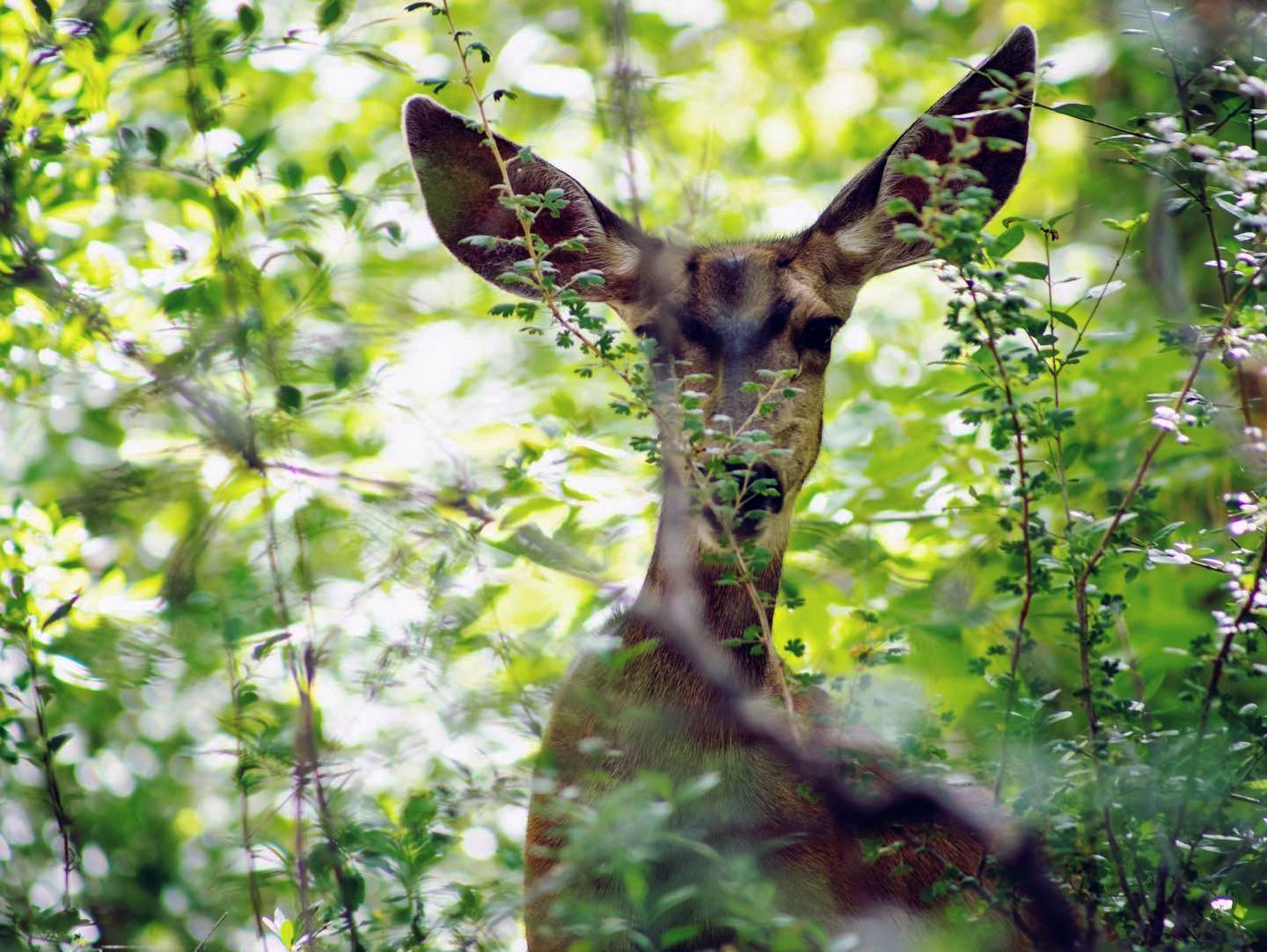
 A local mule deer peeking through branches. Photo by Leslie Bucklin/LAC
COUNTY News:
The natural pattern of recovery after a wildfire is referred to as “ecological succession”. This is the process whereby the land, plants, and wildlife move through various ecological stages to return to a state of relative stability. It’s like hitting the “reset” button on the life cycle of a forest.
Low-intensity fires burn close to the ground, “cleaning” and thinning the forest by removing thick and flammable vegetation from the forest floor. High-severity fires burn with high heat, climb into and remove the tree canopy, and can scorch the soil and tree roots, causing a more severe impact on vegetation and wildlife. More light reaches the forest floor post-fire, and fire-adapted plants regenerate.
After a fire, burned forests can be lush with shrubs and other vegetation that deer favor as summer forage. Deer generally prefer burned areas for about 20 years post-fire, which is the time it takes for the forest to move beyond the initial regrowth stage. Burns can create a win-win for deer: more food and less risk of being detected by a predator.
To learn more about wildfire in the Jemez Mountains and its impact on the ecosystem, visit the Valles Caldera Wildland Fire webpage.