 Los Alamos Health Council News:
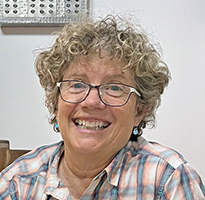
Dr. Celeste Raffin is a board-certified Emergency Medicine Physician who practiced for 30 years in Emergency Departments in California and Utah. She recently joined the Los Alamos County Health Council in order to help advocate and advise on health-related matters in the community.
Dr. Raffin comes to the council with extensive experience in the treatment of opioid and other drug overdoses and the lifesaving properties of naloxone.
The following is her perspective on Naloxone:
Opioid overdoses have become a public health catastrophe in New Mexico affecting every age group and socioeconomic class. Opioid overdoses are the number one cause of death in New Mexicans under age 40. Los Alamos is not immune as we have had several opioid overdose deaths in the past few years. These are preventable deaths.
Opioids are a class of drugs that are either directly synthesized from or artificially created in the lab by copying molecules from the sap of the opium poppy. Opioids have used by man for 5,000 years. Through time they have evolved into two categories: Legitimate prescription medications and very popular drugs of abuse.
All opioids share the same mechanism of action. They circulate through the bloodstream and land on opioid receptors located on the central and peripheral nervous systems. In the peripheral nervous system opioids block the transmission of pain signals from the body to the spinal cord so the brain no longer perceives pain. In the brain opioids cause euphoria, drowsiness, deep sleep, and coma. In the brain stem they decrease the rate of breathing and if taken in large enough doses stop breathing entirely. Once breathing has stopped death occurs within a few minutes. Opioids’ magnitude of effect depends on two factors: potency and dose. ANY opioid can result in a fatal overdose if taken in a large enough dose.
Opioids are not difficult to get. They can be obtained legitimately via prescription; however, the illegal opioid market is a multi-billion-dollar industry. Illegal opioids are relatively inexpensive and can be obtained via online sites, social media, and dealers on the street.
There is a drug, naloxone (brand name Narcan) which can reverse opioid overdoses. The New Mexico legislature has been very proactive in developing legislation that allows the non-medical lay public and law enforcement to obtain and use naloxone. The Los Alamos County Health Council is actively promoting naloxone education and distribution in Los Alamos County.
Naloxone is an opioid antagonist. Its ONLY use is to reverse the effects of opioids. When administered via injection or nasal spray it circulates through the blood stream, kicks the opioids off their receptors, binds in their place, and reverses the opioid effects within minutes. Breathing stabilizes, consciousness improves, and pain returns. Naloxone can be safely used in any age group from infants to elderly. It is safe in pregnancy. Side effects are related to reversing the effects of the opioid: elevated heart rate and blood pressure, agitation, and pain. However, one gives naloxone only when one believes the patient is in imminent danger of dying from an opioid overdose, so don’t worry about side effects: give the naloxone.
How do you recognize a possible Opioid overdose?
- The person is unresponsive: you shake them and shout but they do not respond.
- Their skin may be cold and clammy, pale, blue, or ashy grey.
- They are not breathing normally: they might be gasping, gurgling, snoring, or not breathing.
- Their pulse may be slow, erratic, or not present.
What do you do if you encounter someone who you believe could be overdosing?
- Establish unresponsiveness: shake and shout. If they do not wake up:
- Give Naloxone, check for breathing and pulse. If absent, and if you know how, start rescue breathing and chest compressions (CPR), and call 911.
- Re-evaluate after 2 -3 minutes. If pulse present and breathing, stop CPR. If they are breathing normally, protecting their airway, and not blue or ashy, put them in recovery position, watch carefully for signs of deterioration, and wait for EMS. If they have NOT improved, or deteriorate, give a second dose of naloxone. Do not give up on naloxone if you don’t see results. Multiple doses of naloxone may be required before a response is seen.
What if your naloxone is expired? A recent study from the Journal of Pre-Hospital Care looked at expired vials of naloxone dating back to 1990 and found that they all contained at least 90% active naloxone. Expired naloxone is better than no naloxone. So, give it and after the emergency is over, replace any expired drug.
All patients that have been revived with naloxone should be evaluated in an Emergency Department. Why?
In the emergency department we ask ourselves three questions:
- What happens when the naloxone wears off? Naloxone’s duration of effectiveness is 30-90 minutes. There are many opioids that last much longer so when the naloxone wears off the overdose returns.
- What else did they take? Mixed drug overdoses are common and a nightmare to treat.
- Why did they overdose? Was this a suicide attempt? Is there anything that can be offered to the patient so that this won’t happen again? Will they be safe if we send them home?
Drug abuse and addiction are a frustrating and difficult part of medicine. It is not unusual for Emergency departments to treat the same patient multiple times for overdoses. Our fear is that the next overdose will be the fatal one. At the very least, overdose patients need to be offered treatment, counseling, and detox.
Who should get Naloxone? Naloxone is one of those things that when you need it, you need it NOW. There is no time to phone a friend, go to the store, or wait for paramedics to arrive. The data is showing us pretty clearly that anyone can overdose on opioids. My advice is this: Households with children, teens, and young adults (up to age 40) should have naloxone. Opioids are present in colleges, universities, and the public school system. They are in the workplace. Private school and home-schooled kids are not immune either. If you or a family member have been prescribed opioids and have them in the house, naloxone is a good idea as well. Having naloxone is like having a fire extinguisher. Hopefully you’ll never need it, but if you do, you will be so glad it’s there.
So, you’ve picked up your Naloxone, now what? Open up the package, look at it, read the instructions, and make sure you understand how to use it. Teach everyone in your family or household. Do NOT lock it up! Put naloxone someplace that is rapidly accessible and easy to remember and make sure everyone knows where it is. Pull it out occasionally and reacquaint yourself and your household with naloxone. Remember, Naloxone only TREATS overdoses, it does not prevent them. It does not treat addiction, substance abuse, experimenting teenagers, inquisitive toddlers, or suicidality. While timely administration of naloxone may pull a patient out of the jaws of overdose death, we still need to figure out how to keep people from getting there in the first place.
Our Call for Connection:
Go pick up some naloxone! It is available for purchase at local pharmacies, and can be found at various locations around the County for free (https://www.losalamosnm.us/Health-and-Public-Safety/Community-Health/Narcan).
Reminder:
Los Alamos County Health Council invites community members to voice their community health concerns and suggestions to Health Council through completion of this survey, and by welcoming you to attend the Los Alamos County Health Council meetings. The meetings are held noon to 1:30 p.m. on the first Thursday of the month. ou can attend in-person or via Zoom. The next meeting is scheduled for Aug. 1, 2024 and the agenda will be posted approximately a week before the meeting https://losalamos.legistar.com/Calendar.aspx. If you have items you want brought before the council, you can contact Jessica Strong at jessica.strong@lacnm.us.