 By LAURA LEONARD
Doctor of Chiropractic
Los Alamos
New Mexico is under siege with multiple wildfires impacting air quality and health.
According to a PBS News Hour article on Wildfires and Air Quality, researchers estimate the amount of acreage burned by wildfires in the U.S. is four times more than it was 40 years ago.
Wildfire smoke doesn’t just affect our lungs, it also contains high levels of lead and other contaminants which affect cellular health.
Poor air quality from wildfire impacts us all whether we are included in the ‘sensitive groups’ category or not.
Sensitive groups include those over 65, pregnant women, young children and people with cardiac or lung disease. It’s obvious for people with asthma and COPD when they are struggling with air quality however, people with cardiac disease may not be aware of the effects until it’s too late.
There is an increased risk for heart attack and stroke when air quality is affected by wildfires.
The number of ER and urgent care visits increase in areas affected by wildfires and we don’t know how wildfire smoke affects long-term health. When we are stressed about mitigating fire risk around our home and the possibility of evacuation, we need to remember to also mitigate against the negative health effects of poor air quality.
Below are some tips you can take to protect the health of yourself and your family in these trying times.
Use N95 masks. Surgical masks, cloth masks and bandanas do not protect you from smoke particles.
Monitor air quality and take steps to protect the air inside your home and office. An article in the New York Times rated the EPA’s AirNow mobile app as the best way to keep track at your location. They go on to say that indoor air quality does not necessarily need monitoring because you can extrapolate the AirNow app results to include your indoor environment.
Many indoor air monitoring devices don’t offer accurate information and the best way to protect your indoor environment is to use air purifiers and upgrade to MERV 13 plus HVAC filters. HVAC filters can also be replaced more frequently when there are periods of poor outdoor air quality. Replacement every 90 days is standard but under the current conditions you may consider every 30-60 days. Finally, keep windows closed and remember you can also open windows when the air quality is good to ventilate stale air.
We talk about ready, set, go staging from encroaching fire danger but you also need to consider evacuation if you are in the ‘sensitive group’.
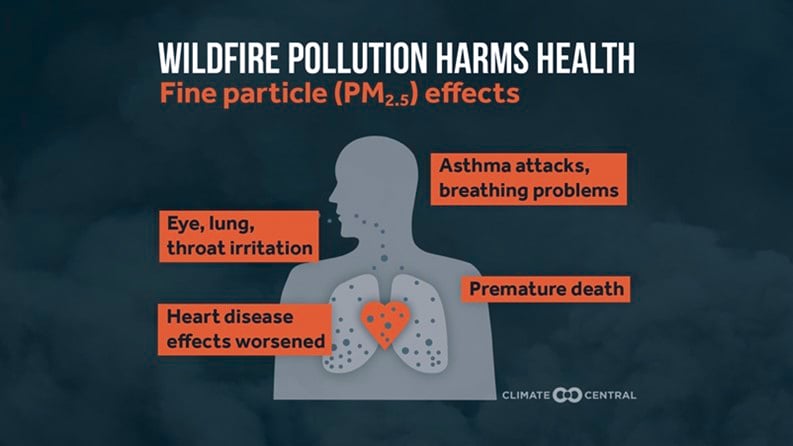
Healthy people should consider this option as well if we have multiple poor air quality days and/or they develop any of the symptoms listed below.
https://medialibrary.climatecentral.org/resources/wildfires-air-quality-2017
Thank you to the emergency management teams, firefighters and experts working tirelessly day and night to protect our communities, heritage sites and wilderness from the wildfires.
Resources
- American Thoracic Society Patient Education Information Series Fact Sheet;
- Wildfires are Increasing Health Risks, Rodriguez-Delgado: PBS News Hour, Health July 27, 2021; and
- The Best Home Air Quality Monitor, Heffernan: New York Times, Oct. 13, 2021
Dr. Leonard’s practice focuses on posture and performance using a combination of soft tissue release, adjustments and exercise recommendations. She also coaches patients on nutrition, self-care and body awareness so they can manage themselves in between visits. Los Alamos Chiropractic Center is located in the Mary Deal building on Trinity.