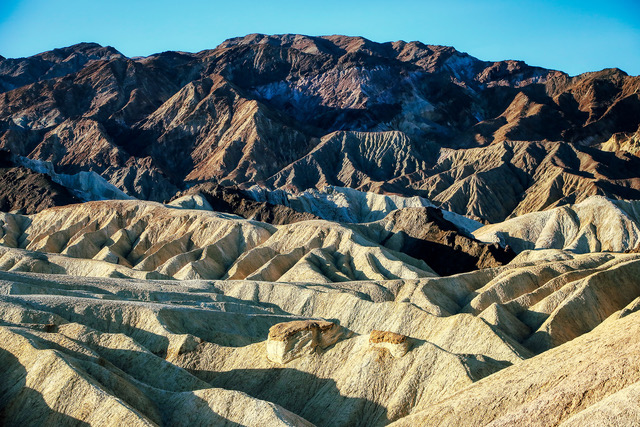
 Zabriskie View: A view toward the south from the Zabriskie Point walkway reveals a portion of the badlands in the area. The textures of the landscape and the various colors of the soil and rocks are easily visible from the walkway and viewpoint. The popular viewpoint is named in honor of Christian Zabriskie who was an executive with the Pacific Coast Borax Company more than 100 years ago. Photo by Gary Warren/ladailypost.com
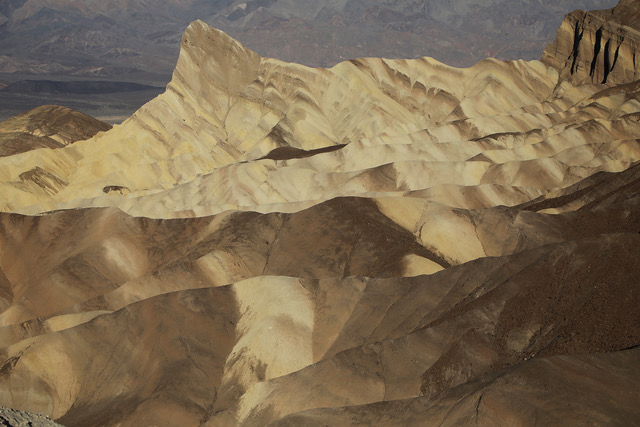 Manly Beacon: The triangular shaped geological feature seen looking north from Zabriskie Point is the most notable feature in the badlands around the point. The stripped landscape is more noticeable in this area as well. Manly Beacon was named after one of the early mining prospectors in the area in 1849. Photo by Gary Warren/ladailypost.com
By GARY WARREN
Photographer
Formerly of Los Alamos
Visiting most national parks in the U.S. requires a minimal amount of planning for the average visitor traveling in a motor vehicle. The parks have suggested sites and features to visit depending on one’s allotted time in the park. However, Death Valley National Park is so large that for most visitors it requires multiple visits to see the entire park, even from the roadside viewpoints, unless you can spend weeks in the park.
With over three hundred miles of paved roads and almost three hundred more miles of improved gravel and dirt roads one begins to realize how grand this park is in size compared to other national parks in the continuous U.S. Our visit featured major stops in the southeast portion of this 3.4 million acre national park.
Zabriskie Point is a popular viewpoint less than five miles from Furnace Creek and is just off of the paved road. (Furnace Creek is the location of the visitors center and any commercial businesses in this area of the park).
To enjoy the views from the viewpoint deck does require an uphill walk of about a quarter mile. The various views are spectacular.
Zabriskie Point features views of the badlands in the area as well as distant views of the valley floor and the Panamint Mountains. The viewpoint is elevated which gives visitors great views in almost all directions. Trails give visitors a chance to explore the badlands as well.
Views from Zabriskie Point give visitors a chance to see the stripped hills of the badlands around the point. The yellowish and brown stripped landscape are enhanced with swatches of white and dark grey rocks. When seen at sunrise or sunset the landscape views are beautiful, colorful, and very unique.
The most notable feature of the viewpoint is Manly Beacon. Manly Beacon is a geological feature that juts over 800 feet in elevation (the base elevation in the area is about 500-600 feet). One can almost feel the texture of the barren landscape as they enjoy the shapes and color contrast of the hills at Zabriskie Point. Zabriskie Point is a stop to view and explore when visiting Death Valley National Park.
Editor’s note: Longtime Los Alamos photographer Gary Warren and his wife Marilyn are traveling around the country, and he shares his photographs, which appear in the “Posts from the Road” series published in the Sunday edition of the Los Alamos Daily Post.
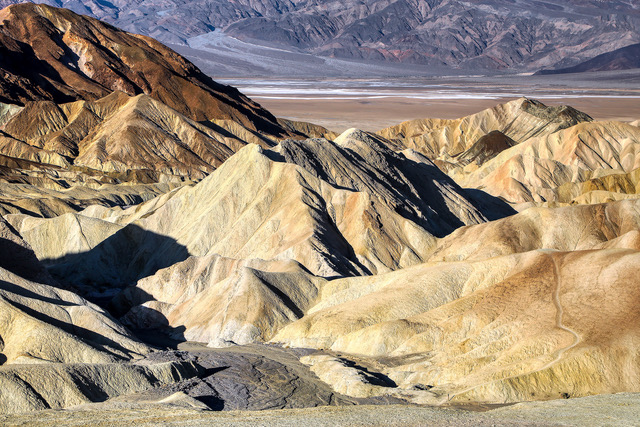 Badlands and Beyond: A view from a trail near Zabriskie Point shows a view of the colorful badlands, the salt flats in the valley floor and the base of the Panamint Mountains in the distance. Photo by Gary Warren/ladailypost.com
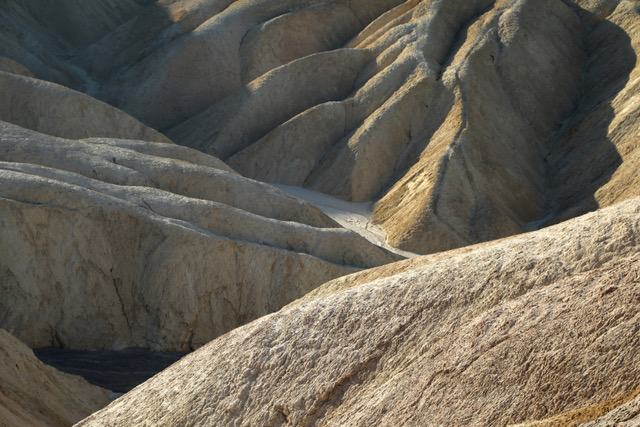 Badlands Loop Trail: The Badlands Loop Trail begins near Zabriskie Point and leads hikers through various routes in the badlands and leading to the Golden Canyon Trail on the west side of the badlands area. Shown is a short stretch of the trail as it passes through badlands seen from the Zabriskie Point walkway. Photo by Gary Warren/ladailypost.com
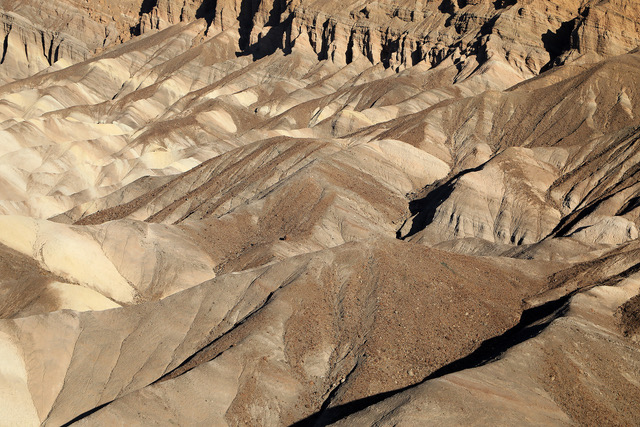 Stripped Landscape: Much of the landscape around Zabriskie Point appears to be stripped. The layers of soil and the mineral content give the landscape this unique appearance and colors. Photo by Gary Warren/ladailypost.com
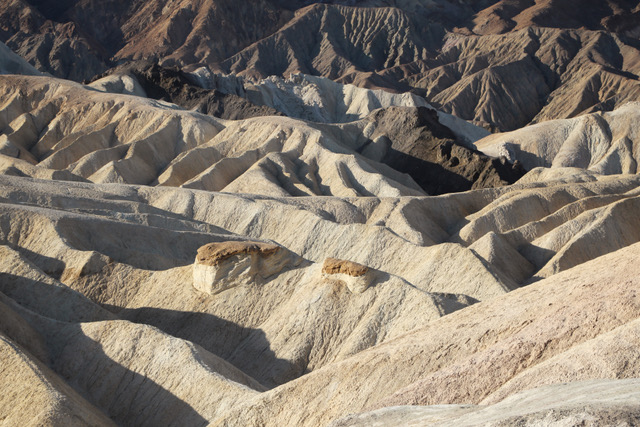 Zabriskie Badlands: This closer view of the badlands to the south of the walkway shows the yellowish and brown coloration of the area and some of the dark gray and white coloring as well as the textures of the soil in the area. The yellowish soil contains borax, which is used in detergents and soaps and dozens of other products still today. The product was discovered in Death Valley in the 1880s and mined extensively in the area until the 1970s when mining in national parks became illegal. No mining operations are found in the national park today. Death Valley is home to the 20 Mule Team Borax detergent popular for many years. (Now I’m showing my age!) Photo by Gary Warren/ladailypost.com