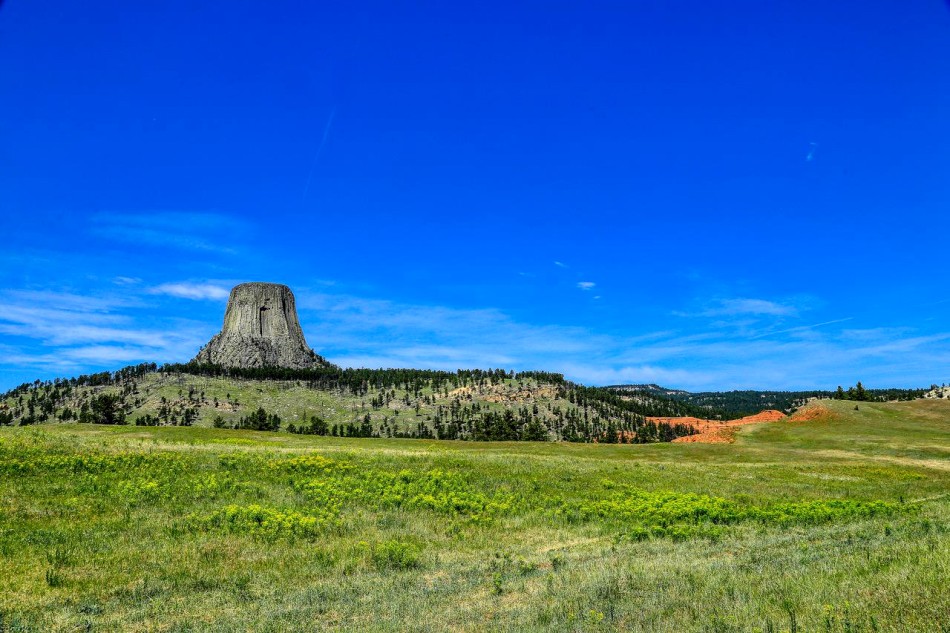
 Distant View: Devils Tower in northeastern Wyoming is an easy landmark to spot. Photo by Gary Warren/ladailypost.com
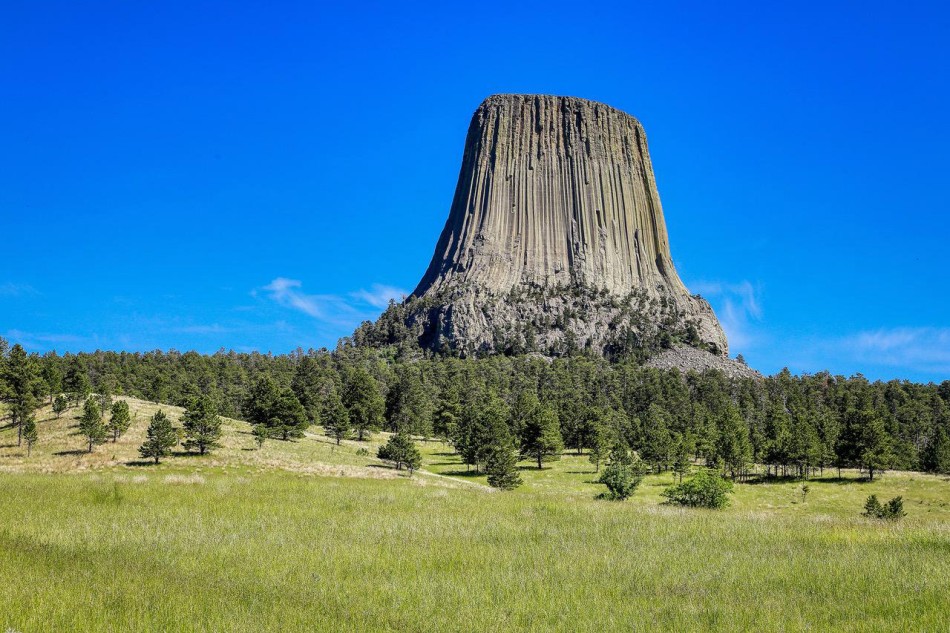 Approaching the Tower: When approaching the Devils Tower visitors begin to see detail in the geological formation. The vertical columns and cracks become more visible as you get near the tower. Photo by Gary Warren/ladailypost.com
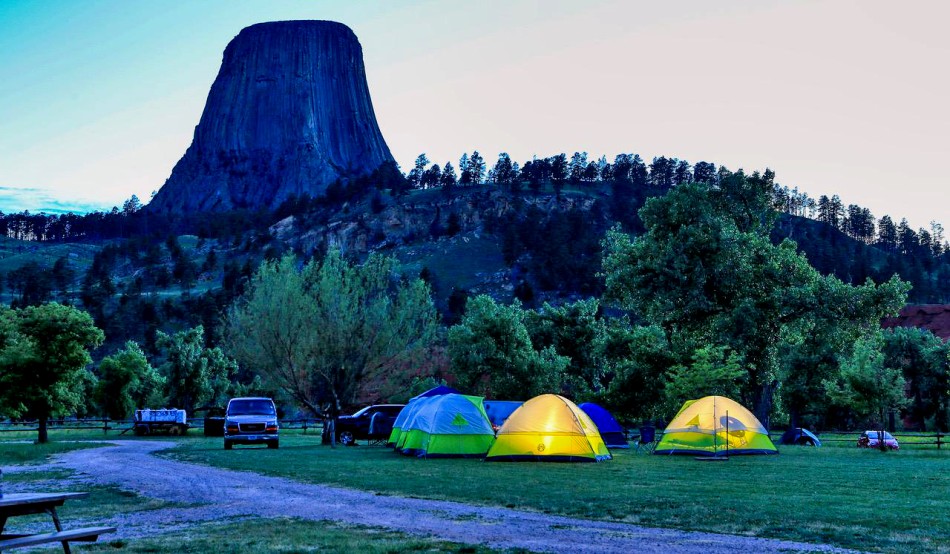 Campers: Tent campers close to our campsite create an interesting visual when the tents were lit against the dark background of the trees nearby and the Devils Tower looming in the evening sky. Photo by Gary Warren/ladailypost.com
By GARY WARREN
Photographer
Formerly of Los Alamos
In the northeast corner of the state of Wyoming stands Devils Tower National Monument. This magnificent geological wonder was named our country’s first national monument by President Theodore Roosevelt in 1906.
Devils Tower is a massive granite butte that rises 1,267 feet above the banks of the Belle Fourche River. The elevation at the top of the tower is 5,112 feet. The butte can be seen for miles and is shaped like a tree stump. There is no mistaking Devils Tower the first time you see it.
The tower is considered sacred by Northern Plains Indians who also called the rocky butte Bear Lodge. It was said that the vertical columns seen on the rocky surface are from bear claws when bears attempted to climb the tower. There have even been attempts to change the name of the national monument to Bear Lodge but it has never passed.
The Devils Tower is surrounded by pine forests and grass lands. The area is home to a variety of wildlife ranging from small mammals to deer and bear. Dozens of species of birds are present during the year and fish are plentiful in the Belle Fourche River. While the tower is in Wyoming, this area is an extension of the Black Hills on the western side of South Dakota.
Camping and hiking are favorite activities for visitors at Devils Tower National Monument. However, climbing is said to be extraordinary at the park. The unique parallel columns and cracks on the exterior of the tower make for climbing unlike most other rock climbing walls.
Climbing is allowed except during two closures per year. Climbing is not allowed in early April to protect nesting falcons. There also is a voluntary closure of all climbing in June in honor of native American culture and sacred ceremonies, which take place during that time.
The Devils Tower National Monument is open year round and sees more than 500,000 visitors per year. However, about 80 percent of visitors are seen between May and September. We visited the area in June, which was ideal except no climbers were allowed on the tower during the voluntary closure.
Devils Tower is a unique geological formation best appreciated by visiting and seeing in person. The Black Hills area is a great travel destination with many things to see and do and Devils Tower National Monument should be on everyone’s list of places to see.
Editor’s note: Longtime Los Alamos photographer Gary Warren and his wife Marilyn are traveling around the country, and he shares his photographs, which appear in the “Posts from the Road” series published in the Sunday edition of the Los Alamos Daily Post.
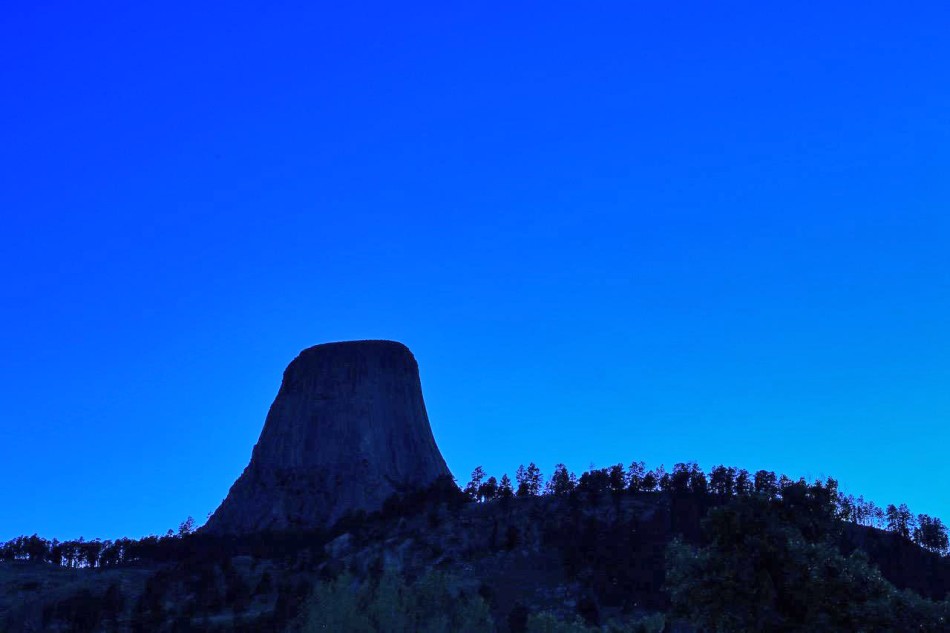 Silhouette: An evening silhouette of Devils Tower stands out in the evening light as seen from our campsite near the massive formation. Photo by Gary Warren/ladailypost.com
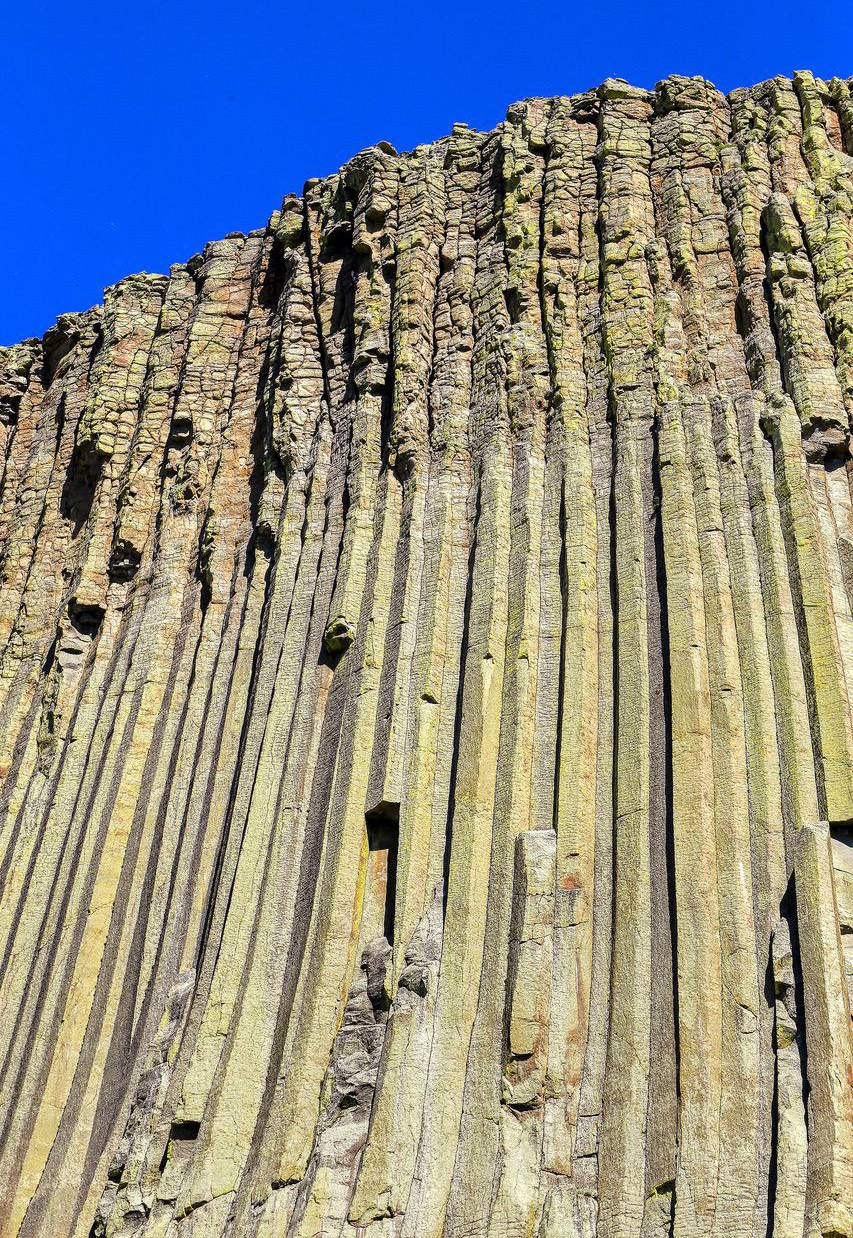 Climbing Wall: A detailed shot of the Devils Tower shows the wall, which attracts climbers from around the world. The vertical columns and cracks create a climbing wall much different than most rock formations. Photo by Gary Warren/ladailypost.com
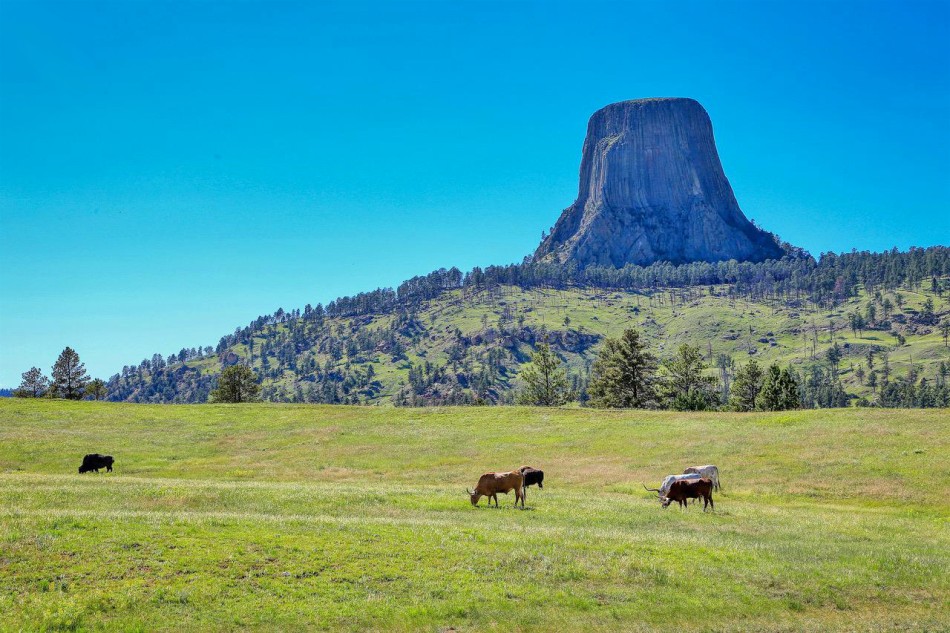 Grazing: Several head of cattle and one bison are seen grazing in a field near the Devils Tower National Monument. The monument was established in 1906 and was the country’s first national monument. Photo by Gary Warren/ladailypost.com