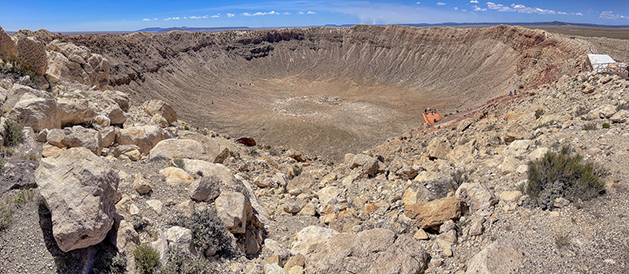
 Panoramic View: A panoramic view of the Meteor Crater as seen from the upper viewpoint on the rim shows the massive crater which is 3/4 of a mile wide and 560 feet deep. The reddish deck to the right of center is the lower viewpoint. To the far right is a portion of the rooftop on the visitors center. Photo by Gary Warren/ladailypost.com
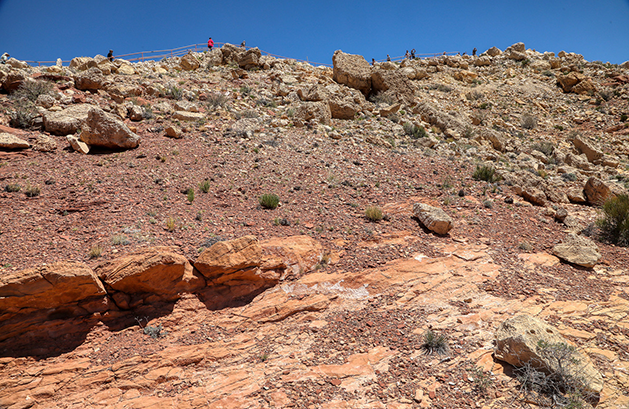 Upper Viewpoint: While on the lower viewpoint, I photographed the upper deck viewpoint where the panoramic photo was made. The two viewpoints are about 250 feet differences in elevation. Also shown are the crater walls and the massive rocks which were thrown about during impact. Photo by Gary Warren/ladailypost.com
By GARY WARREN
Photographer
Formerly of Los Alamos
Fifty thousand years is a long, long time. However, in geological terms it is considered more recent compared to other geological events which date back millions of years. It was 50,000 years ago that a meteorite burst through the earth’s atmosphere at 26,000 miles per hour and crashed into the high desert in what is now northern Arizona.
The massive Meteor Crater, also known as Barring Crater, was first discovered in the later 1800s and was first thought to be an extinct volcano. In 1891 fragments believed to have been silver were analyzed and found to be iron-nickel and it was then that the crater may have been formed by a giant meteorite.
Mining engineer Daniel Barringer became interested in the site in 1902 and visited the area for possible mining of iron. Barring formed the Standard Iron Company because he believed that the body of the meteorite would be buried at the site of the crater. He later purchased two square miles of property including the crater site.
Barringer spent the next 26 years studying and drilling in the crater attempting to find the iron but the best he could do is find a few fragments. It was confirmed that it was an iron-nickel meteorite that collided with the earth. Studies show that the meteorite disintegrated and melted upon impact leaving only fragments. The Barring family continues continues to own the property today.
The Barring family entered into a lease agreement with Bar T Bar Ranch Company who holds lease all around the Meteor Crater and a operate corporation, Meteor Crater Enterprises, Inc. was formed to operate and maintain the crater site. The Barringer’s retain ownership of the crater and they and the Meteor Crater Enterprises regard the property as a public trust. All improvements including the modern visitors center have been paid for by the Enterprise. All maintenance and staff are paid by the Enterprise.
The trust allows scientists to continue studying the crater. The U.S. Geological Survey and others monitor and study the crater using today’s more sophisticated tools and knowledge. NASA has provided astronauts with extensive training as they study the surface of the crater compared to the surface of the moon. NASA remains associated with the Enterprise and astronauts continue to train at the site today.
What makes the Meteor Crater different from other impact craters is the condition of this crater. Many times the craters are leveled by erosion but not the case at Meteor Crater. Meteor Crater is the best preserved meteorite impact sites on earth. Scientists believe that the crater has changed very little over 50,000 years.
The diameter of the meteorite upon impact was about 160 feet. The resulting crater is almost 3/4 of a mile and 560 feet deep. The earthen rim which was a result of the impact is 150 feet high. The circumference of the crater is 2.4 miles.
Visitors to the Meteor Crater are able to tour the Barring Space Museum and view the massive crater from various viewpoints near the visitors center. Guided tours are provided which allow visitors to walk a small portion of the rim. Also available is a movie depicting the impact of the meteorite and the resulting crater. Also within the visitors center is a gift shop and a coffee shop which also serves light lunches.
Meteorite Crater is located a short drive south of I-40 between Winslow, Ariz. and Flagstaff, Ariz. It is an easy detour when traveling the area and well worth the stop.
Meteorite Crater is one of the most extraordinary places on earth. It is a learning experience for visitors that is beyond words. One can only imagine the events in the area during impact.
Editor’s note: Longtime Los Alamos photographer Gary Warren and his wife Marilyn are traveling around the country, and he shares his photographs, which appear in the “Posts from the Road” series published in the Sunday edition of the Los Alamos Daily Post.
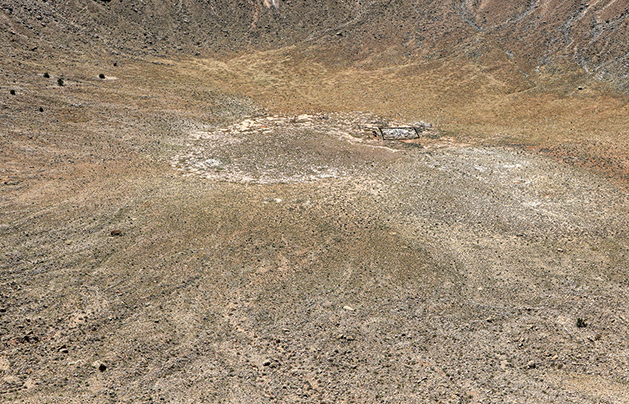 Crater Floor: The crater floor is where much of the research and testing take place at Meteor Crater. The image was made with a telephoto lens and I have marked an area near the center with a black line. Within those boundaries are where much of the early drilling and research was conducted. Photo by Gary Warren/ladailypost.com
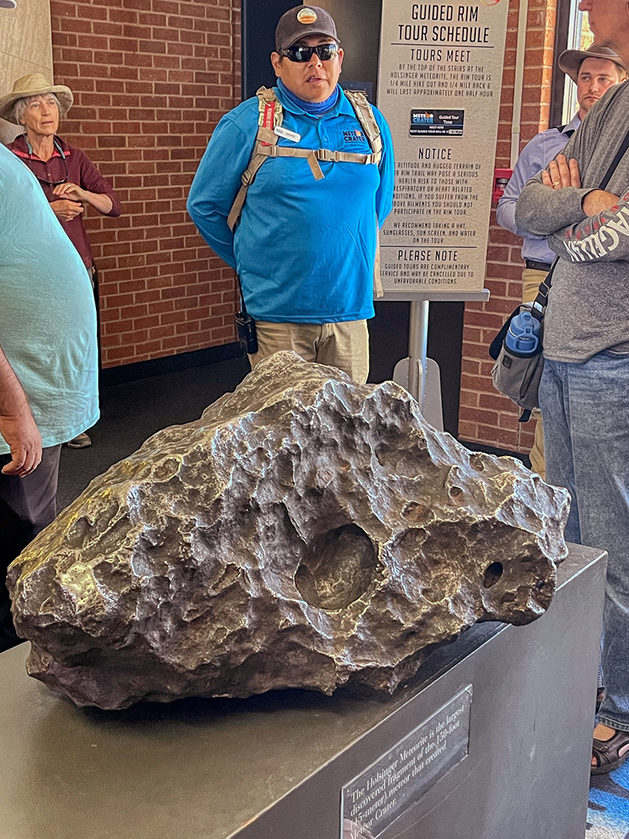 Meteorite: The largest meteorite found in the area following the impact is this meteorite which weighs over 1,400 pounds. The tour group that we were a part of gathered at the display to begin our tour. Our tour guide, Jeremy, discusses the meteorite and other interesting facts about the Meteorite Crater. Photo by Gary Warren/ladailypost.com
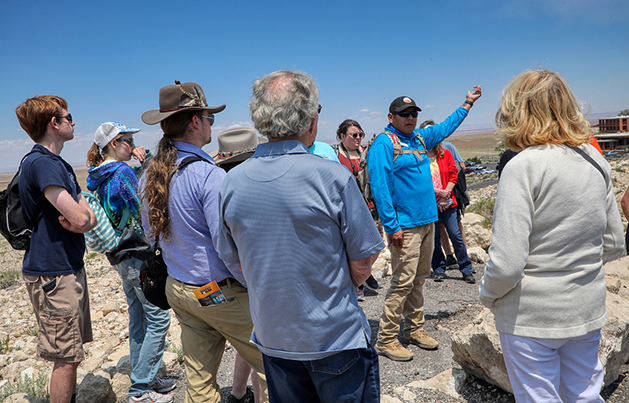 Tour Group: Shown is our tour group on the rim trail a short distance from the visitors center. Tour guide Jeremy points out many facts about the crater as well as the surrounding high desert landscape where one could see for mile and miles. Photo by Gary Warren/ladailypost.com
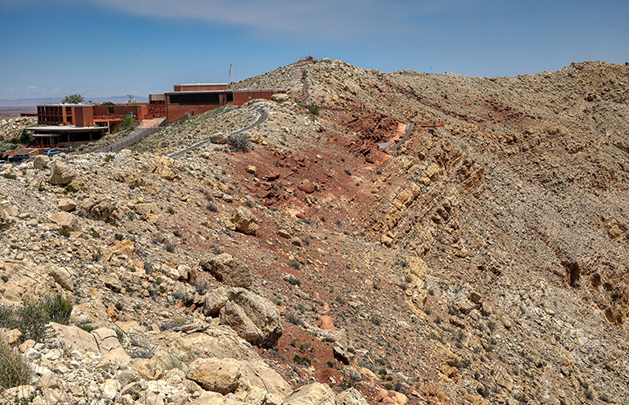 Visitors Center: A view of the visitors center while on our crater rim tour reveals the modern facility which houses many of the learning opportunities for visitors. Also seen is the crater wall in this portion of the crater wall which show the powerful uplift of the desert during impact of the meteorite. The rim of the crater was raised about 150 feet above the desert floor in the area. Photo by Gary Warren/ladailypost.com