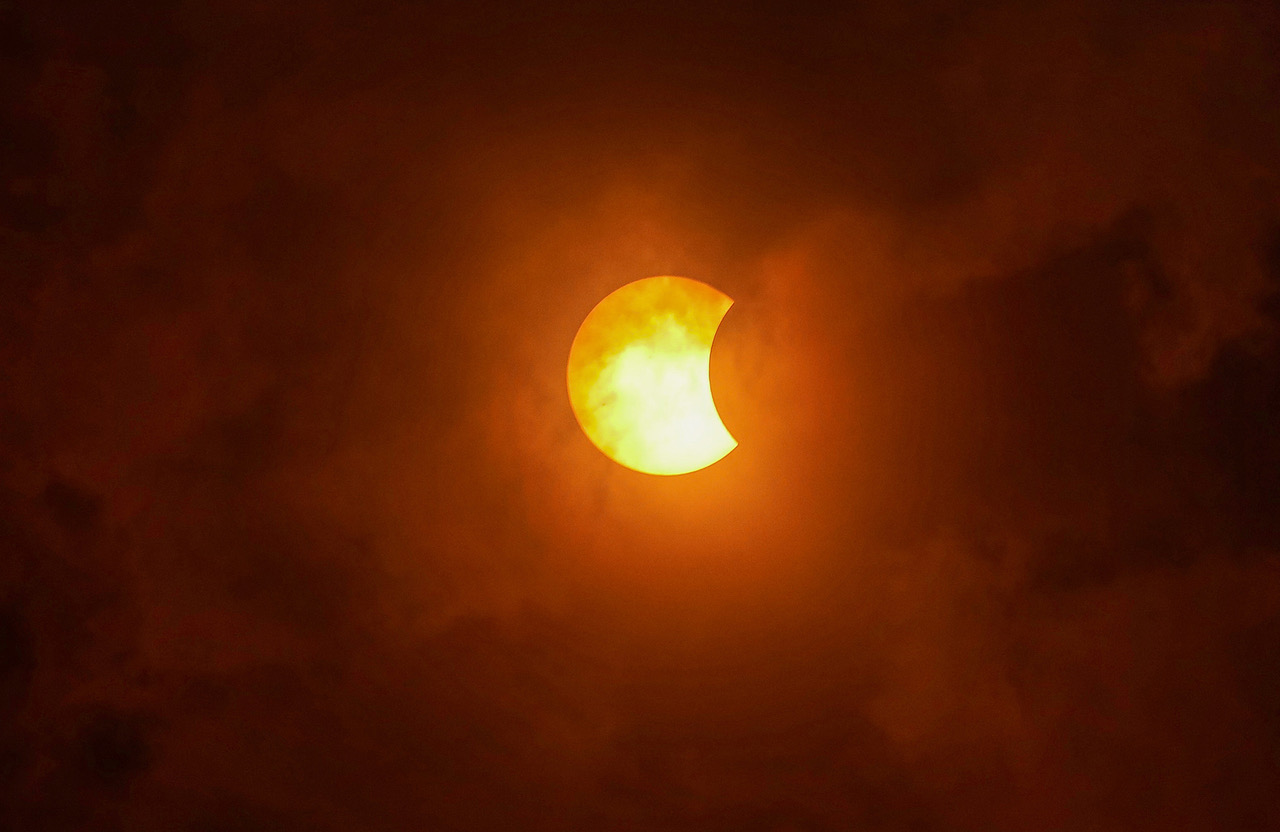
 Early Eclipse: A few minutes after the beginning of the partial eclipse it was obvious that the eclipse was in progress. Some high clouds were obstructing this view but the eclipse was easily seen. Photo by Gary Warren/ladailypost.com
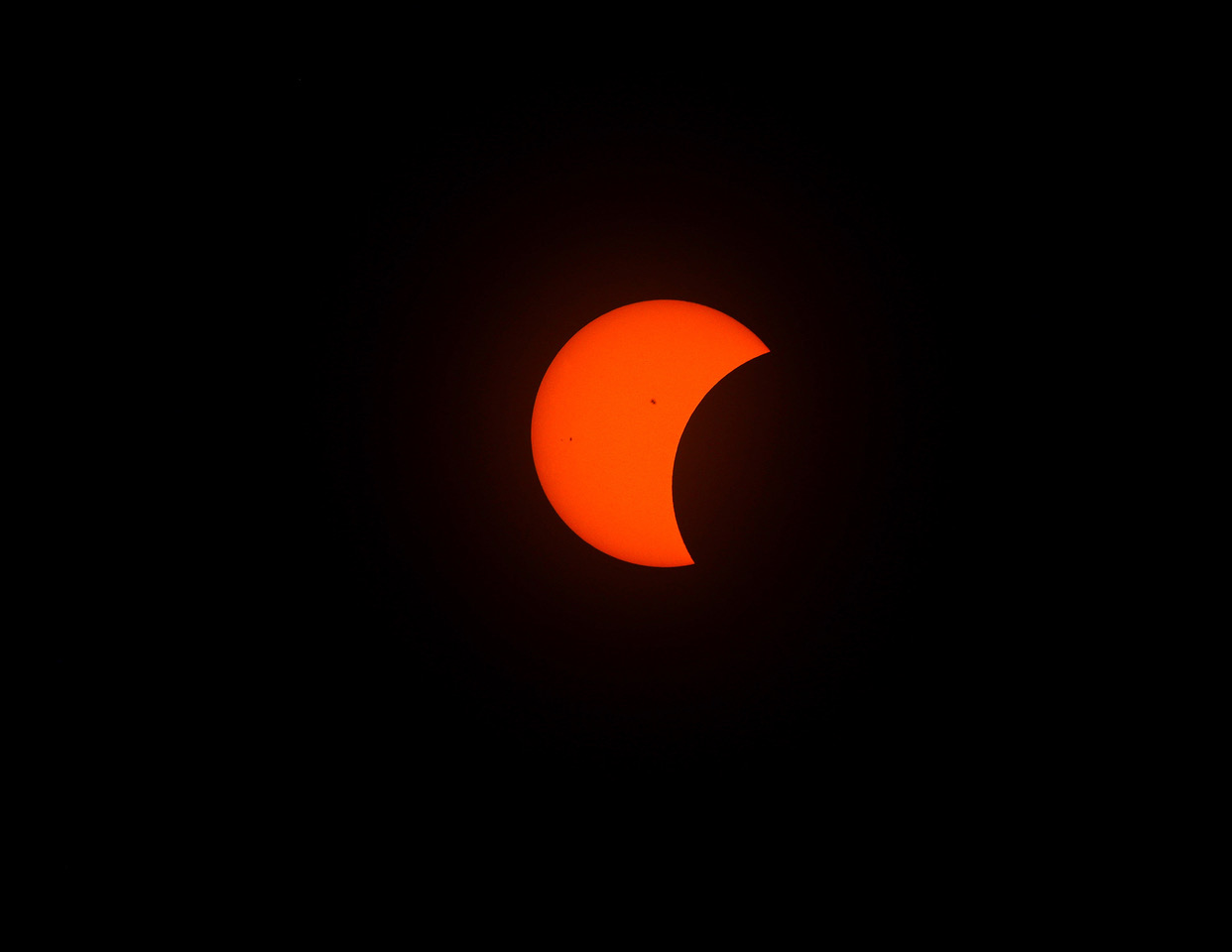 Clearing Skies: A short time following the first photo above, the skies cleared making the eclipse easier to see. The clouds continued to come and go but did not become heavy enough to block the view until after the period of totality. Photo by Gary Warren/ladailypost.com
By GARY WARREN
Photographer
Formerly of Los Alamos
A miracle of nature occurred this week with the total solar eclipse on April 8. To experience a total solar eclipse is very difficult to put into words. However, it is worth any effort needed to see and experience this phenomenal display of nature in the path of totality (the area in the center of the total eclipse where the moon completely blocks the sun).
We are fortunate in that this is our second total solar eclipse to witness within the last decade. In August 2017 we saw the total solar eclipse while in Alliance, Neb. which was on the line of totality. This week we witnessed the eclipse from Buchanan Lake in Texas, which was also located on the line of totality.
The next total solar eclipse which will be visible in North America is in August 2044 but that event will occur mostly in Canada. Only three U.S. states will experience totality; Montana, North Dakota and South Dakota. However, in 2045 a total solar eclipse will cross the U.S. from California to Florida. Unfortunately, I will be 94 and 95 years old when those next solar eclipse occur meaning this was probably my last total solar eclipse to experience.
We met friends from New Mexico, Utah and Colorado at Buchanan Lake, where we reserved a camping spot on private property to accommodate our four RVs. We were able to walk a short distance on a peninsula to watch the eclipse in an area that was remote and not crowded. The lake bed in this part of Buchanan Lake was dry but that did not affect our experience at all.
The partial eclipse began at 12:17 p.m. Monday and lasted until 1:34. The progression of the eclipse was easy to follow while viewing through our special filtered eclipse glasses. At 1:34:36 p.m. the start of the total eclipse began, peaking at maximum totality at 1:36 p.m. The total eclipse lasted 4 1/2 minutes, which was about double the total eclipse time in 2017. At 1:39 p.m. the total eclipse was completed and the partial eclipse resumed for the remainder of the eclipse.
The weather forecast for our region of Texas was predicted to be cloudy with a chance of rain. We indeed did wake up to cloudy skies but as the morning progressed the clouds began to dissipate. By the time the eclipse was scheduled to begin, we experienced mostly clear skies with clouds moving in and out.
During the minutes of the total eclipse, the skies darkened and the clouds disappeared overhead completely. Some clouds could be seen across the horizon but the sky was clear.
Just minutes after the total eclipse was completed the clouds moved in even heavier than earlier in the day. We experienced a brief rain shower late Monday afternoon but the entire event was completed by that time.
While it is exciting to see the entire process, the seconds leading up to the four and one half minutes of total eclipse are by far the highlight of the event. When the skies darken and the total eclipse begins, we could hear crowds of people from other nearby viewing areas at Buchanan Lake.
To experience a total solar eclipse in the path of totality is amazing. We feel very fortunate to have witnessed the two total solar eclipses in 2017 and 2024. Mother nature is amazing and the weather for the event Monday was an additional blessing.
Editor’s note: Longtime Los Alamos photographer Gary Warren and his wife Marilyn are traveling around the country, and he shares his photographs, which appear in the “Posts from the Road” series published in the Sunday edition of the Los Alamos Daily Post.
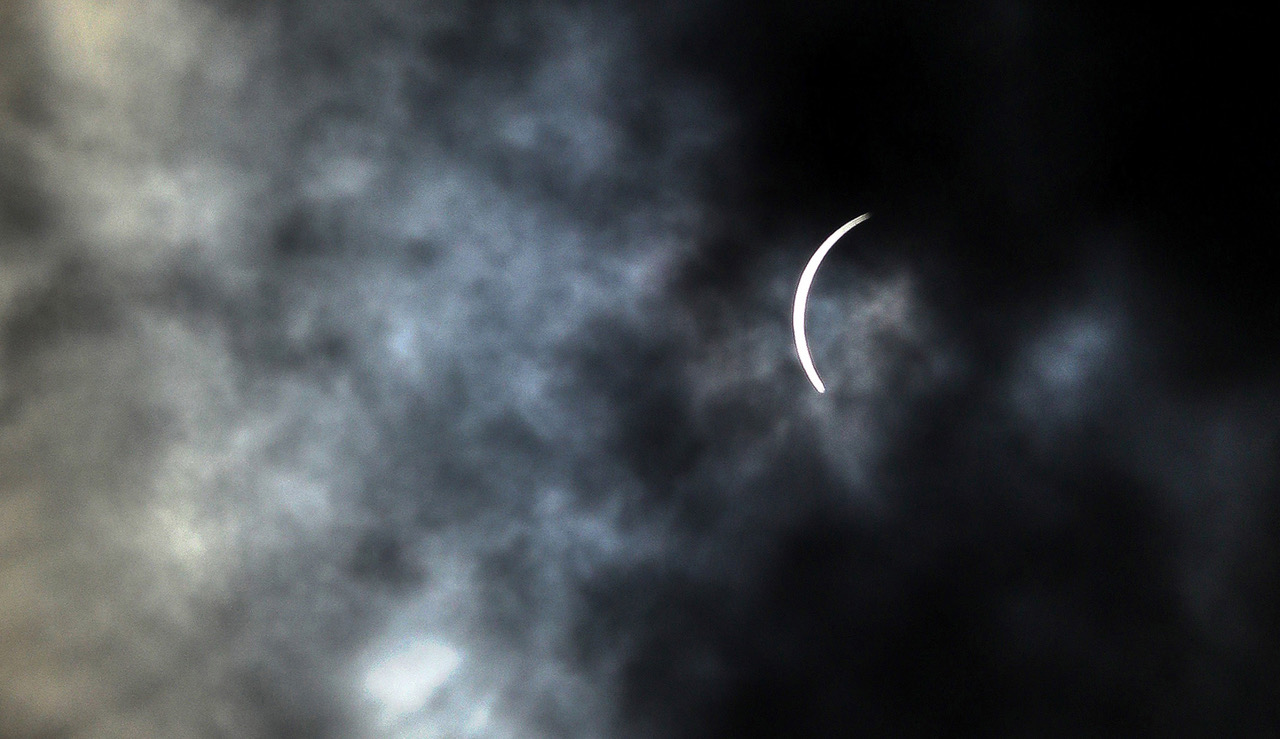 Clouds: While we were disappointed to have the clouds on this special day the clouds did provide some dramatic photos of the process. Shown are clouds as they pass by the eclipse just a short time before totality. Photo by Gary Warren/ladailypost.com
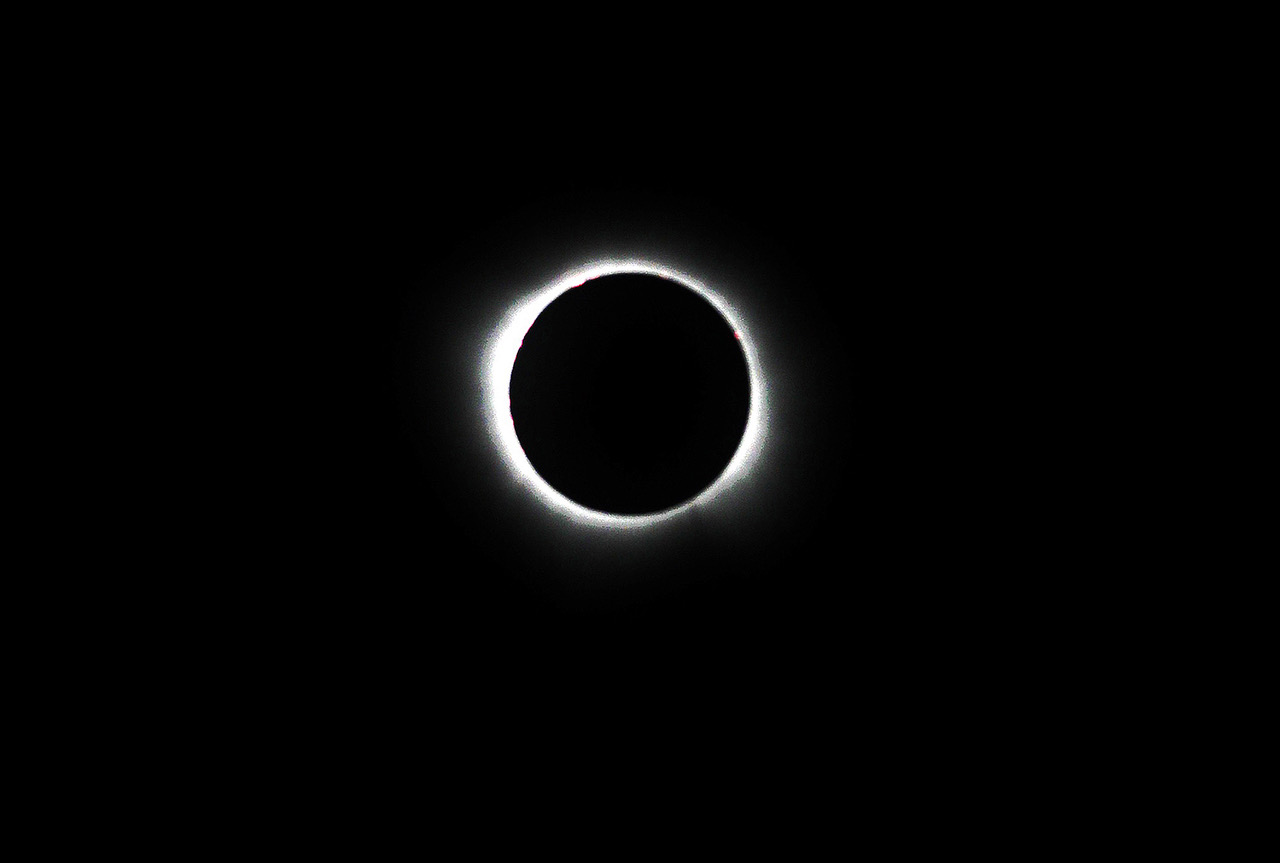 Totality: The total eclipse occurs when the moon completely blocks the sun. The skies become darker and the temperature drops. This just last for a few minutes (four and 1/2 minutes at our location) but the experience is amazing. Photo by Gary Warren/ladailypost.com
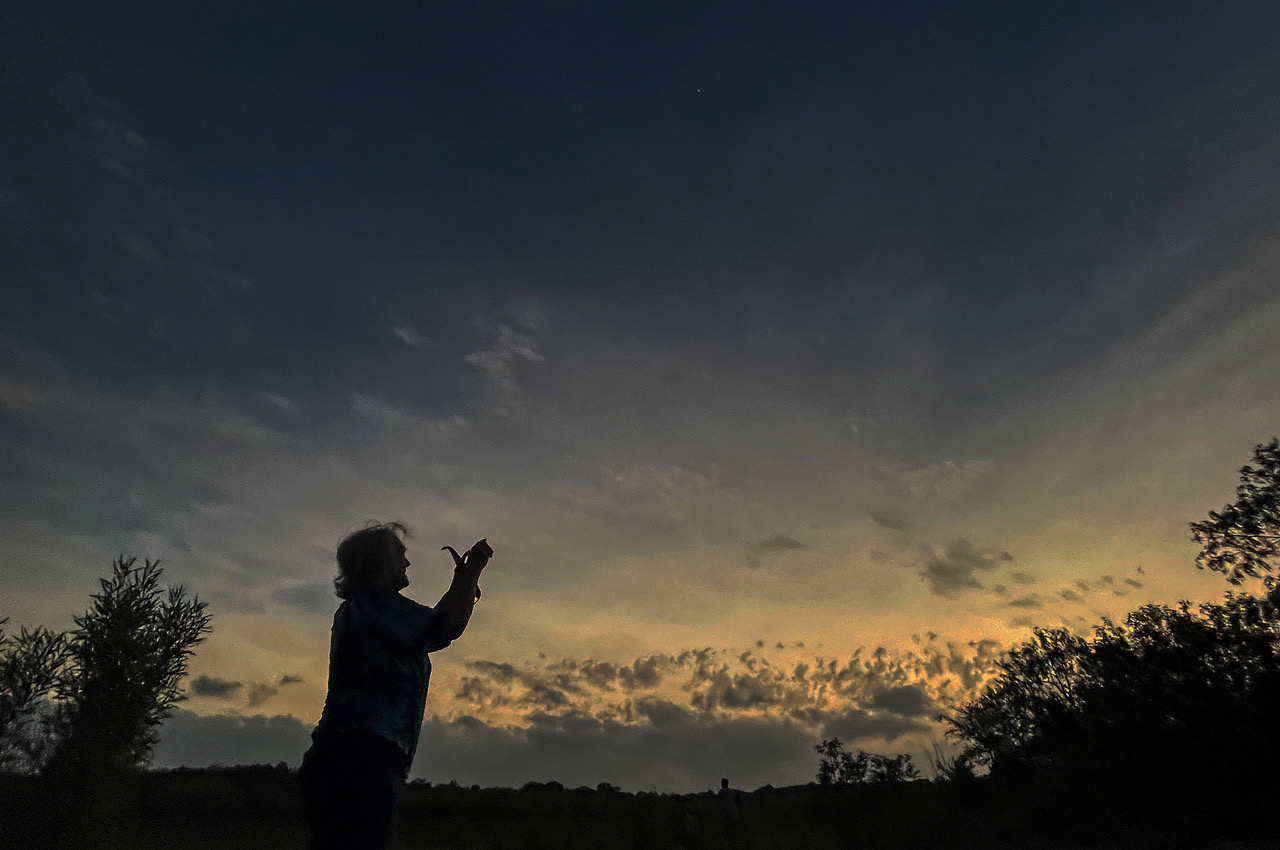 Scene of Totality: During the short time of totality I glanced over and saw my wife Marilyn taking a photo with her iPhone. I grabbed my phone and took a few shots of her illustrating a scene of totality. Photo by Gary Warren/ladailypost.com