NMED News:
SANTA FE — New Mexico Environment Department (NMED) said New Mexico is stepping up to help residents and workers surrounding Cannon Air Force Base near Clovis by offering free blood tests for PFAS, a group of man-made chemicals that can affect your health.
These tests are available to anyone who has lived or worked in certain areas around the base, where PFAS contaminated the local water supply.
PFAS, or per- and polyfluoroalkyl substances, are a group of synthetic chemicals used in a variety of products, including food packaging, nonstick cookware, and certain types of fire-fighting materials.
They are often referred to as “forever chemicals” because they do not easily degrade in the environment, building up over time in soil, water and living organisms.
Studies have shown a link between PFAS and numerous adverse health effects, including increased cholesterol, reproductive problems and cancer. Additional information about PFAS is available here.
To help people understand their exposure, the New Mexico Environment Department (NMED), the Department of Health (NMHealth), and the Department of Veterans’ Services are joining forces to offer these free tests.
This allows those impacted by the release of PFAS into local groundwater and their healthcare providers to quantify exposure and manage potential health impacts. It also helps NMHealth inform future public health actions, such as working with communities to increase awareness about the importance of testing private wells and providing residents with resources about testing water for PFAS and methods of water treatment.
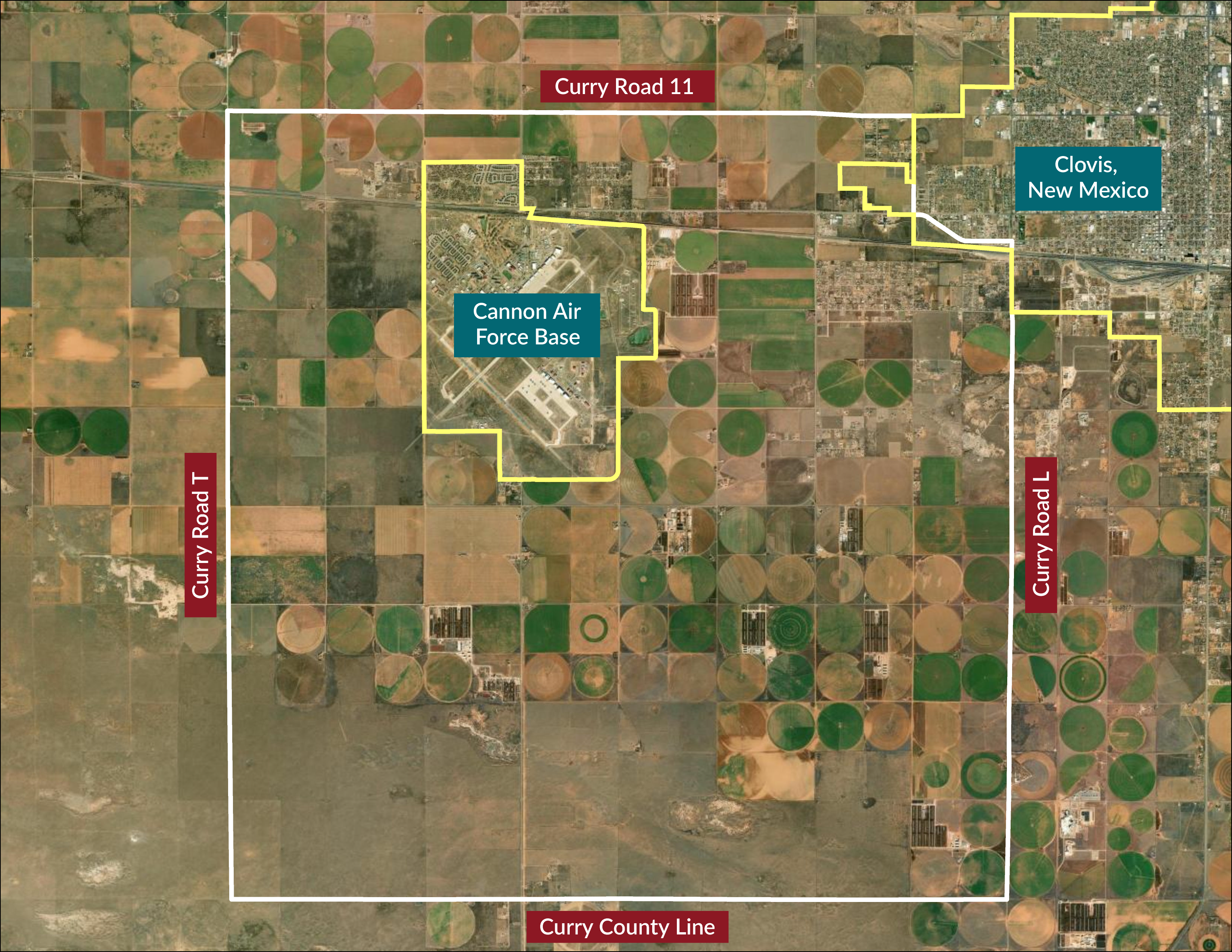
Together, the state agencies will host a public meeting starting at 6 p.m., Aug. 27 at the Clovis Civic Center (801 Schepps Blvd., Clovis, New Mexico 88101) to share information with those interested in participating and assist in making appointments. Testing will be performed during two periods: Sept. 12 through Sept. 18 and Oct. 3 through Oct. 9. No PFAS blood testing will be performed at the public meeting Aug. 27. At this time, only current New Mexico adults who have worked or lived in the white-outlined area of the map attached to this release are eligible. If future testing is warranted, the state may increase eligibility outside this initial area.
“The unfortunate truth is that most of us likely have PFAS in their blood due to the common use of these chemicals in consumer products like non-stick cookware and waterproof clothing,” NMED Secretary James Kenney said. “However, our residents who live on or near military installations like Cannon Air Force Base may be at significantly higher risk due to the Department of Defense’s longstanding practice of releasing PFAS into nearby groundwater. The Department of Defense’s lack of responsible and meaningful clean-up outside of Cannon Air Force Base over the last five years increases the risk of exposure to New Mexicans.”
“This blood testing project allows residents to be more aware of their contamination level and consult with their healthcare provider in how to manage its potential effects,” Kenney continued.
All PFAS blood testing is completely free and totally confidential. From one teaspoon-size blood sample, the laboratory will measure 33 different PFAS commonly found in firefighting foams and consumer goods. Participants will receive their results within three to four months of their appointment via a letter that explains how to understand the data. In addition, NMHealth will offer access to public health staff members via a help line to discuss your results and answer any questions. All participants will be given a $25 physical gift card after completing their appointment.
While there are no medical treatments available to reduce PFAS in your body once you are exposed, there are practical steps you can take to limit further exposure. In addition, sharing PFAS blood testing data with your medical provider can assist in more informative discussions when it comes to prevention and treatment of issues.
“Based on your family health history, your health care provider may recommend further tests,” Department of Health Sec. Patrick Allen said. “Issues broadly ranging from high cholesterol, and pregnancy concerns, to types of certain cancers all play a role in what actions your health provider may recommend.”
PFAS, primarily from firefighting foams, were discharged into soil at firefighting training areas around Cannon AFB. Those chemicals made their way into the underlying Ogallala Aquifer, which serves as a drinking and agricultural water source for thousands of residents in the Clovis area. Based on tests performed by EPCOR, the area’s primary local drinking water supplier, as recently as 2023, public drinking water was deemed safe. NMED does not have information on the PFAS testing cycles of some small public water systems in the area.
Unlike at installations such as Reese Air Force Base in Lubbock, Texas, the U.S. Department of Defense has not cleaned up any of its PFAS plume that migrated off Cannon Air Force Base since its discovery.
Additional information about PFAS is available here.