Science

Nine LANL Researchers Named 2022 Laboratory Fellows

Top row from Left: David Chavez, Tim Germann and Neil Harrison. Center row from left, Ricardo Lebensohn, Hui Li and Babetta Marrone. Bottom row from left, Karissa Sanbonmatsu, Lin Yin and Jianxin Zhu. Courtesy/LANL

LANL News:

Nine researchers have been named 2022 Los Alamos National Laboratory Fellows: David Chavez, Tim Germann, Neil Harrison, Ricardo Lebensohn, Hui Li, Babetta Marrone, Karissa Sanbonmatsu, Lin Yin and Jianxin Zhu.

“These nine researchers are some of the best minds in their fields and it is an honor to recognize them as Laboratory fellows,” Thom Mason said, Laboratory director. Read More
LANL News Roundup For Week Of Oct. 17, 2022

Science: First phase of new supercomputer installed:

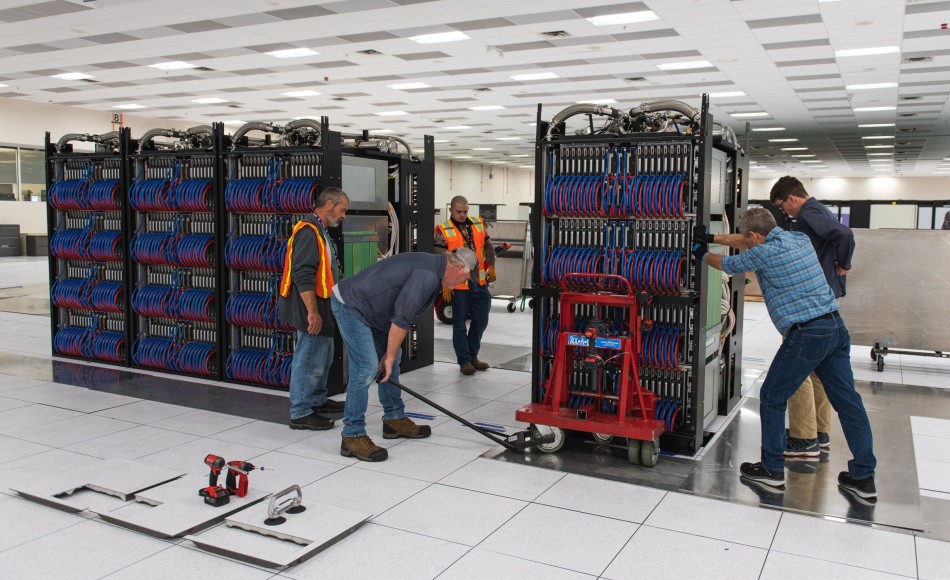
The critical first phase of Los Alamos National Laboratory’s (LANL) newest supercomputer, Crossroads, has been successfully installed. Called Tycho, this machine is a stepping-stone to Crossroads, which will replace Trinity as the Laboratory’s primary supercomputer in the coming year and will support next-generation weapons simulations. Read full article here. Courtesy/LANL

LANL News:

Los Alamos National Laboratory (LANL) shares a compilation of news stories for the week of Oct. 17, 2022.

People: Winners of Los Alamos’ most Read More

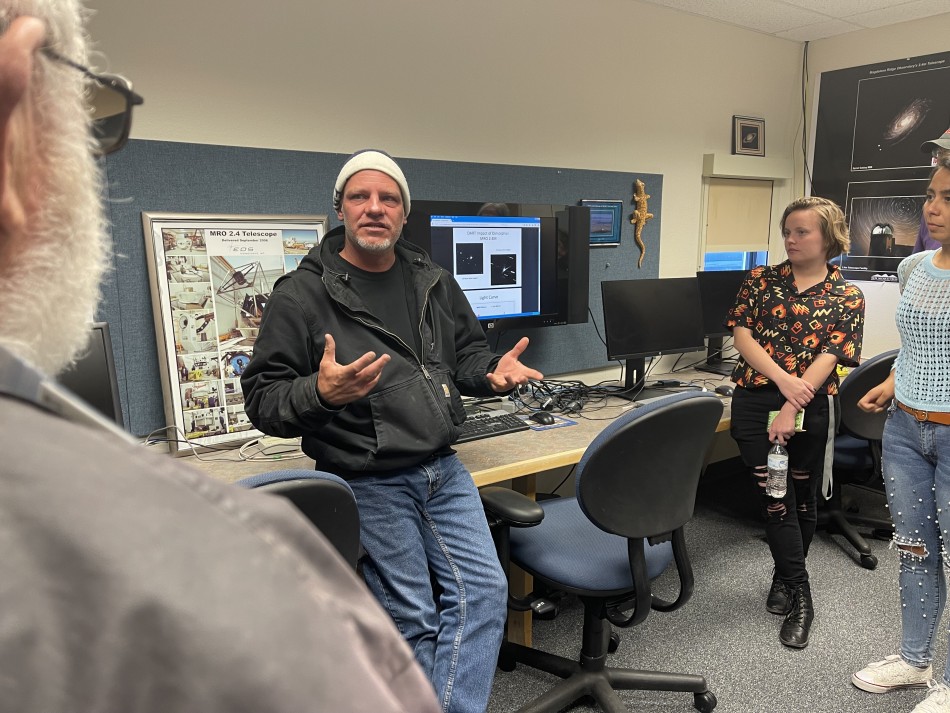
Students, Alums Tour Magdalena Ridge Observatory

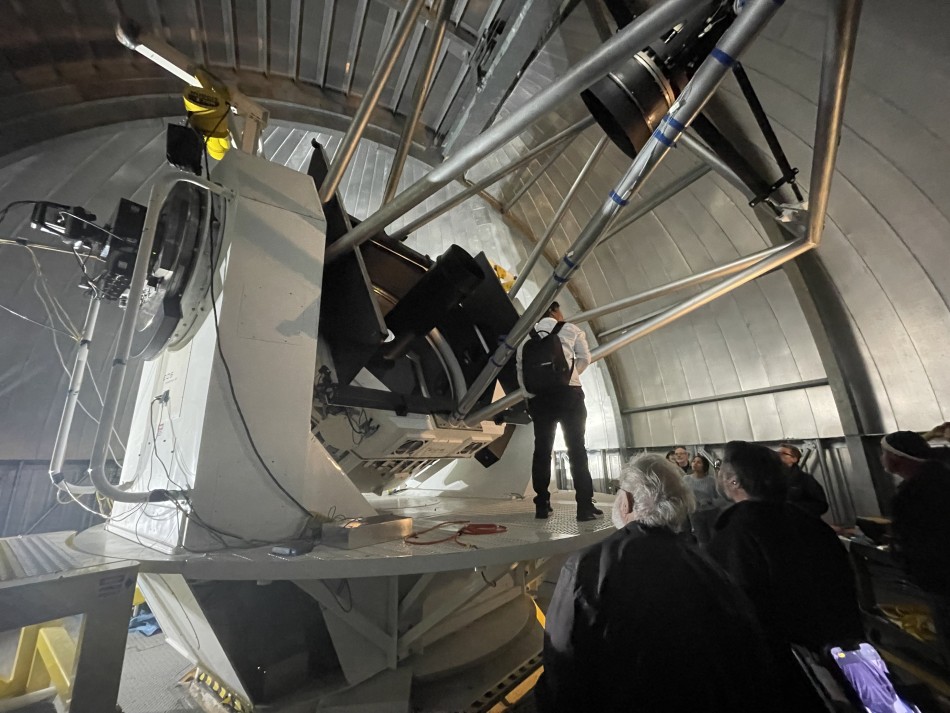
Paul Loskamp, maintenance technician for the 2.4-meter Telescope at the Magdalena Ridge Observatory, describes how the telescope has played a key role this fall in NASA’s Double Asteroid Redirection Test Mission to capture images of the asteroid Dimorphos’ light trail that resulted from impact from a spacecraft aimed at knocking it off its orbit. Courtesy/NMT

Students and alumni take turns peering into the 2.4-meter Telescope as part of a special behind-the-scenes tour of Magdalena Ridge Observatory. Courtesy/NMT

NMT News:

SOCORRO — Two groups of New Mexico Tech (NMT) students and alumni Read More

Verus® Research Renews $19.5 Million Contract With Air Force Research Laboratory Directed Energy Directorate

Verus Research CTO Dr. J. Mark DelGrande

BUSINESS News:

ALBUQUERQUE — Verus® Research, a New Mexico-based team of scientists and engineers specializing in advanced research and development, announces it has renewed its High Power Electromagnetics (HPEM) Empirical Effects support for the Air Force Research Laboratory Directed Energy Directorate.

The $19.5 million, five-year contract focuses on understanding and quantifying the effects of HPEM waveforms.

“After a competitive bid and selection process, we are honored to receive the award and renewal of the HPEM contract. It shows the Read More

Tellus Science Museum Acquires Recently Fallen Meteorite

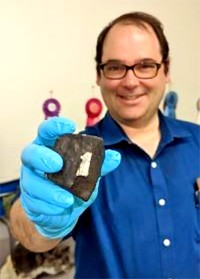
Tellus Curator Ryan Roney

Tellus Science Museum News:

CARTERSVILLE, GA — A meteorite exploded over south Georgia during the overnight hours of Sept. 26, 2022, spraying fragments across the small town of Junction City, GA, and Tellus Science Museum has already acquired a piece of the space rock.

At 12:04 a.m., EDT that morning, the meteorite burst into a bright fireball that lit up the sky over Talbot County. The meteor was captured flying across the sky by a camera operated by planetary astronomer Dr. Ed Albin. After analyzing radar data and watching the captured video, Dr. Albin and fellow meteorite Read More

NCP Free Green Chile Cheeseburger Day Tuesday Oct. 25

Nuclear Care Partners (NCP) is hosting a FREE Green Chile Cheeseburger luncheon to honor current/former Atomic and Department of Energy employees and their family members Tuesday, Oct. 25. You must call the Betty Ehart Center to sign up by Monday, Oct. 21, at 505.662.8920. NCP will be on hand with a fond remembrance, prizes and resources. A small resource fair will take place upstairs with community partners that support the needs of seniors in the community. Those seniors 60 and over can join the senior center for free and learn about all of the great programs availble. Courtesy/Bernadette Read More

LANL News Roundup For Week Of Oct. 10, 2022

Science: AI predicts physics of future fault slip in laboratory earthquakes:

An artificial-intelligence approach borrowed from natural-language processing — much like language translation and auto-fill for text on your smartphone — can predict future fault friction and the next failure time with high resolution in laboratory earthquakes. The technique, applying AI to the fault’s acoustic signals, advances previous work and goes beyond by predicting aspects of the future state of the fault’s physical system. Read the full article here. Courtesy/LANL

LANL News:

Los Alamos National Read More

Top NNSA Leaders Visit Kazakhstan, Discuss Continued Security, Nuclear Nonproliferation Cooperation

Administrator Jill Hruby

NNSA News:

WASHINGTON, D.C. — Jill Hruby, Administrator of the National Nuclear Security Administration (NNSA), and Frank Rose, Principal Deputy Administrator of the NNSA, completed a successful trip Oct. 5 to Kazakhstan.

The trip served as a chance for Administrator Hruby and Principal Deputy Administrator Rose to thank senior Kazakhstan government officials for the strong nonproliferation and nuclear security partnership that exists between the United States and Kazakhstan, which has resulted in many notable achievements including Project Sapphire, Read More

AGU: Rainy Days On Track To Double In Arctic By 2100

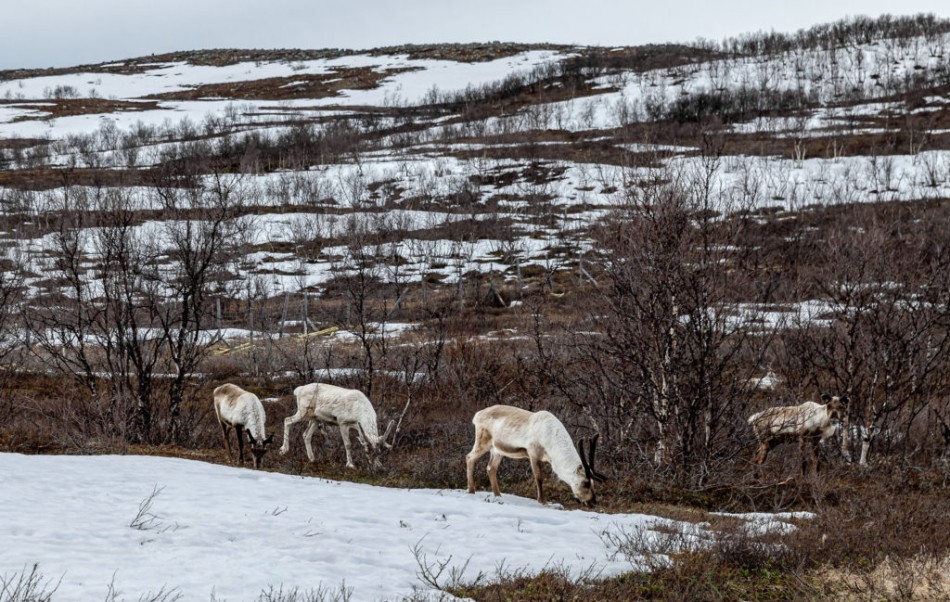
With rainy days in the Arctic predicted to double by 2100, ice could coat critical reindeer food sources more often, say the authors of a new study in Earth’s Future. Courtesy/Ninara/flickr

AGU News:

WASHINGTON, D.C. — Today, more snow than rain falls in the Arctic, but this is expected to reverse by the end of the century. 

A new study shows the frequency of rainy days in the Arctic could roughly double by 2100.

The Arctic is the northernmost region of the Earth, encompassing the Arctic Ocean and northernmost parts of Alaska, Canada, Russia, and Greenland. As the planet warms, more frequent and Read More

Mexican Wolf Recovery Plan Revision Draws Mixed Reviews From Wildlife Advocates

WEG News:

TUCSON — Wildlife advocates expressed mixed feelings about the Mexican Wolf Recovery Plan, Second Revision that was released by the U.S. Fish and Wildlife Service Friday.

The plan includes positive actions towards wolf recovery but also does not go far enough in addressing the dire threats to the species.

“Recovery plans are supposed to be based on the best available science,” said Greta Anderson, deputy director of Western Watersheds Project. “The recovery objectives in this plan – improve genetic diversity, ensure adequate habitat availability – are laudable, but the actual Read More