Science

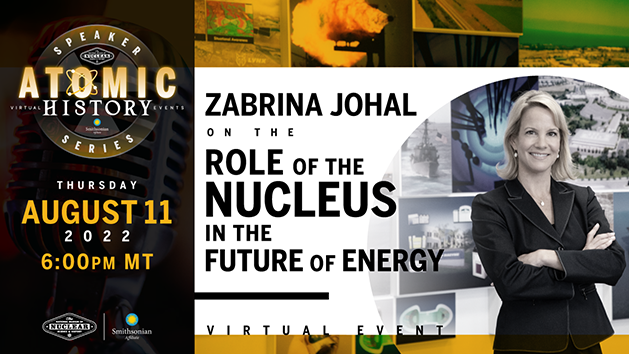
Atomic History Speaker Series: A Virtual Event With Zabrina Johal On Role Of Nucleus In Future Of Energy, Aug. 11

National Museum of Nuclear Science & History Vice President of the Board of Trustees, Zabrina Johal will speak in the new virtual Atomic History Speaker Series Aug. 11. Courtesy/National Museum of Nuclear Science & History

National Museum of Nuclear Science & History News:

Join the National Museum of Nuclear Science & History at 6 p.m. Aug. 11 for the first episode of their new virtual event series, Atomic History Speaker Series.

Their esteemed Vice President of the Board of Trustees, Zabrina Johal, Senior Director of Strategic Development with General Atomics, will be Read More
NMMNHS: The One True King

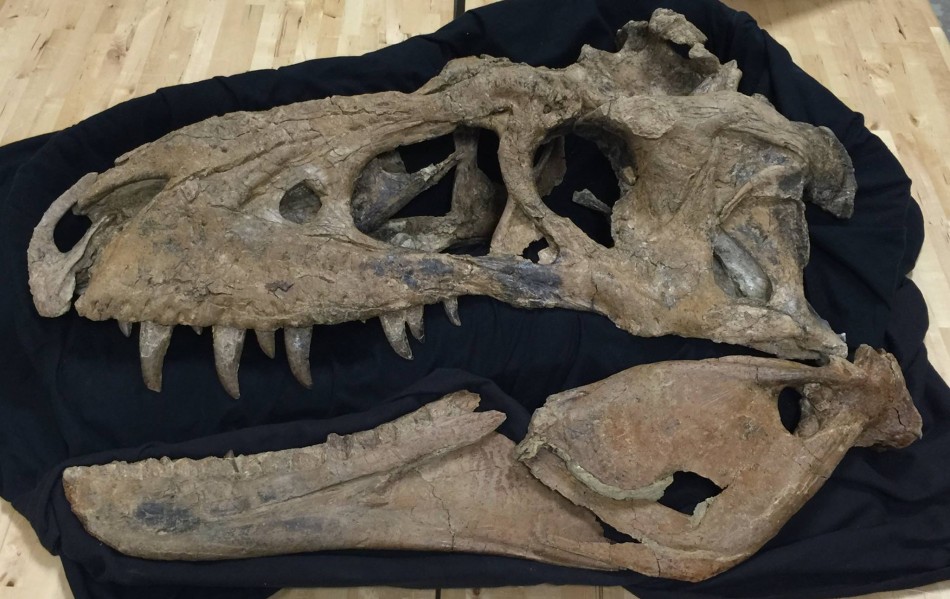
Bisti Beast Skull. Courtesy/NMMNHS

NMMNHS News:

ALBUQUERQUE — The mighty Tyrannosaurus rex should continue to be classified as a single unique species, according to a new report co-authored by a researcher from the New Mexico Museum of Natural History & Science (NMMNHS).  

The new paper, published recently in the journal Evolutionary Biology and headed by paleontologists at the American Museum of Natural History and Carthage College, refutes a provocative claim made earlier this year that fossils classified as the iconic dinosaur T. rex represent three separate species. The Read More

James Webb Space Telescope & The Manhattan Project

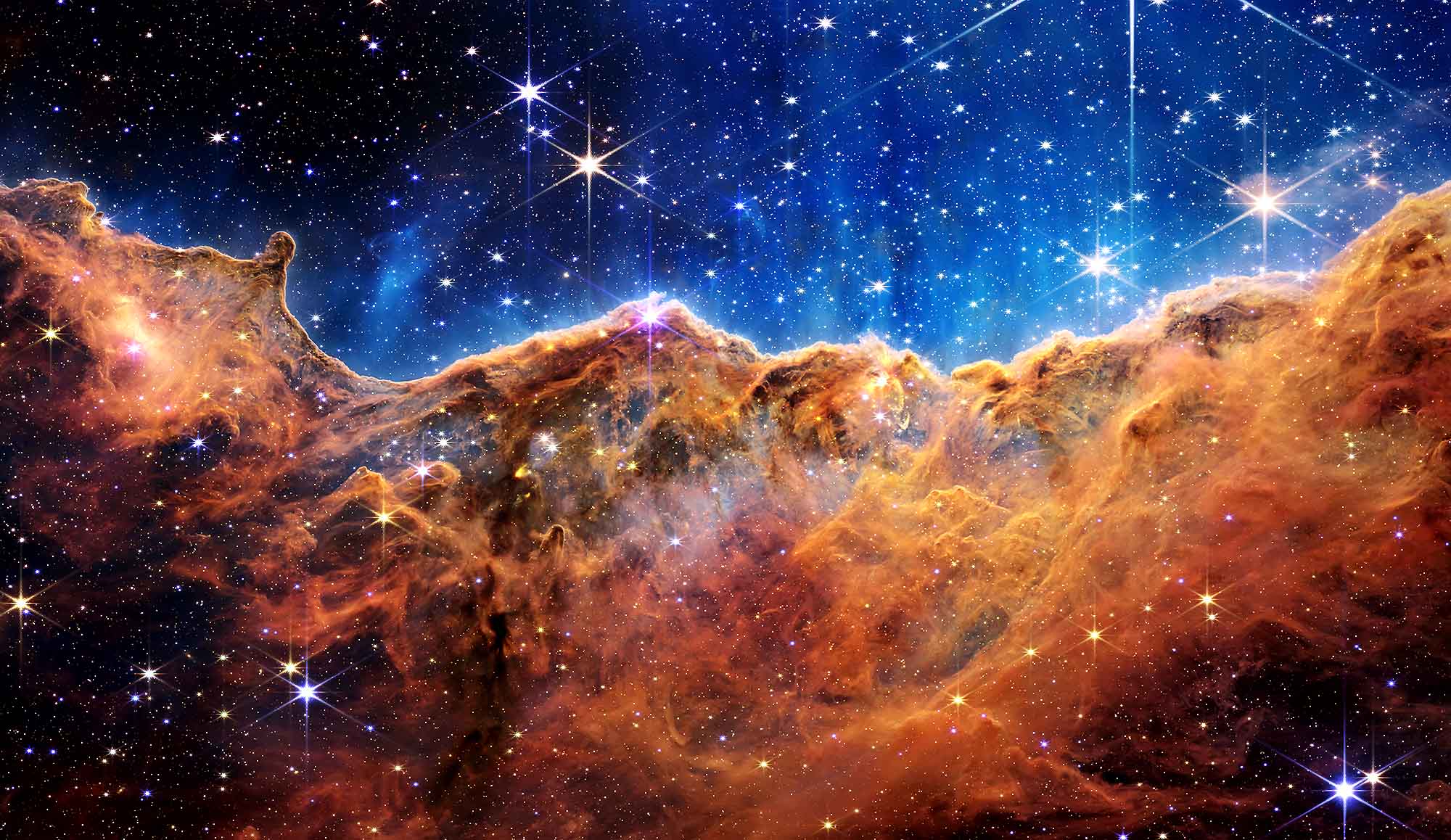
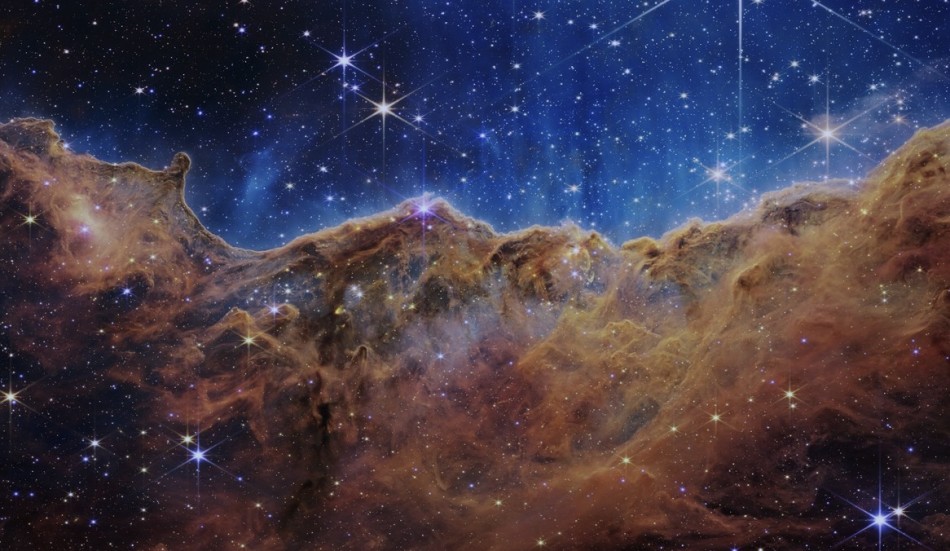
Image of the ‘Cosmic Cliffs’ taken by the James Webb Space Telescope. Courtesy/Atomic Heritage Foundation

By CYNTHIA C. KELLY
President and Founder
Atomic Heritage Foundation

After 20 years and $10 billion, the unfolding of the 18 gold-coated beryllium hexagons of telescope’s sunflower-like mirror of the James Webb Space Telescope (JWST) in early January 2022 went flawlessly. 

Like a modern-day Manhattan Project, the project involved an interdisciplinary team of engineers, astronomers, mathematicians, technicians, and government officials.

The telescope will allow scientists Read More

New Mexico’s Nationally Leading Oil And Gas Emissions Rule Becomes Law Aug. 5, 2022

Environment Department Secretary James Kenney

STATE News:

SANTA FE — A nationally leading rule over the oil and gas industry that will cut harmful air emissions by 260 million pounds is now state law – a fulfillment of one of Gov. Michelle Lujan Grisham’s first commitments made in office.

The rule, which was developed with input from more than 520 stakeholders representing industry, environmental groups and the public, was published in the state register this week.

The rule will go into effect Aug. 5, 2022.

The new rule embraces innovation and is more protective of public health and the environment Read More

U.S. Sen. Martin Heinrich Issues Statement On Senate Passage Of Chips And Science Act

U.S. SENATE News:

WASHINGTON — U.S. Sen. Martin Heinrich (D-N.M.) issued the following statement on the Senate passage of the CHIPS and Science Act, bipartisan legislation to lower costs, boost domestic manufacturing, strengthen domestic supply chains, and preserve American competitiveness in the 21st century:

“The CHIPS and Science Act is designed to fight inflation and invest in domestic jobs and the future. This bipartisan legislation will serve as a launchpad for scientific innovation and manufacturing at places like Intel in Rio Rancho and allow America to maintain our competitive Read More

LANL News Roundup For Week Of July 25-29, 2022

Science: Anti-butterfly effect enables new benchmarking of quantum-computer performance.

Research drawing on the quantum ‘anti-butterfly effect’ solves a longstanding experimental problem in physics and establishes a method for benchmarking the performance of quantum computers. Read the full article here. Courtesy/LANL

LANL News:

Los Alamos National Laboratory (LANL) shares a compilation of news stories for the week of July 25-29, 2022.

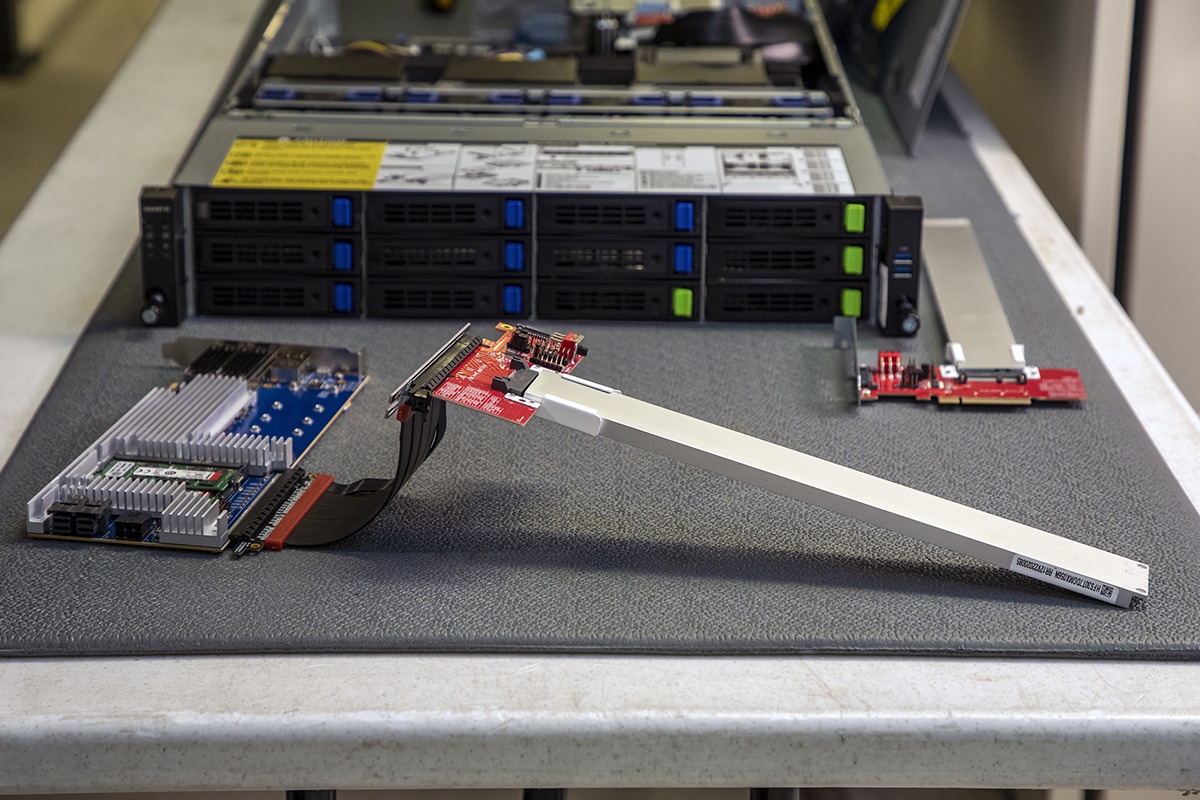
Los Alamos National Laboratory and SK hynix to demonstrate first-of-a-kind ordered Key-value Store Computational Storage Device Los Alamos Read More

UCLA Scientists Discover Places On Moon Where It’s Always ‘Sweater Weather’

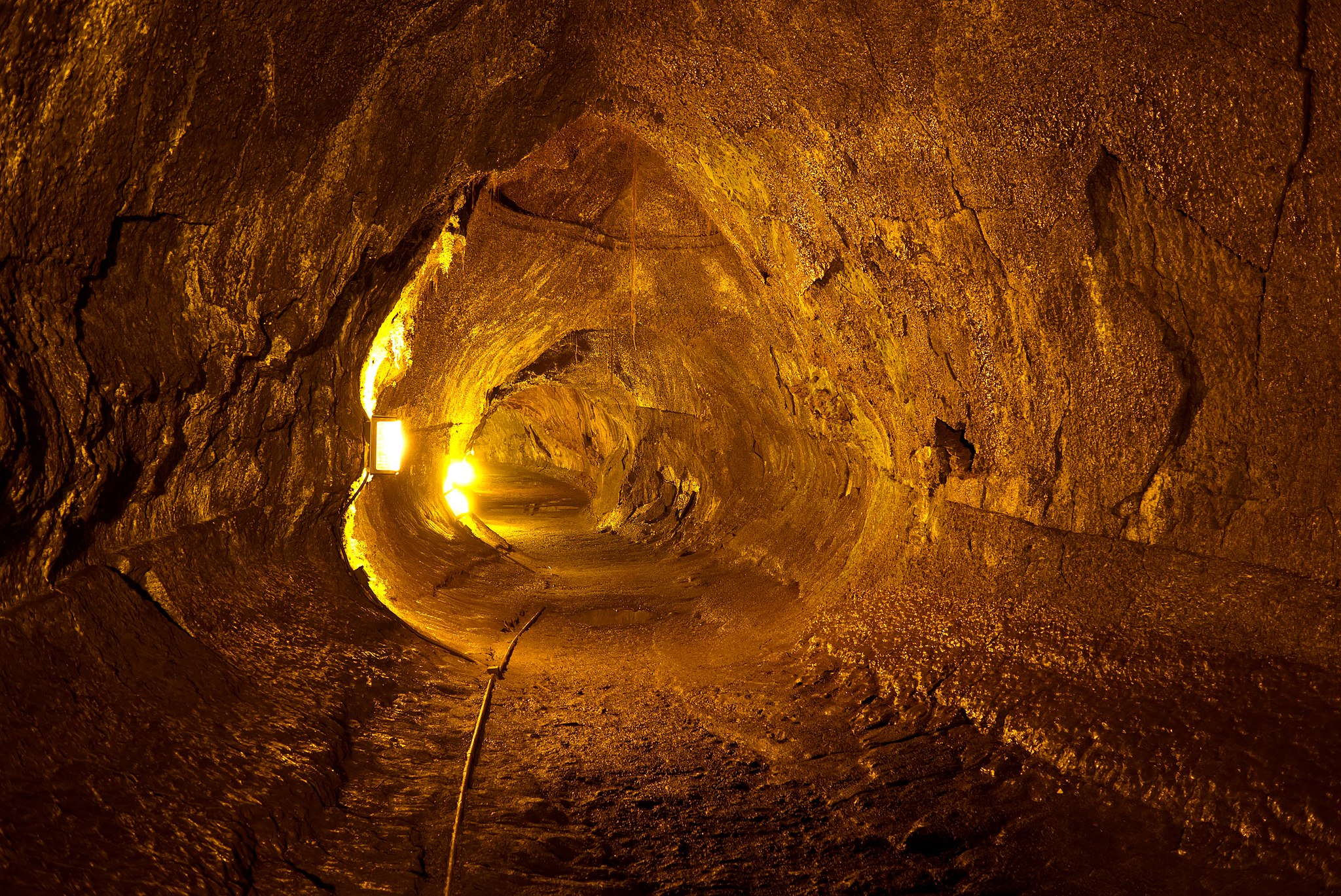
A good place for a base? Scientists predict that some lunar pits lead to lava tubes like the one seen here in Hawaii Volcanoes National Park. The moon has similar tunnels, which are left behind after molten lava flows beneath the surface. NASA/GSFC/Arizona State University

UCLA News:

Future human explorers on the moon might have 99 problems but staying warm or cool won’t be one. A team led by planetary scientists at UCLA has discovered shady locations within pits on the moon that always hover around a comfortable 63 degrees Fahrenheit.

The pits, and caves to which they may lead, would make safer, Read More

LAFSF: ‘The Heavens Declare’: The Universe And Judeo-Christian Truth Claims By Nels Hoffman

Courtesy/Los Alamos Faith and Science Forum

Los Alamos Faith and Science Forum News:

Los Alamos Faith and Science Forum is hosting the final talk of the summer series Wednesday, Aug. 3: “The Heavens Declare”: The Universe and Judeo-Christian Truth Claims by Nels Hoffman, PhD.

The writer of the biblical book of Genesis asserted that “In the beginning God created the heavens and the earth,” while the Psalmist similarly stated that “The heavens declare the glory of God; the skies proclaim the work of his hands.” This idea, that the universe had a beginning at a definite point in time, and was the Read More

PEEC: First Images From James Webb Space Telescope – Exploring The Details At Nature Center Planetarium Aug. 4

Examine the first released images from the James Webb Space Telescope in detail Thursday with PEEC at the Los Alamos Nature Center Planetarium, 2600 Canyon Road. Courtesy/PEEC
PEEC News:

Join the Pajarito Environmental Education Center for this captivating astronomy talk examining the first released images from the James Webb Space Telescope in detail, 7 p.m. Thursday, Aug. 4, at the Los Alamos Nature Center Planetarium, 2600 Canyon Road.

Hear about the benefits and innovations of the telescope, and delve into questions like what type of information can we see in these and future Webb images Read More

AGU: Balloon Fleet Senses Earthquakes From Stratosphere

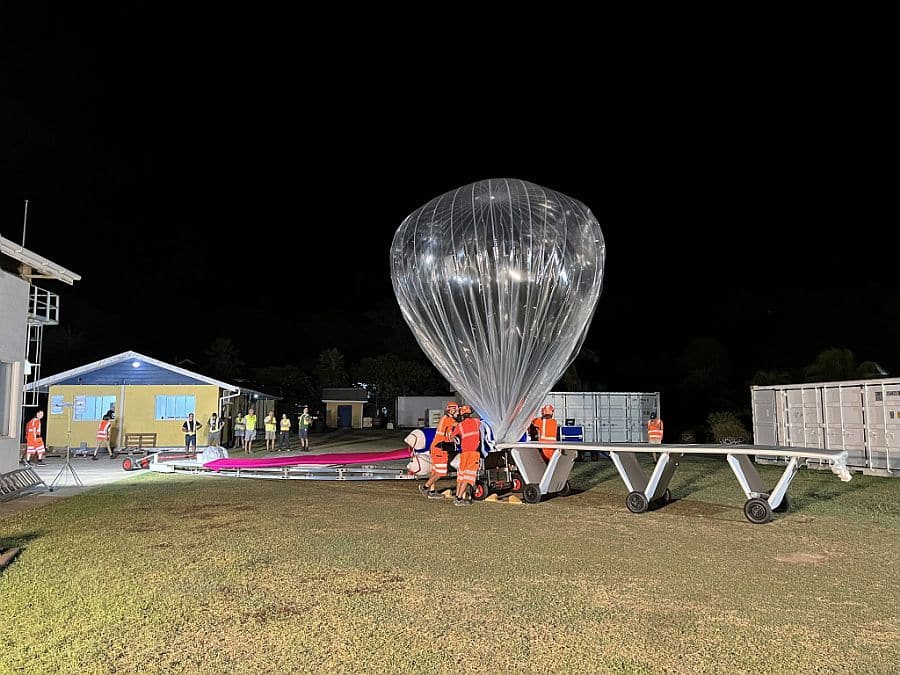
The ISAE-SUPAERO team releasing a pressurized balloon, as part of their Strateole-2 project. These balloons have sensors on board capable of detecting large earthquakes from thousands of kilometers away, as reported in a new study in Geophysical Research Letters. Courtesy/CNES/SABLON Igor, 2021

AGU News:

A new study in AGU’s Geophysical Research Letters reports on the first detection of a large, distant earthquake in a network of balloon-bound pressure sensors in the stratosphere.

The technique could one day be applied on Venus, whose hot, dense and corrosive atmosphere limits our Read More